Получете файл, готов за печат, който предлага много по-високо качество от уеб прегледа. Всяко дигитално изображение, което предлагаме, е извлечено от висококачествен оригинал в нашата база данни — обикновено с ширина между 5 000 и 15 000 пиксела — така че със сигурност да можете да принтирате в голям формат, да кадрирате тесно или да възпроизведете фините детайли.
Нито един файл не напуска нашето студио без внимание. Дигитален експерт проверява цветовете спрямо оригиналната картина и ги коригира при необходимост, след което подобрява яснотата и детайлите с професионални инструменти за ретуш — винаги оставайки верен на мазките и стила на художника. Резултатът е изображение, което изглежда като самата картина, а не като сканиран образ с филтър.
Одобрявате преди финализиране: нашият експерт ще изпрати изображението по имейл в рамките на 72 часа за ваш преглед. Не сте доволни? Можете да поискате подобрения или корекции, или пълно възстановяване на сумата, ако качеството не отговаря на очакванията ви.
Това е качеството, на което разчитат издателства, дизайн студиа, галерии и печатници.
Изтеглете файл с висока резолюция за лично съхранение, принтиране и творчески проекти. ( Превключване към принт Купете ръчно рисувана картина)
Избирайки WahooArt.com, вие не получавате просто изображение – вие придобивате професионално обработена дигитална творба, създадена с прецизност и подкрепена от гаранция за удовлетворение. Ето какво автоматично е включено във вашата поръчка:
Вашето дигитално изображение с висока резолюция ще бъде изпратено по имейл в рамките на 72 часа от поръчката – готово за незабавно използване.
Вашата картина е професионално оптимизирана чрез усъвършенствани инструменти с изкуствен интелект и ръчна редакция, което гарантира максимална детайлност, яснота и точност на цветовете.
Изгубили сте или сте изтрили файла си по погрешка? Не се притеснявайте – ще го изпратим отново на Вас по всяко време, безплатно.
Насладете се на вашето произведение незабавно, без мита, такси или разходи за доставка – дигиталните изтегляния винаги са освободени от данъци.
Гарантираме, че вашето дигитално изображение отразява оригиналните цветове възможно най-точно чрез използването на професионални инструменти и системи за управление на цветовете.
Ако не сте доволни от вашето дигитално изображение, ще го преработим или ще възстановим 100% от сумата в рамките на 100 дни – без излишни въпроси.
Не сте доволни? Получете пълен възврат на сумата в рамките на 100 дни от получаването на вашия цифров файл – без излишни въпроси.
Купете 3 изображения, спестете 10% - Купете 5, спестете 15% - Купете 10+, спестете 20%. Идеално за творчески проекти, галерии и агенства.
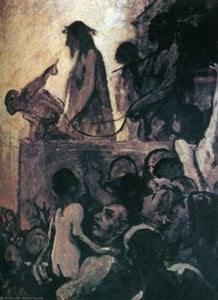
In the crowded, dimly lit confines of a mid-19th-century railway carriage, Honoré Daumier captures more than just a moment in transit; he captures the very essence of human endurance. The Third-class Carriage serves as a profound window into the burgeoning urban reality of France during the Second Empire. As the industrial revolution reshaped the landscape of Europe, Daumier turned his gaze away from the gilded salons of the aristocracy and toward the weary faces of the common people. The painting invites us to step into a space defined by proximity and shared struggle, where the boundaries between strangers dissolve in the cramped, rhythmic motion of the train.
The composition is a masterclass in realism, utilizing a tight, almost claustrophobic perspective that forces the viewer to sit alongside the passengers. There is no escape from the density of the scene; we are pressed against the heavy textures of worn clothing and the weathered surfaces of the carriage walls. Daumier’s ability to evoke the atmosphere of a moving vessel is palpable, as if one can almost feel the vibration of the tracks beneath the wooden benches. This sense of enclosure does not merely depict a setting; it symbolizes the social limitations and the heavy, inescapable weight of class distinctions that defined the era.
Technically, Daumier employs a palette dominated by somber earth tones—deep browns, muted ochres, and shadowy blues—which lends the work an incredible sense of gravity and permanence. His use of chiaroscuro is particularly striking; light does not flood this carriage but rather seeps in, catching the edge of a forehead, the curve of a shoulder, or the texture of a bundle of belongings. This selective illumination directs our eyes through the crowd, highlighting the individual stories hidden within the collective mass. The brushwork, while grounded in realism, possesses an expressive, almost sculptural quality that gives the figures a monumental presence despite their humble status.
For the discerning collector or interior designer, this piece offers a sophisticated emotional depth that transcends mere decoration. It is a work of profound empathy. Each figure—the elderly woman, the young mother, the stoic laborer—carries an expression of quiet resignation and quiet strength. There is no melodrama here, only the dignified reality of daily life. Incorporating a high-quality reproduction of this masterpiece into a space brings with it a sense of historical weight and intellectual curiosity, making it an ideal centerpiece for a room designed to inspire reflection and conversation.
Beyond its visual beauty, The Third-class Carriage remains a powerful piece of social commentary. Daumier, a master of satire and a keen observer of political absurdity, uses this scene to honor the fortitude of the working class. He finds beauty in the unvarnished truth, transforming a mundane journey into an epic of human resilience. The painting does not look away from poverty or fatigue; instead, it elevates these experiences through art, granting the subjects a level of importance usually reserved for kings and deities.
To own a reproduction of this work is to possess a fragment of history—a piece that speaks to the enduring human spirit amidst the tides of change. Whether placed in a contemporary gallery setting or a classic study, Daumier’s vision continues to resonate, reminding us that even in the most crowded and difficult of journeys, there is a profound, quiet dignity to be found.
„The Third-class Carriage“ на Хонарé Дамиер е в в обществено достояние – авторското право е изтекло. Срокът на авторското право се изчислява от годината на смъртта на художника, която е през 1879.
„The Third-class Carriage“ на Хонарé Дамиер се отнася към течението Social Realism, създадено в епохата XIX век на своя автор.
"The Third-class Carriage" датира от 1860. Тази дата поставя произведението в контекста на кариерата на Хонарé Дамиер и неговата епоха.


1808 - 1879 , Франция
 Преглед в реален мащаб
 Изпрати
 Сподели
 Детайли
 Ръководство

 Изтегляне
 Подобни артикули
 Рентгенова снимка
 Слайдшоу
 Q&A
Q&A Статистика


 Прочети повече