Закупете дигитално изображение с висока резолюция и подобрени характеристики, значително по-добро от онлайн прегледа.
Всеки файл е щателно подготвен от нашите специалисти с помощта на съвременни инструменти и експертна ръчна ретуш. Гарантираме, че всяко изображение има изключителна яснота, прецизна цветова точност и фини детайли.
Окончателният файл се доставя по имейл в рамките на 72 часа, оптимизиран за незабавна употреба в професионални, редакционни и печатни среди. Това е същото качество, на което се доверяват водещи дизайнерски студия, издатели и галерии.
Изтеглете файл с висока резолюция за лично показване, принтиране и творчески проекти. ( Превключване към принт
Купете ръчно рисувана картина)
Когато изберете WahooArt.com, вие не получавате само изображение – вие получавате професионално подобрена дигитална творба, създадена с прецизност и подкрепена от гаранция за удовлетворение. Ето всичко, което автоматично се включва в вашата поръчка:
Вашето дигитално изображение с висока резолюция ще ви бъде изпратено по имейл в рамките на 72 часа от поръчката - готово за незабавно използване.
Вашата картина е професионално оптимизирана с помощта на усъвършенствани инструменти за изкуствен интелект и ръчна редакция, осигурявайки максимална детайлност, яснота и точност на цветовете.
Изгубили сте или сте премахнали файла си по погрешка? Не се притежнявайте – ще го изпратим отново на Вас по всяко време, безплатно.
Всредите си веднага без мита, данъци или такси по доставка - дигителните приложения винаги са без данъчно освободени.
Гарантираме, че вашето дигитално изображение отразява оригиналните цветове възможно най-точно, използвайки професионални инструменти и управление на цветовете.
Ако не сте доволни от вашето дигитално изображение, ще го преработим или ще възстановим 100% от сумата в рамките на 100 дни – без излишни въпроси.
Не сте доволни? Получете пълен възврат на сумата в рамките на 100 дни от получаването на вашия цифров файл – без излишни въпроси.
Купете 3 изображения, спестете 10% - Купете 5, спестете 15% - Купете 10+, спестете 20%. Отлично за творчески проекти, галерии и агенства.
To gaze upon this depiction of Warwick Castle is to be transported across the centuries, standing at the confluence of medieval might and Rococo elegance. Painted in 1749, this work captures more than just stone and mortar; it encapsulates a moment in time when history was both preserved and presented for admiration. Canaletto, the master chronicler of Italian light and grand vistas, brought his unparalleled skill to document this magnificent English landmark. The sheer scale suggested by the many towers and turrets speaks to centuries of strategic importance, making the castle itself a monumental subject worthy of such detailed artistic reverence.
Canaletto’s signature style shines through with breathtaking clarity. While he is perhaps most famous for his luminous portrayals of Venice, his ability to render architectural grandeur in any setting remains evident here. Observe the meticulous detail applied to the stonework; every angle and curve seems captured with scientific precision, yet it breathes with life. The composition is masterfully balanced, drawing the eye from the foreground activity—the strolling figures suggesting leisurely promenade—back towards the imposing bulk of the castle itself. This technical brilliance allows the viewer to appreciate both the solid permanence of the architecture and the ephemeral nature of human life passing before it.
What elevates this piece beyond mere architectural record is the vibrant sense of narrative woven throughout the scene. The inclusion of several people meandering through the grounds suggests a day of pleasure, perhaps during a grand festival or royal visit. Further enhancing this liveliness are the birds soaring in the azure sky, their flight adding a delicate, airy counterpoint to the heavy stone below. Even the presence of a boat upon the water hints at the castle's enduring connection to its surrounding waterways—a vital artery for both defense and daily commerce. It is a scene brimming with implied sound: the murmur of conversation, the cry of gulls, and the gentle lapping of water against ancient foundations.
For the collector or designer seeking to infuse a space with depth, history, and unparalleled artistry, this reproduction offers profound resonance. It speaks to an appreciation for enduring beauty—the kind that withstands the passage of time. Imagine this piece gracing a drawing-room or library; it acts as a sophisticated conversation starter, inviting contemplation on eras past. Canaletto’s ability to marry documentary accuracy with romantic atmosphere ensures that the artwork feels both scholarly and deeply emotional, making it a centerpiece that anchors any grand interior design scheme.
Giovanni Antonio Canal, universally known as Canaletto, was a pivotal figure in 18th-century art, a painter whose meticulous depictions of Venice and its surrounding landscapes continue to captivate viewers today. Born on October 18, 1697, in the heart of Venice, he inherited an artistic legacy from his father, Bernardo Canal, a skilled theatrical scene painter. This early exposure to visual storytelling and stagecraft undoubtedly shaped Canaletto’s later approach to capturing the dynamism and social life of his beloved city.
Canaletto's formative years were spent honing his craft under his father’s tutelage, learning the fundamentals of perspective, composition, and color. However, a significant turning point in his artistic development occurred when he traveled to Rome in 1718. There, he immersed himself in the vibrant world of Roman painting, encountering the techniques of Giovanni Paolo Pannini, a master of vedute – detailed views of urban landscapes. Pannini’s influence was profound; Canaletto adopted the veduta genre as his primary focus, dedicating his career to meticulously documenting Venice and its environs.
Canaletto's signature style is instantly recognizable: a remarkable blend of precision, observation, and atmospheric quality. He was not merely a recorder of scenes; he sought to capture the *essence* of Venice – its light, its movement, its social fabric. His use of precise perspective, often achieved through painstaking preparatory drawings, combined with a masterful understanding of color and light, created images that were both accurate and deeply evocative.
A persistent debate surrounds Canaletto’s technique, particularly regarding the potential use of a camera obscura – a device that projects an image onto a surface. While some scholars believe he employed this tool to aid in achieving topographical accuracy, it's generally accepted that his primary focus remained on compositional design and capturing the overall mood of a scene. His meticulous attention to detail, combined with a keen eye for light and shadow, resulted in paintings that are remarkably realistic yet imbued with a sense of warmth and vitality.
Canaletto’s oeuvre is rich and diverse, encompassing cityscapes, portraits, and imaginary views. Among his most celebrated works are “The Stonemason’s Yard” (circa 1725), a vibrant depiction of daily life in a Venetian workshop; “Regatta on the Grand Canal” (1730s), a dynamic portrayal of a public ceremony; and “Eton College” (1746-1756), a meticulously rendered view of the prestigious English boarding school. His work in England, particularly during his collaboration with Joseph “Consul” Smith, proved exceptionally successful, bringing him widespread recognition and wealth.
A crucial element of Canaletto’s career was his close relationship with his nephew, Bernardo Bellotto. Bellotto became a talented artist in his own right, often working alongside Canaletto on large-scale projects, particularly in the years following his uncle's death. Their collaborative efforts resulted in a series of panoramic views of Venice and other cities, showcasing a shared artistic vision and technique.
Canaletto’s legacy extends far beyond his own lifetime. His meticulous depictions of Venice profoundly influenced subsequent generations of artists, particularly the development of the “vedute” genre in Europe. His work is now housed in major museums around the world, including the National Gallery in London and the Getty Museum in Los Angeles, testament to his enduring artistic merit.
Canaletto’s paintings offer a unique window into 18th-century Venice – its bustling streets, its grand palaces, and its vibrant social life. They are not merely representations of a city; they are celebrations of light, color, and the human experience, solidifying his place as one of the most important landscape artists in European history.

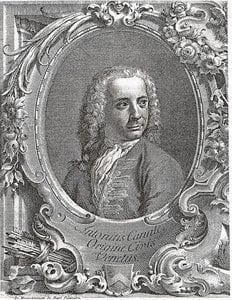
1697 - 1768 , Италия