A Master of Light and Shadow: The Life and Art of Gerard van Honthorst
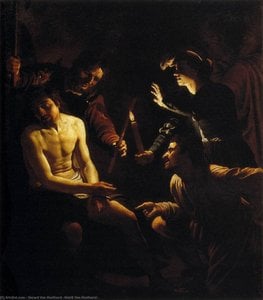
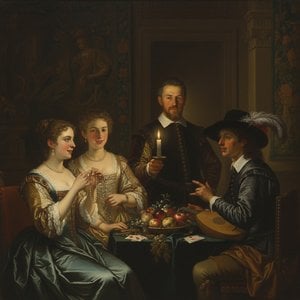
Gerard van Honthorst emerged from Utrecht in 1592, a pivotal figure poised to illuminate the Dutch Golden Age with his dramatic artistry. Initially guided by his father, a decorative painter, young Gerard’s talent blossomed under the tutelage of Abraham Bloemaert, establishing a solid foundation in draftsmanship and composition. However, it was a transformative journey to Rome that irrevocably altered the course of his artistic development. There, amidst the fervent energy of the Italian Baroque, he encountered the groundbreaking work of Caravaggio – an encounter that would define his signature style and earn him the evocative nickname “Gherardo delle Notti,” or Gerard of the Nights. The dramatic use of *tenebrism*, a technique employing stark contrasts between light and dark, became Honthorst’s hallmark, imbuing his canvases with a palpable sense of drama and emotional intensity. He wasn't merely imitating Caravaggio; he was translating the Italian master’s innovations into a distinctly Dutch sensibility, focusing on intimate scenes illuminated by artificial light sources – candles, lamps, and fires – creating an atmosphere both realistic and deeply theatrical. This mastery over light wasn’t simply technical skill; it was a means of revealing character, of drawing the viewer into the emotional core of each scene.
From Roman Acclaim to Dutch Mastery
Honthorst's time in Rome was marked by considerable success and patronage. He found favor amongst the city’s elite, including Vincenzo Giustiniani, for whom he created the powerful “Christ Before the High Priest,” a work that exemplifies his masterful command of light and shadow. This painting, now residing in London’s National Gallery, showcases not only his technical skill but also his ability to convey profound psychological depth within his figures. The scene is charged with tension, the faces illuminated by a single, unseen source, highlighting the vulnerability and fear of Christ before the high priest. He further solidified his reputation by working for Cosimo II de' Medici, Grand Duke of Tuscany, demonstrating an adaptability and versatility that would serve him well throughout his career. Honthorst’s ability to capture not just physical likeness but also the character and social standing of his sitters made him highly sought after by wealthy merchants, nobles, and even royalty. He became president of the Guild of St. Luke in Utrecht in 1623, a testament to his growing influence within the artistic community. This period saw a flourishing of commissions, allowing Honthorst to refine his style and establish a distinctive voice within Dutch painting.
The Utrecht Caravaggisti
Honthorst’s time in Rome was not merely a period of stylistic absorption; it fostered a vibrant artistic community known as the *Utrecht Caravaggisti*. Alongside artists like Hendrick ter Brugghen and Dirck van Baburen, Honthorst spearheaded a movement that sought to translate the dramatic intensity and realism of Caravaggio into the context of Dutch painting. These artists shared a common interest in portraying scenes with heightened emotion, often utilizing *tenebrism* – the stark contrast between light and dark – to create a sense of drama and immediacy. The Utrecht group’s work differed subtly from that of their Italian counterparts; they tended to focus on more intimate subjects, such as genre scenes depicting everyday life, and often incorporated elements of Dutch domesticity into their compositions. Honthorst's influence extended beyond his immediate circle, inspiring a generation of artists who sought to emulate his masterful use of light and shadow.
A Courtly Artist: Commissions and Collaborations
The reach of Honthorst’s talent extended beyond the Netherlands. His work attracted the attention of Sir Dudley Carleton, who enthusiastically recommended him to prominent English aristocrats like the Earl of Arundel and Lord Dorchester. This led to commissions from Queen Elizabeth of Bohemia, sister of Charles I, who employed him as both a painter and drawing master for her children. These royal connections culminated in significant works such as the allegorical depiction of Charles and Henrietta Maria as Diana and Apollo, now housed at Hampton Court Palace. The painting is a masterful example of Honthorst’s ability to combine classical mythology with contemporary portraiture, creating a visually stunning and emotionally resonant image. He also collaborated with other prominent artists, including Rembrandt van Rijn, sharing ideas and techniques that enriched the artistic landscape of the time. These collaborations weren't simply about sharing workload; they were intellectual exchanges that fostered innovation and broadened artistic horizons.
Legacy and the Utrecht Caravaggisti
Gerard van Honthorst’s influence resonated far beyond his lifetime. He was a key figure in the *Utrecht Caravaggisti* movement – a group of Dutch painters who embraced Caravaggio's dramatic realism and *tenebrism*. Alongside artists like Hendrick ter Brugghen and Dirck van Baburen, he helped to establish a distinctly Dutch interpretation of Italian Baroque style. His emphasis on genre scenes illuminated by artificial light, his masterful portraits, and his ability to convey emotional depth through skillful use of chiaroscuro left an indelible mark on the development of Dutch Golden Age painting. Even his brother, Willem van Honthorst, followed in his footsteps, though often with works initially misattributed to Gerard due to stylistic similarities.
- Honthorst’s paintings continue to captivate audiences today.
- His dramatic beauty and psychological insight are enduring qualities.
- He cemented his place as a pivotal figure in art history.
Van Honthorst's ability to seamlessly blend Italian influences with Dutch sensibilities ensured his lasting legacy, inspiring generations of artists who followed. He died in Utrecht in 1656, leaving behind a body of work that continues to illuminate the artistic landscape and remind us of the power of light and shadow to reveal the human condition.



 Преглед в реален мащаб
 Поръчайте ръчно рисувано репродукция на този колекционерски предмет
 Сподели
 Сподели
 Подробности
 Ръководство

 Изтегляне
 Подобни артикули
 Рентгенова снимка
 Слайдшоу
 Статистика


 Разгърни целия текст






































 Опцията със стъкло е налична само за размери под 110 см