The Allure of Power: Gérard de Lairesse’s Cleopatra’s Banquet
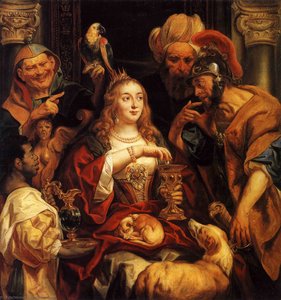
Gérard de Lairesse’s “Cleopatra’s Banquet,” painted in 1675, isn't merely a depiction of a historical event; it’s a carefully constructed tableau of power, seduction, and opulent extravagance. This dramatic scene, brimming with theatricality and rich color, transports the viewer to a moment of intense rivalry between Cleopatra, the last pharaoh of Egypt, and Mark Antony, one of Rome's most formidable generals. The painting captures not just a wager—Cleopatra’s audacious challenge to dissolve a pearl in vinegar and drink the resulting liquid—but also the very essence of her captivating allure and strategic brilliance.
Lairesse, a leading figure of Belgian Baroque art, masterfully employs light and shadow to create a palpable sense of drama. The composition is meticulously arranged, drawing our eye through a carefully orchestrated series of figures and gestures. Cleopatra, positioned at the heart of the scene, exudes an air of regal confidence as she removes her earring—a gesture laden with symbolic weight, suggesting both defiance and control. Her posture, her gaze, and the subtle curve of her lips all contribute to an image of calculated charm and unwavering authority.
A Stage for Intrigue: Context and Composition
To fully appreciate “Cleopatra’s Banquet,” it's crucial to understand its historical context. The painting draws upon a well-established narrative—Pliny the Elder’s account of a wager between Cleopatra and Antony, where she demonstrated her wealth by dissolving a pearl in vinegar. Lairesse elevates this anecdote into a grand theatrical spectacle, reminiscent of a classical play. He deliberately borrows elements from Italianate stage design, evident in the elaborate architecture and the carefully positioned figures, creating an illusionistic space that invites the viewer to step into the scene.
The composition is remarkably balanced, with a clear hierarchy of importance. Cleopatra dominates the center, surrounded by a throng of elegantly dressed guests—both men and women—each contributing to the overall sense of lavishness. The inclusion of a dog near the bottom left corner adds an unexpected touch of realism and humanizes the scene, grounding it in a tangible reality amidst the fantastical elements.
Technique and Symbolism: A Masterclass in Baroque Art
Lairesse’s technical skill is immediately apparent. He demonstrates a remarkable command of color, using rich reds, golds, and blues to create a vibrant and luxurious atmosphere. The use of *chiaroscuro*—the dramatic contrast between light and shadow—heightens the sense of drama and emphasizes key figures within the composition. Notice how he uses light to illuminate Cleopatra’s face, drawing attention to her expression and reinforcing her position as the central figure.
Beyond its visual splendor, “Cleopatra’s Banquet” is rich in symbolism. The pearl itself represents wealth, power, and beauty—qualities that Cleopatra sought to exploit to her advantage. The act of dissolving it in vinegar symbolizes a willingness to risk everything for love and ambition. The setting, with its classical architecture and opulent furnishings, evokes the grandeur of ancient Rome and Egypt, underscoring the clash between these two powerful civilizations.
A Legacy of Grandeur: Reproduction and Inspiration
Reproductions of “Cleopatra’s Banquet” capture a significant portion of the original's captivating atmosphere. The painting’s dramatic lighting, intricate details, and compelling narrative continue to inspire artists and designers today. When commissioning a high-quality reproduction, consider the scale and framing to best complement your interior space. The rich colors and dynamic composition will undoubtedly add a touch of historical grandeur and theatrical flair to any room.



 Преглед в реален мащаб
 Избор на принт
 Сподели
 Сподели
 Подробности
 Ръководство

 Изтегляне
 Подобни артикули
 Рентгенова снимка
 Слайдшоу
 Статистика


 Разгърни целия текст






































 Опцията със стъкло е налична само за размери под 110 см