Биография на художника
A Master of Flemish Light: The Enigmatic World of Gerard David
Gerard David, a name that resonates with the brilliance and quiet intensity of early Netherlandish painting, remains an artist shrouded in intriguing mystery. Born around 1460 in Oudewater, Netherlands – a small town now nestled within the province of Utrecht – his life story is pieced together from fragmented archival records and, more importantly, through the profound eloquence of his art. Unlike many of his contemporaries whose lives are meticulously documented, David’s personal narrative remains sparse, allowing his paintings to speak volumes where biographical details fall silent. What emerges is a portrait of an artist deeply engaged with both the traditions of his past and the burgeoning innovations of his time – a master who synthesized influences into a uniquely personal style. His success was considerable, likely managing workshops in both Antwerp and Bruges – vibrant centers of artistic exchange during the Renaissance – and he enjoyed a respected position within the art community until his death in 1523.
Formative Influences and Artistic Development
David’s artistic journey began under the careful tutelage of several key figures, shaping the very foundation of his distinctive style. Early works reveal a clear debt to painters who dominated the visual landscape of Northern Europe during his formative years: Jacob Janszoon, Dieric Bouts, and Geertgen tot Sint Jans – masters known for their meticulous attention to detail and their ability to imbue religious narratives with profound emotional resonance. It’s believed he spent a significant period in Haarlem, absorbing these lessons and developing his technical skills before relocating to Bruges in 1484, joining the Corporation of Imagemakers and Saddlers – a pivotal step that solidified his professional standing. Here, David encountered the masterpieces of Jan van Eyck, Rogier van der Weyden, and Hans Memling, artists whose techniques he studied with unwavering dedication while simultaneously forging his own path. Crucially, David didn’t merely imitate; he synthesized these diverse influences into something entirely his own – a style characterized by luminous color, serene compositions, and an increasingly sophisticated understanding of landscape. His early paintings, such as *Christ Nailed to the Cross*, demonstrate this evolution, moving away from the stylized figures of late medieval art towards more sculptural forms grounded in their environment. The influence of Bouts’ spatial construction is particularly evident, creating a sense of depth and drama that was groundbreaking for its time.
Innovation in Landscape and Religious Narrative
Gerard David's artistic signature lies not just in his technical skill but in his innovative approach to both landscape and religious subject matter. He wasn’t simply depicting backgrounds; he was crafting immersive environments that profoundly enhanced the emotional impact of his scenes. His landscapes are not merely decorative elements, but integral components of the narrative, often imbued with symbolic meaning – a reflection of the prevailing humanist ideals of the era. Consider *View in a Forest*, one of the outer wings of a triptych housed at the Groeninge Museum in Bruges; it’s not simply a picturesque vista but a world unto itself, rendered with meticulous detail and an atmospheric perspective that suggests both distance and depth. This pioneering use of landscape foreshadowed the development of landscape painting as a distinct genre, influencing generations of artists to come. Within his religious works, David demonstrated a remarkable ability to convey both profound spirituality and relatable human emotion. Paintings like *The Marriage of St. Catherine*, housed in the same museum, exemplify this skill. The scene is rendered with exquisite detail – the rich fabrics, the intricate architecture, the subtle expressions on the figures’ faces – yet it's precisely these details that draw the viewer into the narrative, inviting contemplation and empathy. He possessed a rare gift for imbuing his sacred subjects with a sense of quiet dignity and profound humanity, moving beyond mere iconography to create works that resonate deeply with the viewer. The *Triptych of the Madonna Enthroned and Saints*, now residing in Genoa, is another testament to this mastery – a harmonious composition filled with vibrant color, delicate detail, and a masterful balance between realism and symbolism. Notably, David included a self-portrait within the painting itself – a rare and intimate gesture from an artist of his time, suggesting a deep personal connection to his work.
A Unique Contribution: The Self-Portrait and Artistic Identity
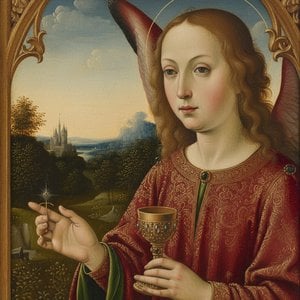
What truly distinguishes Gerard David is his willingness to incorporate himself into his own paintings, most famously in *The Virgin Among the Virgins*. This self-portrait, subtly integrated within the composition as an angel, represents a bold departure from traditional artistic conventions. It’s a testament to David's confidence and his desire to establish a unique artistic identity – one that blended technical skill with personal expression. The inclusion of the self-portrait not only elevates the painting’s emotional depth but also serves as a powerful statement about the artist’s role within the religious narrative, suggesting a connection between the divine and the human. This practice was relatively uncommon in his time, setting him apart from many of his contemporaries and contributing to the enduring fascination with his work.
Legacy and Enduring Influence
Though his fame diminished somewhat after his death in 1523, Gerard David’s influence on subsequent generations of artists is undeniable. His innovative use of color, his masterful handling of light and shadow, and his pioneering approach to landscape all left an indelible mark on the development of Flemish painting. He successfully bridged the gap between the late medieval tradition and the emerging Renaissance style, creating a synthesis that was both deeply rooted in the past and strikingly modern. David paved the way for artists who would further explore the expressive potential of natural settings – figures like Jacob Patinir and Jacob van Ruisdael – and his work continues to inspire awe and admiration centuries later. His legacy is not simply one of technical skill, but of artistic vision—a testament to a master who captured the light and spirit of his time with unparalleled grace and insight.
Exploring Further
* WahooArt.com: Discover an extensive collection of Gerard David’s paintings, including *The Adoration of the Magi*.
* View in a Forest: Explore this stunning Northern Renaissance landscape painting.
* The Early Netherlandish Art Movement: Delve deeper into the artistic context of David’s work.



 Преглед в реален мащаб
 Поръчайте ръчно рисувано репродукция на този колекционерски предмет
 Сподели
 Сподели
 Подробности
 Ръководство

 Изтегляне
 Подобни артикули
 Рентгенова снимка
 Слайдшоу
 Статистика


 Разгърни целия текст






































 Опцията със стъкло е налична само за размери под 110 см