Биография на художника
Пионер на Лъчистата Прецизност: Животът и Изкуството на Жорж Сеорат
Жорж Пиер Сеорат, роден в Париж на 2 декември 1859 година, се изяви като ключова фигура в прехода от импресионизма към модерното изкуство. Неговият кратък, но интензивно фокусиран кариера революционизира живописта чрез развитието на пуантилизма – техника, основана на научни принципи и неумолимо търсене на оптическа истина. Историята на Сеорат е разказ за щателно наблюдение, интелектуална строгост и дълбока чувствителност към нюансите на светлината и цвета – качества, които го отличават от съвременниците му и продължават да пленяват публиката днес. Неговият ранен живот, макар и изглеждащ конвенционален, полага основите за бъдещите му артистични изследвания. Семейството се премества на булевард де Магента малко след раждането му, а баща му, Антуан Хризостом Сеорат, бивш юридически служител, превърнал се в спекулант на недвижими имоти, осигурява комфортно детство, което позволява на младия Жорж достъп до художествено образование. Той започва формално обучение в École Municipale de Sculpture et Dessin под скулптора Жустен Лекен, последвано от записване в престижното École des Beaux-Arts през 1878 година, където учи при Анри Леман. Тези формиращи години му втвърдяват солидна основа в традиционните техники, но дори тогава уникална артистична личност започва да се оформява – комбинация от деликатна чувствителност и нововъзникваща фасцинация към систематичния анализ.
От Академични Корени към Хромолуминаризъм
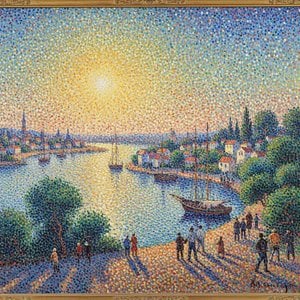
Художественото развитие на Сеорат не е внезапно откритие, а постепенна еволюция, подхранвана от интелектуална любопитство и строги експерименти. Първоначално неговите творби отразяват академичните стандарти на времето, демонстрирайки владеене на рисунката и уважение към установените композиционни принципи. Въпреки това, той скоро започва да поставя под въпрос тези конвенции, търсейки по-научен подход към живописта. Той се потапя в развиващата се област на теорията на цветовете, изучавайки писанията на учени като Мишел Шеврьо и Огъдън Рууд, които изследват оптичните ефекти на съседстващите цветове. Това проучване става крайъгълен камък на неговата революционна техника – хромолуминаризма – науката за цвета и нейното практическо приложение, пуантилизмът. Основната идея е изненадващо проста: прилагането на малки, различни точки от чисти цветове върху платно, разчитайки на окото на зрителя да ги оптически смеси и създаде жив, светещ ефект. Това не става въпрос просто за постигане на по-ярки цветове; става въпрос за разбиране как визуалната система на човека възприема светлината и цвета и използване на това знание, за да се създаде по-динамично и ангажиращо изживяване при рисуването. Той щателно подготвя своите големи композиции с рисунки с Conté crayon върху груба хартия, внимателно картографирайки поставянето на всяка точка, демонстрирайки почти математическа прецизност в своя артистичен процес.
Белези на Иновацията: Основни Творби и Артистично Виждане
Възможно е кулминацията на изследванията и експериментите на Сеорат да се прояви най-добре в A Sunday Afternoon on the Island of La Grande Jatte (1884-1886), монументално произведение, което отбелязва началото на неоимпресионизма. Тази емблематична картина, изобразяваща парижани, наслаждаващи се на лежерен следобед край Сена, показва неговата пуантилистка техника в пълния ѝ обхват. Фигурите, рендирани като внимателно поставени точки от цвят, сякаш блестят и вибрират със светлина, създавайки атмосфера на спокойна тишина. Alfalfa, Saint-Denis (1886-1887) демонстрира приложението на теорията за цветовете към селски пейзаж, докато по-ранни творби като Landscape at Saint-Ouen (1882-1883) разкриват неговия развиващ се стил и нарастващия интерес към улавянето на ефектите от светлината и атмосферата. Дори изображенията на съвременния парижки живот, като The Eiffel Tower (1889), са трансформирани чрез неговата уникална техника, показвайки хармонично сливане на индустриална модерност и артистична иновация. Bathers at Asnières (1884), друга значима творба, изследва теми за отдиха и съвременния живот с неговия отличителен стил, предвещавайки по-изтънчения подход, видим в *La Grande Jatte*. Тези картини не са просто представяния на сцени; те са внимателно конструирани визуални експерименти, предназначени да изследват възможностите за цвят и възприятие.
Наследие, което трае: Влияние и Историческо Значение
Въпреки краткия си живот – Сеорат умира на 31 години през 1891 година – неговото влияние върху света на изкуството е дълбоко и далечно. Неговата работа оспорва традиционните художествени конвенции, проправяйки пътя за множество последващи движения. Акцентът върху субективното изразяване и изследването на нови техники резонира с художници, стремящи се да се освободят от академичните ограничения. Влиянието на Сеорат може да бъде видяно в творбите на Фовистите, които възприемат смели цветове и експресивна четка; Кубистите, които деконструират формите в геометрични фигури; и Абстрактните експресионисти, които приоритизират емоционалната интензивност и спонтанния жест. Научният подход на Сеорат към рисуването, макар и първоначално противоречив, в крайна сметка разширява дефиницията за художествена възможност. Той демонстрира, че изкуството може да бъде едновременно интелектуално строго и емоционално въздействащо – синтез, който продължава да вдъхновява художници днес. Наследството на Сеорат се простира отвъд неговите технически иновации; той остави след себе си корпус от творби, които улавят същността на съвременния живот с несравнима прецизност и красота, затвърждавайки мястото му като истински пионер на модерното изкуство. Неговите картини остават свидетелства за силата на наблюдението, експериментирането и трайното човешко желание да разберем света около нас чрез призмата на артистичното изразяване.



 Представи си го
 Превключване към принт
 Изпрати
 Сподели
 Детайли

 Изтегляне
 Подобни
 Рентгенова снимка
 Слайдшоу
 Статистика

 Прочетете повече






































 Стъклото е налично само в размери под 110 см