Биография на художника
A Chronicler of the Vanishing West: The Life and Art of Frederic Remington
Frederic Sackrider Remington, роден в Кантон, Ню Йорк, на 4 октомври 1861 г., не беше продукт на Дивия Запад, който толкова живо изобразяваше; по-скоро той беше изтокчанин, който оформи своята артистична идентичност чрез страст и посветено изучаване. Неговата родословна намекваше за живот далеч от прашните пътища и кавалерийските атаки – френски баскски произход смесен със строго консервативни ню Йоркски корени, баща, който беше полковник по време на Гражданската война и вестникчий, както и връзки с известната Remington Arms Dynasty чрез далечни роднини. Въпреки това, ранно излагане на военни теми, съчетано със страстен дух и остър усет към разказването на истории, го насочи към пътя да стане един от най-разпознаваемите артисти на Дивия Запад. Детството му премина в Блумингтън, Иланоис, след това обратно в Кантон и накрая в Оджъндсбърг, Ню Йорк, но въображението му беше очаровано от разказите за живота на границата. Въпреки че първоначално беше насочен към военно образование във Vermont Episcopal Institute, истинското призвание на Remington не беше да следва заповеди, а да наблюдава и интерпретира света около него чрез изкуство. Кратък престой в Йейлския университет потвърди това; футболът и скицирането имаха много по-голям интерес от формалното академично обучение.
От Илюстратор до Художник: Формиране на Артистична Визия
Артистичният път на Remington започна не с големи платна, а с мастило и хартия. Неговата първа публикувана работа – карикатура за *Yale Courant*, сигнализира за ранна способност да улавя действие и разказ. Ключово пътуване до Монтана през 1881 г. запали неговата вечна страст към Запада. Това не беше просто поглед на турист; Remington се стремеше да се потопи в културата, наблюдавайки копитари, индианци и самия пейзаж. Първоначално опитваше да започне пасища и минни предприятия, но тези се оказаха неуспешни, освобождавайки го да посвети напълно себе си на изкуството. Връщайки се на Изток, той бързо се утвърди като илюстратор за списания като *Harper’s Weekly* и *Collier’s*, динамичните му изображения на западни сцени очароваха национална публика, жадна за истории от границата. Тези илюстрации не бяха просто репортаж; те бяха пропити с драма, енергия и романтизирано виждане за Запада, което резонираше дълбоко в колективното въображение. Именно чрез тази работа Remington усъвършенства уменията си в композиция, улавяне на движение и предаване на емоции – качества, които по-късно ще дефинират неговите картини. Той получи минимално формално обучение извън няколко уроци по рисуване в Йейл и кратък период в Art Students League, развивайки вместо това отличителен стил, характеризиращ се с енергични мастилени линии, смели цветове и фокус върху реализъм, съчетан с драматичен акцент.
Запечатване на Изчезващия Свят: Теми и Стил
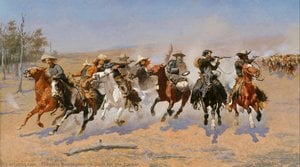
Изкуството на Remington е неразривно свързано с определен момент в американската история – затишието на Стария Запад. Неговите картини са населени от емблематични фигури: сурови копитари, каращи добитък, строги индианци, изправени пред изселване и американски кавалерийски войници, ангажирани както в героични битки, така и в трагични конфликти. Той не се колебаеше да изобразява суровите реалности на живота на границата, но неговото изкуство често се наклонява към романтизирано представяне, подчертавайки смелостта, приключението и сблъсъка на културите. Неговите картини не са просто исторически документи; те са емоционални разкази, които изследват теми за героизъм, загуба и неизбежния марш на прогреса. Стилът на Remington се развива с течение на времето, преминавайки от по-тясни, по-академични изображения към по-свободни, по-експресивни мастилени линии. Той беше майстор в улавянето на движение – коне, галопиращи през равнините, копитари, борещи се с добитък и войници, нападащи в битка. Той често използваше бързи скици и снимки като материали за справка, но неговото изкуство винаги превъзхождаше простото копиране, изпълнено със собственото му уникално виждане и емоционална интензивност. Забележителни произведения на изкуството като *My Ranch*, *Waiting in the Moonlight*, *Ridden Down* (1905) и *The Long-Horn Cattle Sign* (1908) демонстрират способността му да улавя както величието, така и уязвимостта на американския Запад.
Влияния и Последователност
Frederic Remington умира неочаквано през 1909 г. на 48 години, оставяйки след себе си огромно количество творби, които продължават да очароват публиката днес. Неговото влияние върху западното изкуство е несъмнено; той не просто изобрази Запада, а го *определи* за поколения американци. Той установи визуална език за границата – икона на копитари, индианци и кавалерийски войници, която се вкорени дълбоко в колективното въображение. Неговата работа повлия на много други художници, включително N.C. Wyeth и Zane Grey. Музеят Frederic Remington за изкуство в Оджъндсбърг, Ню Йорк, е свидетелство за неговото трайно наследство, запазвайки обширна колекция от картини, скулптури и архивни материали. Неговото изкуство продължава да бъде експонирано в големи музеи в цялата страна, включително Metropolitan Museum of Art и Amon Carter Museum of American Art.
Ключови постижения
* **Ранен живот:** Роден на 4 октомври 1861 г. в Кантон, Ню Йорк, като единствено дете на Seth Pierre Remington и Clara Bascom Sackrider Remington.
* **Военно образование:** Първоначално е насочен към военно образование във Vermont Episcopal Institute, но по-късно се отказва, за да преследва кариера в изкуството.
* **Илюстраторска слава:** Бързо става известен като илюстратор за списания като *Harper’s Weekly* и *Collier’s*.
* **Картинен талант:** Развива отличителен стил, характеризиращ се с енергични мастилени линии, смели цветове и фокус върху реализъм, съчетан с драматичен акцент.
* **Скулптурен успех:** Създава няколко забележителни бронзови скулпти, включително *The Broncho Buster*, който става класически символ на американския Запад.



 Преглед в реален мащаб
 Избор на принт
 Сподели
 Сподели
 Подробности
 Ръководство

 Изтегляне
 Подобни артикули
 Рентгенова снимка
 Слайдшоу
 Статистика


 Разгърни целия текст