Преглед в реален мащаб Преглед с AR Поръчайте ръчно рисувано репродукция на този колекционерски предмет Превключване към дигитално изображение Сподели
Подробности Ръководство Добави в любими Изтегляне Подобни артикули Рентгенова снимка Слайдшоу Статистика

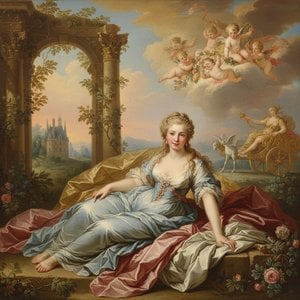
The Love Letter

François Clouet’s "The Love Letter" (1570) is a captivating Renaissance oil painting. Explore its intimate composition, chiaroscuro & symbolism of love. See this masterpiece in Madrid!

Фредерик Кло е френски художник от Ренесанса, известен с детайлните и изтънчени портрети на кралското семейство. Той съчетава фламандска натуралистичност с италианска елегантност, създавайки ценни свидетелства за живота в двора на Валоа.

Жикле / Художествен принт

Giclée печат или принт върху платно с музейно качество, бързо производство и гъвкави опции за завършен вид. ( Поръчайте ръчно рисувано репродукция на този колекционерски предмет Превключване към дигитално изображение)

P118B $10
P118H $10
P118W $10
P438Z $10
P508JH $12
P508YH $12
P805H $10
P805Z $10
P919BZ $10
P919G $10
P919XJ $10
P959ZH $10
P968JZ $12
W106C $8
W218G $10
W218JH $8
W218Y $10
W307PJ $10
W316G $10
W316PJ $8
W316Y $10
W398PJ $8
W4111J $10
W500HY $15
W500JH $15
W692G $12
W849H $8
W940BG $15
W953PJ $8

Стандартен размер
по поръчка
CM
INCH

Изберете от нашите предварително зададени размери, които съответстват на оригиналните пропорции на произведението.

ширина
височина

Можете да въведете собствени размери, за да паснат на конкретна рамка или пространство. Ако избраният от Вас размер не съвпада с пропорциите на оригиналното изображение, ние ще изрежем произведението или ще разширим изображението с огледален или едноцветен ръб. Дигитален макет ще бъде изпратен за Ваше одобрение преди започването на производството.
Моля, имайте предвид, че предпрегледът на екрана не отразява реалното изрязване или разширяване. Само макетът ще покаже точно финалната композиция.
Въпреки че са налични персонализирани размери, препоръчваме да изберете размер от предварително дефинирания списък, за да запазите оригиналните пропорции.

Доставка по целия свят () в рамките на 2 седмици вместо стандартните 4/5 седмици. (23 Септември)

why_choose_icon
Безплатна експресна доставка по целия свят
why_choose_icon
Висококачествено ленено платно
why_choose_icon
Пълно застраховане на доставката
why_choose_icon
Гаранция за възстановяване на митнически такси
why_choose_icon
Гаранция за пълно съответствие на цветовете
why_choose_icon
Политика за връщане в рамките на 100 дни (само при дефекти)
why_choose_icon
100% Гаранция за връщане на сумата
why_choose_icon
Отстъпка при поръчка на повече произведения

Обща сума

$ 68

reproduction

The Love Letter

Жикле / Художествен принт

Размер на репродукцията

-

Крайна цена

$ 68

Бърза информация

  • Artist: François Clouet
  • Subject or theme: Love; Relationships
  • Movement: Renaissance
  • Influences: School of Fontainebleau
  • Location: Museo Thyssen, Madrid
  • Notable elements or techniques: Chiaroscuro; Symbolism (letter)
  • Title: The Love Letter

Квиз за изкуство

За всеки въпрос има само един верен отговор.

Въпрос 1:
What artistic style is François Clouet’s "The Love Letter" primarily influenced by?
Въпрос 2:
In what museum can you find "The Love Letter"?
Въпрос 3:
What technique is prominently used in the painting to create depth and volume?
Въпрос 4:
The composition of "The Love Letter" features a triangular arrangement. What is positioned at the apex of this triangle?
Въпрос 5:
What symbolic element contributes to the painting's theme of love and communication?

A Renaissance Dialogue of Desire and Virtue

In the quiet, shadowed corridors of the French Renaissance, few works capture the delicate tension between public propriety and private longing as poignantly as François Clouet’s "The Love Letter." Executed around 1570, this oil on panel masterpiece serves as a profound window into the psychological complexities of the sixteenth century. The painting does not merely present a scene; it orchestrates a silent drama. At its heart lies a young woman, draped in luxurious, shimmering fabrics that catch the light with a tactile brilliance, embodying a breathtaking synthesis of beauty and vulnerability. She is caught in a pivotal moment of transition, where the written word becomes a bridge between the known world and the hidden depths of the heart.

The composition is masterfully structured in a triangular arrangement, a classical technique that directs the viewer’s gaze upward toward the central figure, ensuring her emotional state remains the focal point. Flanking this ethereal woman are two figures who ground the scene in human experience: an older procuress on the left, whose weathered features suggest a lifetime of shrewd observation and worldly wisdom, and a lover on the right, whose intense, admiring gaze reflects the raw, unbridled passion of youth. This grouping creates a dynamic energy, a triangular dance of characters that explores the intersection of experience, desire, and the societal structures that govern them.

The Artistry of Light and Texture

Clouet’s technical prowess is on full display through his innovative use of chiaroscuro. By employing dramatic light sources that illuminate the central figures while allowing the background to recede into an undefined, dark void, he achieves a palpable sense of three-dimensional volume. This technique, reminiscent of the great masters of the Fontainebleau School, lends the skin tones a luminous quality and gives the heavy folds of the drapery a sculptural weight. For the discerning collector or interior designer, this interplay of light and shadow offers an unparalleled depth that can transform the atmosphere of any room, providing a sophisticated focal point that commands attention through subtlety rather than noise.

Beyond the play of light, the painting is a triumph of meticulous detail. Clouet’s ability to render diverse textures—the crispness of the parchment, the soft sheen of silk, and the intricate patterns of the man's doublet—demonstrates the Flemish naturalism he inherited from his lineage. Every brushstroke serves to heighten the sensory experience of the viewer, making the tactile reality of the scene almost palpable. This level of detail ensures that a high-quality reproduction remains a captivating subject for close study, revealing new nuances of craftsmanship with every glance.

Symbolism and Emotional Resonance

Every element within "The Love Letter" is imbued with symbolic weight. The letter itself, held aloft by the procuress, acts as more than just a prop; it is a conduit for unspoken anxieties and secret hopes. It represents the power of communication to both reveal truth and create tension within the confines of societal expectations. The contrast between the older man’s experience and the younger man’s ardent admiration invites the viewer to contemplate the cyclical nature of human emotion—the movement from the heat of passion to the calculated wisdom of age.

For those seeking to adorn a space with art that speaks to the soul, this work offers an enduring emotional impact. It is a painting of intimacy and intrigue, perfect for creating a sophisticated, contemplative environment. Whether placed in a grand library or a contemporary living space, Clouet’s masterpiece brings with it a sense of historical gravity and a timeless exploration of the human condition, making it an exquisite choice for anyone looking to invest in art that transcends mere decoration to become a true narrative centerpiece.


Биография на художника

A Legacy of Likeness: The World of François Clouet

François Clouet, a name synonymous with the refined portraiture of the French Renaissance, emerged from a lineage steeped in artistic skill and courtly favor. Born around 1510 in Tours, France, his life unfolded against a backdrop of evolving artistic sensibilities and the opulent world of the Valois monarchy. He wasn’t merely a painter; he was a chronicler of an era, capturing the essence of kings, queens, and courtiers with a meticulousness that continues to captivate viewers today. The shadow of his father, Jean Clouet, loomed large – both artists shared not only a profession but also the familiar nickname ‘Janet,’ leading to occasional confusion in attributing their works across generations. Yet, François carved his own distinct path, blending Flemish naturalism with an emerging Italianate grace, and establishing himself as one of France’s most celebrated portraitists.

Early Life and Artistic Formation: The Influence of Jean Clouet

The early years of François Clouet remain somewhat veiled in historical obscurity, but his artistic trajectory was undeniably shaped by the legacy of his father. Jean Clouet, originating from the Southern Netherlands, brought with him to the French court the meticulous detail and realistic approach characteristic of Flemish painting. This foundation formed the bedrock of François’s training. A pivotal moment arrived in 1541 when François inherited his father's estate, formally stepping into his artistic inheritance and assuming the responsibilities that came with it. This wasn’t simply a transfer of property; it was an assumption of a role within the very fabric of the French court. The Clouet family also enjoyed a unique connection to the Italian Renaissance through Jean’s time in Amboise, exposing François to the burgeoning ideals and innovative techniques emanating from Italy – a subtle but significant influence that would later manifest in his work. He absorbed not just technique, but an understanding of how art could serve as both documentation and celebration of power and status. Jean Clouet's meticulous style—characterized by precise anatomical rendering and skillful use of hatching—served as a blueprint for François’s own artistic endeavors.

The Flemish Connection: Naturalism and Artistic Technique

François Clouet skillfully blended Flemish naturalism with the stylistic refinements emerging from Italy, creating a distinctive visual language that distinguished his work from earlier traditions. Like Jean Clouet before him, he embraced the principles of observation and realism championed by artists such as Hans Holbein the Younger—a conscious decision to prioritize accuracy and detail over idealized representations. This approach is evident in numerous drawings attributed to François, where subtle shading and hatching techniques convey a remarkable sense of volume and texture. The influence of Leonardo da Vinci’s masterful use of chiaroscuro – the interplay between light and shadow – can also be discerned in some of Clouet's paintings, demonstrating his awareness of groundbreaking artistic innovations. This fusion of styles solidified Clouet’s position as a leading figure in French portraiture during its formative years.

Notable Portraits: A Reflection of Royal Power

François Clouet achieved renown primarily through his portraits of the French royal family—a task he undertook with unwavering dedication and unparalleled skill. His depictions of Francis I at the Uffizi Gallery and at the Louvre exemplify his mastery of conveying regal dignity and authority, capturing not only physical likeness but also the psychological complexity of his subject. The meticulous detail invested in these portraits underscores Clouet’s commitment to documenting the visual culture of the Renaissance court. Beyond Francis I, he immortalized other key figures—Henry II, Francis II, Charles IX, Marguerite of France—each portrait reflecting the individual character and social standing of its sitter. Particularly striking is his portrayal of Mary, Queen of Scots, housed in the Bibliothèque nationale – a drawing that showcases Clouet’s ability to capture delicate features and convey emotional depth with astonishing subtlety. Similarly impressive is the portrait of Elizabeth of Austria at Versailles, demonstrating Clouet's understanding of how art could serve as a symbol of royal prestige.

Legacy and Influence: Shaping French Artistic Tradition

François Clouet’s enduring legacy resides in his profound impact on subsequent generations of French artists. His meticulous style—characterized by precise anatomical rendering and skillful use of hatching—became a cornerstone of French portraiture, influencing countless painters who sought to emulate his achievements. He established a tradition of detailed observation and psychological insight that transcended stylistic boundaries, ensuring that Clouet’s work would continue to inspire artistic creativity for centuries to come. His contribution to documenting the visual culture of the Renaissance court cemented his place as one of France's most celebrated portraitists—a testament to his artistic genius and enduring influence on French art history.
Франьойс Клое

Франьойс Клое

1510 - 1572 , Франция

Бързи факти

  • Artistic Movement Or Style: Ренесансова портретна живопис
  • Artists Or Movements Influenced By This Artist: ['Френски портретисти']
  • Artists Who Influenced This Artist:
    • Жан Клоет
    • Леонардо да Винчи
  • Date Of Birth: c. 1510
  • Date Of Death: 1572
  • Full Name: François Clouet
  • Nationality: Френски
  • Notable Artworks:
    • Портрет на Франциск I
    • Портрет на Хенри II
    • Мария Кралица Света
  • Place Of Birth: Tours, Франция
Разгледайте произведения на изкуството, организирани по теми, стилове и характеристики.