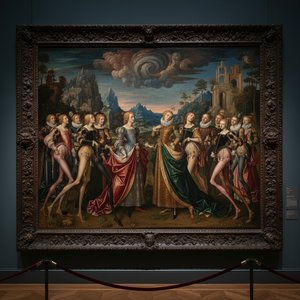
Преглед в реален мащаб Преглед с AR Избор на принт Превключване към дигитално изображение Сподели
Подробности Ръководство Добави в любими Изтегляне Подобни артикули Рентгенова снимка Слайдшоу Статистика

The Resurrection

„Възкресението“ от Ел Греко: Драматично произведение в типичния за художника стил с изненадващо разтягане на фигурите и интензивна светлина, създаващо емоционално въздействие от 16 век – открийте го!

Уникална картина на Ел Греко, изобразяваща Светия Семейство в драматичен стил. Разкрийте красотата и дълбочината на тази емблематична творба от Златната ера на Испания.

Ръчно изработена маслена репродукция

Ръчно рисувана маслена картина върху платно във вашия размер и рамка, изработена по поръчка от нашите художници. ( Избор на принт Превключване към дигитално изображение)

Corner sample of the P118B picture frame: формован полистирол, 5 cm wide and 3 cm thick
P118B €10
Corner sample of the P118H picture frame: формован полистирол, 5 cm wide and 3 cm thick
P118H €10
Corner sample of the P118W picture frame: формован полистирол, 5 cm wide and 3 cm thick
P118W €10
Corner sample of the P438Z picture frame: формован полистирол, 5.5 cm wide and 3.5 cm thick
P438Z €10
Corner sample of the P508JH picture frame: формован полистирол, 7 cm wide and 3.5 cm thick
P508JH €12
Corner sample of the P508YH picture frame: формован полистирол, 7 cm wide and 3.5 cm thick
P508YH €12
Corner sample of the P805H picture frame: формован полистирол, 5 cm wide and 3.5 cm thick
P805H €10
Corner sample of the P805Z picture frame: формован полистирол, 5 cm wide and 3.5 cm thick
P805Z €10
Corner sample of the P919BZ picture frame: формован полистирол, 7 cm wide and 3.5 cm thick
P919BZ €10
Corner sample of the P919G picture frame: формован полистирол, 7 cm wide and 3.5 cm thick
P919G €10
Corner sample of the P919XJ picture frame: формован полистирол, 7 cm wide and 3.5 cm thick
P919XJ €10
Corner sample of the P959ZH picture frame: формован полистирол, 5 cm wide and 3 cm thick
P959ZH €10
Corner sample of the P968JZ picture frame: формован полистирол, 6 cm wide and 4 cm thick
P968JZ €12
Corner sample of the W106C picture frame: масивна дървесина, 5 cm wide and 3 cm thick
W106C €8
Corner sample of the W218G picture frame: масивна дървесина, 5 cm wide and 3 cm thick
W218G €10
Corner sample of the W218JH picture frame: масивна дървесина, 5 cm wide and 3 cm thick
W218JH €8
Corner sample of the W218Y picture frame: масивна дървесина, 5 cm wide and 3 cm thick
W218Y €10
Corner sample of the W307PJ picture frame: масивна дървесина, 6 cm wide and 3 cm thick
W307PJ €10
Corner sample of the W316G picture frame: масивна дървесина, 6 cm wide and 3 cm thick
W316G €10
Corner sample of the W316PJ picture frame: масивна дървесина, 6 cm wide and 3 cm thick
W316PJ €8
Corner sample of the W316Y picture frame: масивна дървесина, 6 cm wide and 3 cm thick
W316Y €10
Corner sample of the W398PJ picture frame: масивна дървесина, 5 cm wide and 3 cm thick
W398PJ €8
Corner sample of the W4111J picture frame: масивна дървесина, 6.5 cm wide and 3.5 cm thick
W4111J €10
Corner sample of the W500HY picture frame: масивна дървесина, 7 cm wide and 5 cm thick
W500HY €15
Corner sample of the W500JH picture frame: масивна дървесина, 7 cm wide and 5 cm thick
W500JH €15
Corner sample of the W692G picture frame: масивна дървесина, 8 cm wide and 4 cm thick
W692G €12
Corner sample of the W849H picture frame: масивна дървесина, 5 cm wide and 3 cm thick
W849H €8
Corner sample of the W940BG picture frame: масивна дървесина, 7.5 cm wide and 4.5 cm thick
W940BG €15
Corner sample of the W953PJ picture frame: масивна дървесина, 6 cm wide and 3.5 cm thick
W953PJ €8

Стандартен размер
по поръчка
CM
INCH

Изберете от нашите предварително зададени размери, които съответстват на оригиналните пропорции на произведението.

ширина
височина

Въведете необходимата ширина и височина, за да паснат на вашата рамка или стена. Тъй като това е ръчна работа, при избор на размер с различен формат, художникът може да нарисува малко повече около картината или да отреже малко от периферията — вие избирате. Преди да започне рисуването, ще ви изпратим дигитален мок업 за одобрение. Картината, показана на тази страница, не е реалният резултат — само мок업ът го показва.

Примери за възможности за персонализация: Заменете лицето с фотография на клиента; Добавете домашен любимец (например заменете котка с куче); Включете скрито послание на фона; Променете пейзажа или елементите на фона.
След получаване на поръчка, екипът на WahooArt.com ще изпрати имейл до клиента с инструкции и ще предостави примерен макет за преглед.

Доставка по целия свят () в рамките на 3-4 седмици вместо стандартните 5 седмици. (23 Октомври). Без компромис с качеството.

Безплатна експресна доставка по целия свят
Висококачествено ленено платно
Пълно застраховане на доставката
Гаранция за възстановяване на митнически такси
Гаранция за пълно съответствие на цветовете
Политика за връщане в рамките на 100 дни (само при дефекти)
100% Гаранция за връщане на сумата
Отстъпка при поръчка на повече произведения

Обща сума

€ 239

The Resurrection

Техника на репродукция

Размер на репродукцията

-

Крайна цена

€ 239

Бърза информация

  • Artistic style: Експресивно, динамично
  • Dimensions: 275 x 127 см
  • Movement: Манихейство
  • Artist: Ел Греко
  • Year: 1596-1600
  • Location: Музей Прадо (Мадрид)

The Resurrection: A Dance of Light and Drama by El Greco

Doménikos Theotokópoulos, universally known as El Greco, remains one of the most singularly captivating figures in Western art history. His work transcends mere representation, plunging viewers into a realm of intense emotion and spiritual dynamism. “The Resurrection,” painted between 1596 and 1600 for what is believed to be the Colegio de Doña Maria in Madrid, stands as a monumental testament to his unique vision – a dramatic interpretation of one of Christianity’s most profound narratives. More than just a depiction of Christ's triumph over death, it’s an exploration of faith, movement, and the very essence of human experience.

El Greco’s style is instantly recognizable: elongated figures that seem to defy gravity, vibrant colors often applied in bold, contrasting blocks, and a masterful manipulation of light. “The Resurrection” exemplifies these hallmarks perfectly. The scene unfolds with an almost frenetic energy, capturing the moment of Christ's resurrection with breathtaking intensity. He abandons traditional Renaissance perspective, opting instead for a flattened space where figures surge forward, propelled by an unseen force. This deliberate distortion creates a sense of immediacy and urgency, drawing the viewer directly into the heart of the event.

Context and Composition: A Pair of Masterpieces

Understanding “The Resurrection” requires considering its relationship to another equally significant work by El Greco – “The Pentecost.” These two paintings were likely intended as a pair, forming a powerful visual statement within the chapel’s design. The similarities in size and shape suggest they were positioned on opposite sides, creating a unified narrative of faith and redemption. While the exact placement remains debated, scholars believe they were situated flanking the Nativity and Baptism scenes, establishing a chronological sequence of salvation history.

Notably, El Greco deliberately stripped the scene of any conventional historical context. He eliminates the tomb itself, the landscape surrounding Jerusalem, and even any explicit references to earthly reality. This deliberate abstraction elevates the image beyond a mere historical record; instead, it becomes a universal symbol of resurrection and hope. The focus is entirely on the figures – nine in total – caught within a whirlwind of movement and light.

Artistic Elements: Foreshortening and the Power of Color

El Greco’s technical skill is immediately apparent in his masterful use of foreshortening, particularly evident in the figure of the soldier wearing a yellow cuirass. This dramatically elongated form not only creates visual interest but also contributes to the painting's overall sense of dynamism. The other soldiers, rendered in shades of green and brown, further emphasize this movement, their bodies contorted in reactions to the radiant light emanating from Christ.

The color palette is equally striking. El Greco employs a vibrant range of hues – brilliant yellows, deep reds, and intense blues – creating a luminous effect that seems to emanate from within the canvas. The use of chiaroscuro—the dramatic contrast between light and shadow—further intensifies the emotional impact of the scene, highlighting Christ’s divine presence while simultaneously underscoring the terror and awe experienced by those witnessing his resurrection.

Significance and Legacy: A Journey to Madrid

Today, “The Resurrection” resides within the esteemed Museo del Prado in Madrid, a testament to its enduring artistic value. The Prado, one of the world’s premier art museums, houses an unparalleled collection spanning centuries of European art, with a particular emphasis on Spanish masters like El Greco. His work profoundly influenced generations of artists, bridging the gap between the Byzantine and Renaissance traditions while forging his own distinctive style.

El Greco's influence extends far beyond the confines of the Prado. His innovative approach to composition, color, and emotional expression continues to inspire artists and captivate audiences worldwide. “The Resurrection” stands as a powerful reminder of the enduring power of art to convey spiritual depth and universal themes – a timeless masterpiece that transcends its historical context.

Conclusion: Exploring El Greco’s Vision

“The Resurrection” by El Greco is more than just a painting; it's an experience. It’s a visceral encounter with faith, hope, and the transformative power of divine grace. For those seeking to delve deeper into the world of this extraordinary artist, we invite you to explore other notable works such as “The Pentecost,” “St. John the Evangelist,” and “The Trinity” – all available for high-quality reproduction on WahooArt.com. Discover the captivating artistry of El Greco and bring a piece of his visionary spirit into your own space.

Further Exploration: El Greco (Doménikos Theotokopoulos) and his other notable paintings like the Pentecost can be found on WahooArt. Painting by 'El Greco (Doménikos Theotokopoulos)' | El Greco (Doménikos Theotokopoulos):The Resurrection, Painting by 'El Greco (Doménikos Theotokopoulos)' | El Greco (Doménikos Theotokopoulos):Pentecost, Painting by 'El Greco (Doménikos Theotokopoulos)' | El Greco (Doménikos Theotokopoulos):St John the Evangelist, Painting by 'El Greco (Doménikos Theotokopoulos)' | El Greco (Doménikos Theotokopoulos):The Trinity, The Museum Prado (Madrid, Spain)

Въпроси и отговори

Каква наситенност и интензивност притежава „The Resurrection“ на Ел Греко?

Цветовете на „The Resurrection“ на Ел Греко показват Деликатен цвят наситен цвят с Монохроматичен интензивност.

Коя стая съответства на цветовете на „The Resurrection“ на Ел Греко?

Предвид цветовете в неговата Земни тонове палитра, се препоръчва "The Resurrection" за Дневна.

Кой е създал "The Resurrection" и в какъв стил е?

Ел Греко създава "The Resurrection" в рамките на движението Mannerism.


Биография на художника

Doménikos Theotokópoulos, Known As El Greco – A Pioneer Of Expressionism And Cubism

Doménikos Theotokópoulos, universally recognized as El Greco – “the Greek” – stands apart in the annals of Western art history. Born in Crete, Greece, around 1541, his artistic journey was marked by constant movement and transformation, culminating in a singular style that anticipated the revolutionary impulses of Expressionism and Cubism centuries later. He wasn’t merely responding to trends; he fundamentally reshaped visual language, forging a path toward modern art while retaining an unwavering devotion to Byzantine spiritual traditions.

Early Training And Cretan Roots

El Greco's formative years were steeped in the Orthodox faith of Crete, then under Venetian rule. His early artistic training focused on mastering the meticulous techniques of icon painting – a practice deeply rooted in Byzantine aesthetics—characterized by precise detail and symbolic representation. This foundational understanding profoundly influenced his subsequent work, informing his compositional choices and his use of color. The influence of Byzantine art is palpable in his earliest paintings, demonstrating an acute sensitivity to spiritual themes and a commitment to conveying profound emotion through visual imagery. His signature “Krḗs” – Cretan – served as a defiant assertion of his heritage, signaling both pride and artistic distinction amidst the cosmopolitan currents of Venice and Rome.

Venice And The Renaissance Masters

Around 1567, El Greco relocated to Venice, immersing himself in the vibrant artistic milieu of the Venetian Renaissance. This pivotal move exposed him to the towering figures of Titian, Tintoretto, and Veronese—masters who had revolutionized painting with their mastery of color, perspective, and dramatic lighting. He diligently studied their techniques, absorbing their expressive power and adapting them to his own distinctive vision. The Venetian influence is particularly evident in *St. Sebastian* (1600), where anatomical accuracy merges seamlessly with theatrical staging – a testament to El Greco’s ability to synthesize disparate artistic traditions. He skillfully employed oil paint, embracing its sensual qualities and experimenting with innovative compositional approaches.

Rome And Mannerism: A Difficult Embrace

A subsequent journey to Rome presented El Greco with a contrasting aesthetic landscape—the Mannerist style. While he demonstrated considerable talent in capturing the elegance and sophistication of Mannerist art, he struggled to gain acceptance within the competitive Roman artistic community. The elongated figures and distorted perspectives characteristic of Mannerism posed challenges to his ingrained Byzantine sensibilities, highlighting the difficulties inherent in reconciling tradition with innovation. Nevertheless, El Greco persevered, refining his technique and exploring new expressive possibilities—a testament to his unwavering determination as an artist.

Toledo And Spiritual Intensity

His final artistic home was Toledo, Spain – a city pulsating with religious fervor during the Counter- Reformation. This relocation provided El Greco with both patronage and an environment conducive to developing his intensely spiritual paintings. He found inspiration in the austere beauty of Toledo’s churches and monasteries, channeling his faith into monumental works that conveyed profound emotion and spiritual transcendence. *The Burial of the Count of Orgaz* (1586-1588), arguably his masterpiece, exemplifies this culmination of artistic vision—a breathtaking fusion of realism and mysticism that solidified El Greco's reputation as one of Spain’s greatest painters. The painting’s dramatic lighting, elongated figures, and symbolic imagery continue to captivate viewers today, embodying the enduring legacy of a truly singular artist.

A Lasting Impact On Art History

El Greco’s distinctive style—characterized by elongated figures, intense emotion, and theatrical lighting—anticipated the expressive fervor of Expressionism and Cubism centuries later. Artists like Picasso and Braque recognized him as a precursor to modern art, admiring his innovative use of form and color. His paintings resonated with the spirit of the avant-garde, demonstrating that artistic innovation could emerge from unexpected sources. El Greco’s legacy extends far beyond his own lifetime—he remains an icon of spiritual artistry and a testament to the transformative power of creative vision. He is remembered not merely as a painter but as a prophet of modern art, whose work continues to inspire artists and scholars alike.
Ел Греко

Ел Греко

1541 - 1614 , Гърция

Бързи факти

  • Artistic Movement Or Style: Ренесанс и Барокко
  • Artists Who Influenced This Artist:
    • Тициан
    • Тинторетто
  • Date Of Birth: 1541 г.
  • Date Of Death: 1614 г.
  • Full Name: Doménikos Θεοτοκόπουλος
  • Nationality: Гръцки-Испански
  • Notable Artworks:
    • Погребението на граф Оргоз
    • Панорама над Толедо
    • Разделен Христосъбитие
  • Place Of Birth: Крета, Гърция
Разгледайте произведения на изкуството, организирани по теми, стилове и характеристики.