Преглед в реален мащаб Преглед с AR Избор на принт Превключване към дигитално изображение Сподели
Подробности Ръководство Добави в любими Изтегляне Подобни артикули Рентгенова снимка Слайдшоу Статистика

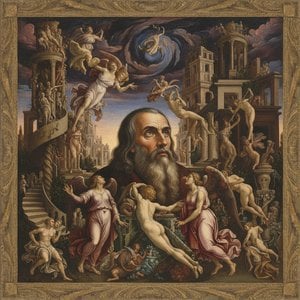
St. Francis praying

Explore El Greco’s poignant 'St. Francis Praying' (1595). A dramatic Baroque masterpiece featuring intense emotion & profound devotion. Discover this iconic work!

Уникална картина на Ел Греко, изобразяваща Светия Семейство в драматичен стил. Разкрийте красотата и дълбочината на тази емблематична творба от Златната ера на Испания.

Ръчно изработена маслена репродукция

Ръчно рисувана маслена картина върху платно във вашия размер и рамка, изработена по поръчка от нашите художници. ( Избор на принт Превключване към дигитално изображение)

P118B $10
P118H $10
P118W $10
P438Z $10
P508JH $12
P508YH $12
P805H $10
P805Z $10
P919BZ $10
P919G $10
P919XJ $10
P959ZH $10
P968JZ $12
W106C $8
W218G $10
W218JH $8
W218Y $10
W307PJ $10
W316G $10
W316PJ $8
W316Y $10
W398PJ $8
W4111J $10
W500HY $15
W500JH $15
W692G $12
W849H $8
W940BG $15
W953PJ $8

Стандартен размер
по поръчка
CM
INCH

Изберете от нашите предварително зададени размери, които съответстват на оригиналните пропорции на произведението.

ширина
височина

Можете да въведете свои собствени размери, за да паснат на конкретна рамка или пространство. Ако избраният от вас размер не съответства на пропорциите на оригиналното изображение, ние ще изрежем произведението или ще разширим картината с допълнителни ръчно рисувани елементи. Дигитален макет ще бъде изпратен за ваше одобрение преди започване на производството.
Моля, обърнете внимание, че предпрогледа на екрана не отразява действителното изрязване или разширяване. Само макетът ще покаже точно финалната композиция.
Въпреки че са налични персонализирани размери, препоръчваме да изберете размер от предварително дефинирания списък, за да запазите оригиналните пропорции.

Примери за възможности за персонализация: Заменете лицето с фотография на клиента; Добавете домашен любимец (например заменете котка с куче); Включете скрито послание на фона; Променете пейзажа или елементите на фона.
След получаване на поръчка, екипът на WahooArt.com ще изпрати имейл до клиента с инструкции и ще предостави примерен макет за преглед.

Доставка по целия свят () в рамките на 3-4 седмици вместо стандартните 5 седмици. (26 Септември). Без компромис с качеството.

why_choose_icon
Безплатна експресна доставка по целия свят
why_choose_icon
Висококачествено ленено платно
why_choose_icon
Пълно застраховане на доставката
why_choose_icon
Гаранция за възстановяване на митнически такси
why_choose_icon
Гаранция за пълно съответствие на цветовете
why_choose_icon
Политика за връщане в рамките на 100 дни (само при дефекти)
why_choose_icon
100% Гаранция за връщане на сумата
why_choose_icon
Отстъпка при поръчка на повече произведения

Обща сума

$ 272

reproduction

St. Francis praying

Техника на репродукция

Размер на репродукцията

-

Крайна цена

$ 272

Бърза информация

  • Artistic style: Baroque
  • Influences: Byzantine art
  • Location: Museo de El Greco, Toledo
  • Medium: Oil on canvas
  • Dimensions: 147 x 105 cm
  • Artist: El Greco
  • Subject or theme: Religious devotion

Квиз за изкуство

За всеки въпрос има само един верен отговор.

Въпрос 1:
What is the primary subject depicted in El Greco’s ‘St. Francis Praying’?
Въпрос 2:
The dramatic lighting and intense emotion characteristic of ‘St. Francis Praying’ are hallmarks of which artistic movement?
Въпрос 3:
What symbolic element is represented by the skull in ‘St. Francis Praying’?
Въпрос 4:
In what year was El Greco’s ‘St. Francis Praying’ painted?
Въпрос 5:
The composition of ‘St. Francis Praying’ is characterized by a flattened perspective, typical of which artistic style?

The Soul’s Embrace: An Exploration of El Greco's ‘St. Francis Praying’

Domenico Theotokopoulos, universally known as El Greco, possessed a singular ability to distill the essence of faith into visual form – an ability powerfully demonstrated in his 1595 painting, “St. Francis Praying.” More than simply a portrait of a revered saint, this work is a profound meditation on humility, devotion, and the enduring struggle between earthly desires and spiritual yearning. Painted during his time in Toledo, Spain, El Greco masterfully blends elements of Mannerism with Byzantine influences, creating an intensely emotive scene that continues to resonate centuries later. The painting isn’t merely observed; it's felt – a visceral experience rooted in the artist’s profound understanding of human emotion and religious iconography.

  • Subject Matter: The central figure is Saint Francis of Assisi, renowned for his radical poverty and dedication to Christ. He kneels in deep contemplation before a stark tableau of mortality – a skull representing the inevitability of death, and a crucifix symbolizing redemption through sacrifice.
  • Composition: El Greco employs a tightly framed composition, drawing the viewer’s eye directly to Francis. The use of dramatic perspective and strong diagonals creates a sense of dynamism within the otherwise somber scene. The placement of the skull behind the saint isn't jarring; it’s integrated seamlessly into the overall narrative, serving as a constant reminder of the spiritual battle being waged.

A Symphony of Color and Texture: El Greco’s Technique

El Greco’s distinctive style is immediately recognizable through his masterful manipulation of color and texture. He utilizes a muted palette dominated by grays, browns, ochres, and deep blues – colors that evoke a sense of solemnity and introspection. However, within this restrained scheme, he introduces vibrant highlights, particularly in the folds of Francis' robe and the delicate details of the skull, drawing attention to key elements. The artist’s technique is characterized by layered brushstrokes, building up texture with remarkable precision. You can almost feel the rough weave of the fabric, the cold smoothness of the stone, and the weight of the crucifix through the application of paint.

The layering of oil paints creates a rich, three-dimensional effect, contributing significantly to the painting’s emotional impact. El Greco's use of chiaroscuro – the dramatic contrast between light and shadow – further intensifies the scene, highlighting Francis’s face and emphasizing his posture of profound humility.

Symbolism Woven into the Fabric of Faith

“St. Francis Praying” is replete with symbolic meaning. The skull represents *memento mori* – a reminder of mortality, urging viewers to contemplate their own fleeting existence. The crucifix embodies Christ’s sacrifice and offers hope for salvation. The leafy branch above the saint symbolizes divine grace and renewal, suggesting that even in the face of death, faith can flourish. Francis' posture—kneeling with hands clasped in prayer—is a universal gesture of supplication and devotion, inviting viewers to join him in his spiritual quest.

  • The Skull: Represents mortality and the need for repentance.
  • The Cross: Symbolizes Christ’s sacrifice and redemption.
  • The Branch: Signifies hope, divine grace, and new life.

A Legacy of Emotion: El Greco's Enduring Impact

El Greco’s “St. Francis Praying” stands as a testament to his extraordinary artistic vision and his ability to capture the complexities of human emotion within a religious context. His elongated figures, dramatic lighting, and emotionally charged compositions foreshadowed the Expressionist movement centuries later. The painting continues to move viewers with its profound sense of humility, devotion, and the eternal struggle between earthly desires and spiritual longing. Reproductions of this iconic work offer a powerful opportunity to experience El Greco’s genius firsthand, bringing a touch of timeless beauty and contemplation into any space.


Биография на художника

Doménikos Theotokópoulos, Known As El Greco – A Pioneer Of Expressionism And Cubism

Doménikos Theotokópoulos, universally recognized as El Greco – “the Greek” – stands apart in the annals of Western art history. Born in Crete, Greece, around 1541, his artistic journey was marked by constant movement and transformation, culminating in a singular style that anticipated the revolutionary impulses of Expressionism and Cubism centuries later. He wasn’t merely responding to trends; he fundamentally reshaped visual language, forging a path toward modern art while retaining an unwavering devotion to Byzantine spiritual traditions.

Early Training And Cretan Roots

El Greco's formative years were steeped in the Orthodox faith of Crete, then under Venetian rule. His early artistic training focused on mastering the meticulous techniques of icon painting – a practice deeply rooted in Byzantine aesthetics—characterized by precise detail and symbolic representation. This foundational understanding profoundly influenced his subsequent work, informing his compositional choices and his use of color. The influence of Byzantine art is palpable in his earliest paintings, demonstrating an acute sensitivity to spiritual themes and a commitment to conveying profound emotion through visual imagery. His signature “Krḗs” – Cretan – served as a defiant assertion of his heritage, signaling both pride and artistic distinction amidst the cosmopolitan currents of Venice and Rome.

Venice And The Renaissance Masters

Around 1567, El Greco relocated to Venice, immersing himself in the vibrant artistic milieu of the Venetian Renaissance. This pivotal move exposed him to the towering figures of Titian, Tintoretto, and Veronese—masters who had revolutionized painting with their mastery of color, perspective, and dramatic lighting. He diligently studied their techniques, absorbing their expressive power and adapting them to his own distinctive vision. The Venetian influence is particularly evident in *St. Sebastian* (1600), where anatomical accuracy merges seamlessly with theatrical staging – a testament to El Greco’s ability to synthesize disparate artistic traditions. He skillfully employed oil paint, embracing its sensual qualities and experimenting with innovative compositional approaches.

Rome And Mannerism: A Difficult Embrace

A subsequent journey to Rome presented El Greco with a contrasting aesthetic landscape—the Mannerist style. While he demonstrated considerable talent in capturing the elegance and sophistication of Mannerist art, he struggled to gain acceptance within the competitive Roman artistic community. The elongated figures and distorted perspectives characteristic of Mannerism posed challenges to his ingrained Byzantine sensibilities, highlighting the difficulties inherent in reconciling tradition with innovation. Nevertheless, El Greco persevered, refining his technique and exploring new expressive possibilities—a testament to his unwavering determination as an artist.

Toledo And Spiritual Intensity

His final artistic home was Toledo, Spain – a city pulsating with religious fervor during the Counter- Reformation. This relocation provided El Greco with both patronage and an environment conducive to developing his intensely spiritual paintings. He found inspiration in the austere beauty of Toledo’s churches and monasteries, channeling his faith into monumental works that conveyed profound emotion and spiritual transcendence. *The Burial of the Count of Orgaz* (1586-1588), arguably his masterpiece, exemplifies this culmination of artistic vision—a breathtaking fusion of realism and mysticism that solidified El Greco's reputation as one of Spain’s greatest painters. The painting’s dramatic lighting, elongated figures, and symbolic imagery continue to captivate viewers today, embodying the enduring legacy of a truly singular artist.

A Lasting Impact On Art History

El Greco’s distinctive style—characterized by elongated figures, intense emotion, and theatrical lighting—anticipated the expressive fervor of Expressionism and Cubism centuries later. Artists like Picasso and Braque recognized him as a precursor to modern art, admiring his innovative use of form and color. His paintings resonated with the spirit of the avant-garde, demonstrating that artistic innovation could emerge from unexpected sources. El Greco’s legacy extends far beyond his own lifetime—he remains an icon of spiritual artistry and a testament to the transformative power of creative vision. He is remembered not merely as a painter but as a prophet of modern art, whose work continues to inspire artists and scholars alike.
Ел Греко

Ел Греко

1541 - 1614 , Гърция

Бързи факти

  • Artistic Movement Or Style: Ренесанс и Барокко
  • Artists Who Influenced This Artist:
    • Тициан
    • Тинторетто
  • Date Of Birth: 1541 г.
  • Date Of Death: 1614 г.
  • Full Name: Doménikos Θεοτοκόπουλος
  • Nationality: Гръцки-Испански
  • Notable Artworks:
    • Погребението на граф Оргоз
    • Панорама над Толедо
    • Разделен Христосъбитие
  • Place Of Birth: Крета, Гърция
Разгледайте произведения на изкуството, организирани по теми, стилове и характеристики.