Представи си гоПредстави си го AR прегледAR преглед Купете ръчно рисувана картина Купете ръчно рисувана картинаКупете изображение Купете изображение ИзпратиИзпрати
ДетайлиДетайли Добавяне към любими Добавяне към любими ИзтеглянеИзтегляне ПодобниПодобни Рентгенова снимкаРентгенова снимка СлайдшоуСлайдшоу

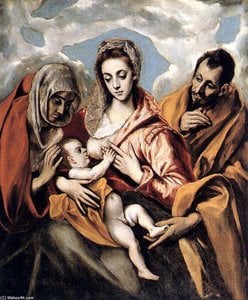
Antonio de Covarrubias

Experience El Greco's 'Portrait of Antonio de Covarrubias,' a dramatic Mannerist masterpiece capturing the wisdom and contemplation of a prominent Toledo jurist. Explore its rich details & historical context.

Уникална картина на Ел Греко, изобразяваща Светия Семейство в драматичен стил. Разкрийте красотата и дълбочината на тази емблематична творба от Златната ера на Испания.

Жикле / Художествен принт

Giclée печат или принт върху платно с музейно качество, бързо производство и гъвкави опции за завършен вид. (Купете ръчно рисувана картина Купете ръчно рисувана картинаКупете изображение Купете изображение)

P118B $10
P118H $10
P118W $10
P438Z $10
P508JH $12
P508YH $12
P805H $10
P805Z $10
P919BZ $10
P919G $10
P919XJ $10
P959ZH $10
P968JZ $12
W106C $8
W218G $10
W218JH $8
W218Y $10
W307PJ $10
W316G $10
W316PJ $8
W316Y $10
W398PJ $8
W4111J $10
W500HY $15
W500JH $15
W692G $12
W849H $8
W940BG $15
W953PJ $8

Стандартен
по поръчка
CM
INCH

Изберете от предварително зададените размери, които съответстват на оригиналните пропорции на произведението.

ширина
височина

Можете да въведете собствени размери, за да паснат на конкретна рамка или пространство. Ако избраният от Вас размер не съвпада с пропорциите на оригиналното изображение, ние ще изрежем произведението или ще разширим изображението с огледален или едноцветен ръб. Дигитален макет ще бъде изпратен за Ваше одобрение преди започването на производството.
Моля, имайте предвид, че предпрегледът на екрана не отразява реалното изрязване или разширяване. Само макетът ще покаже точно финалната композиция.
Въпреки че са налични персонализирани размери, препоръчваме да изберете размер от предварително дефинирания списък, за да запазите оригиналните пропорции.

Доставка по целия свят () в рамките на 2 седмици вместо стандартните 4/5 седмици. (6 Септември)

why_choose_icon
Безплатна експресна доставка по целия свят
why_choose_icon
Висококачествено ленено платно
why_choose_icon
Пълно застраховане при доставка
why_choose_icon
Гаранция за възстановяване на митнически такси
why_choose_icon
Гаранция за цветова точност
why_choose_icon
100-Дневен период за връщане (Само при дефекти)
why_choose_icon
100% Гаранция за връщане на парите
why_choose_icon
Предложение за отстъпка при поръчка на едро

Обща цена

$ 68

reproduction

Antonio de Covarrubias

Жикле / Художествен принт

Размер на репродукцията

-

Обща цена

$ 68

Бързи факти

  • Medium: Oil on canvas
  • Influences:
    • Venetian art
    • Byzantine
  • Subject or theme: Portrait of a Jurist
  • Movement: Mannerism
  • Notable elements: Dramatic lighting, Elongated figures
  • Artist: El Greco
  • Dimensions: 67.5 x 57.5 cm

Тест за изкуство

Има само един верен отговор за всеки въпрос.

Въпрос 1:
What artistic movement is most closely associated with El Greco’s style as depicted in the ‘Portrait of Antonio de Covarrubias’?
Въпрос 2:
The background of the painting features a view of which Spanish city?
Въпрос 3:
What is the primary material used in creating ‘Portrait of Antonio de Covarrubias’?
Въпрос 4:
Which of the following best describes El Greco's use of lighting in this portrait?
Въпрос 5:
According to the description, what is a key characteristic of Antonio de Covarrubias’s expression in the portrait?

Antonio de Covarrubias by El Greco: A Portrait of Quiet Contemplation

Doménikos Theotokópoulos, universally known as El Greco – “the Greek” – stands as one of the most enigmatic and profoundly influential figures in art history. Born on the island of Crete in 1541, his artistic journey took him through Venice and Rome before ultimately finding its resonant expression within the spiritual landscape of Toledo, Spain. Far from simply absorbing regional styles, El Greco synthesized their diverse influences into a strikingly individual aesthetic – a style that presages the emotional intensity of Expressionism and the fragmented forms of Cubism, centuries ahead of his time. His early training in the Byzantine tradition instilled an unwavering attention to detail and a deep understanding of religious iconography, yet this foundation wouldn’t confine him; he embraced new territories with audacious creativity. His signature, often rendered in Greek letters alongside “Krḗs” – “Cretan” – proudly declared his origins, even as he ventured into uncharted artistic realms. The seeds of El Greco's distinctive style were sown during his formative years, a complex blend of tradition and innovation that would define his legacy.

A Study in Shadow and Light: Deconstructing the Portrait

The “Portrait of Antonio de Covarrubias,” painted between 1595 and 1600, offers a compelling glimpse into El Greco’s masterful technique and profound understanding of human psychology. The painting depicts a bust portrait of Antonio de Covarrubias y Leiva, a prominent jurist, professor, and councilor in Toledo – a man whose life was marked by intellectual pursuits and quiet contemplation. El Greco eschews the conventional formality often associated with portraits of this era, instead presenting a figure imbued with an almost palpable sense of inner stillness. The composition is centered around the subject’s face and upper torso, framed against a muted, brownish-grey background that subtly suggests depth without distracting from the central focus. El Greco employs loose brushstrokes and expressive lines to define Covarrubias' features – elongated proportions, a slightly tilted head, and a gaze directed directly at the viewer, creating an immediate and engaging connection. The color palette is dominated by dark tones: deep browns, blacks, and greys punctuated by subtle highlights of white on the collar and beard. This chiaroscuro effect—a dramatic interplay of light and shadow—not only sculpts the form but also imbues the portrait with a sense of solemnity and introspection.

The Language of Mannerism and Baroque Influence

El Greco’s style is firmly rooted in Mannerism, an artistic movement that flourished during the High Renaissance, characterized by elongated proportions, stylized figures, and heightened emotional expression. However, his work also anticipates elements of the emerging Baroque style – a dynamic use of light, dramatic gestures, and a focus on intense emotion. Notice how El Greco deliberately distorts perspective, creating a sense of spatial ambiguity and drawing attention to the subject’s face. The texture is achieved through layered paint application, with visible brushstrokes that add a tactile quality to the portrait. The lack of sharp edges contributes to the painting's overall emotional intensity, conveying a feeling of vulnerability and quiet contemplation. This masterful manipulation of form and color speaks volumes about El Greco’s artistic genius – his ability to capture not just a likeness but also the very essence of his subject.

Symbolism and Historical Context: A Toledo Portrait

The “Portrait of Antonio de Covarrubias” is more than simply a representation of an individual; it's a window into the intellectual and cultural landscape of 16th-century Toledo. Covarrubias, a respected jurist and scholar, represents the flourishing of humanist thought in Spain during this period. His serious expression and contemplative gaze suggest a mind deeply engaged with philosophical and legal matters. The dark clothing he wears—a symbol of formality and status—underscores his position within Toledo’s civic elite. Interestingly, El Greco painted two portraits of Covarrubias: one residing in the Louvre in Paris, and another held by the Museo del Greco in Toledo. This suggests a close personal relationship between the artist and his subject, perhaps fueled by their shared interest in Greek philosophy and literature. The background, reminiscent of Toledo’s architecture, subtly reinforces the portrait's connection to its place of origin. The inclusion of the unfinished figure on the right, possibly representing another clergyman, adds an element of mystery and invites speculation about the social dynamics of the time.

A Legacy of Emotion: El Greco’s Enduring Impact

El Greco’s “Portrait of Antonio de Covarrubias” stands as a testament to his unique artistic vision – a synthesis of Byzantine tradition, Italian Mannerism, and Spanish Baroque influences. It is a portrait that transcends mere likeness, capturing not only the physical appearance of its subject but also his inner world—his thoughts, emotions, and perhaps even his solitude. El Greco’s dramatic use of light, shadow, and elongated forms continues to resonate with viewers today, reminding us of the power of art to evoke profound emotional responses. The painting serves as a poignant reminder of El Greco's ability to transform ordinary subjects into extraordinary works of art, solidifying his place as one of the most compelling and enduring figures in Western art history.

Биография на художника

Doménikos Theotokópoulos, Known As El Greco – A Pioneer Of Expressionism And Cubism

Doménikos Theotokópoulos, universally recognized as El Greco – “the Greek” – stands apart in the annals of Western art history. Born in Crete, Greece, around 1541, his artistic journey was marked by constant movement and transformation, culminating in a singular style that anticipated the revolutionary impulses of Expressionism and Cubism centuries later. He wasn’t merely responding to trends; he fundamentally reshaped visual language, forging a path toward modern art while retaining an unwavering devotion to Byzantine spiritual traditions.

Early Training And Cretan Roots

El Greco's formative years were steeped in the Orthodox faith of Crete, then under Venetian rule. His early artistic training focused on mastering the meticulous techniques of icon painting – a practice deeply rooted in Byzantine aesthetics—characterized by precise detail and symbolic representation. This foundational understanding profoundly influenced his subsequent work, informing his compositional choices and his use of color. The influence of Byzantine art is palpable in his earliest paintings, demonstrating an acute sensitivity to spiritual themes and a commitment to conveying profound emotion through visual imagery. His signature “Krḗs” – Cretan – served as a defiant assertion of his heritage, signaling both pride and artistic distinction amidst the cosmopolitan currents of Venice and Rome.

Venice And The Renaissance Masters

Around 1567, El Greco relocated to Venice, immersing himself in the vibrant artistic milieu of the Venetian Renaissance. This pivotal move exposed him to the towering figures of Titian, Tintoretto, and Veronese—masters who had revolutionized painting with their mastery of color, perspective, and dramatic lighting. He diligently studied their techniques, absorbing their expressive power and adapting them to his own distinctive vision. The Venetian influence is particularly evident in *St. Sebastian* (1600), where anatomical accuracy merges seamlessly with theatrical staging – a testament to El Greco’s ability to synthesize disparate artistic traditions. He skillfully employed oil paint, embracing its sensual qualities and experimenting with innovative compositional approaches.

Rome And Mannerism: A Difficult Embrace

A subsequent journey to Rome presented El Greco with a contrasting aesthetic landscape—the Mannerist style. While he demonstrated considerable talent in capturing the elegance and sophistication of Mannerist art, he struggled to gain acceptance within the competitive Roman artistic community. The elongated figures and distorted perspectives characteristic of Mannerism posed challenges to his ingrained Byzantine sensibilities, highlighting the difficulties inherent in reconciling tradition with innovation. Nevertheless, El Greco persevered, refining his technique and exploring new expressive possibilities—a testament to his unwavering determination as an artist.

Toledo And Spiritual Intensity

His final artistic home was Toledo, Spain – a city pulsating with religious fervor during the Counter- Reformation. This relocation provided El Greco with both patronage and an environment conducive to developing his intensely spiritual paintings. He found inspiration in the austere beauty of Toledo’s churches and monasteries, channeling his faith into monumental works that conveyed profound emotion and spiritual transcendence. *The Burial of the Count of Orgaz* (1586-1588), arguably his masterpiece, exemplifies this culmination of artistic vision—a breathtaking fusion of realism and mysticism that solidified El Greco's reputation as one of Spain’s greatest painters. The painting’s dramatic lighting, elongated figures, and symbolic imagery continue to captivate viewers today, embodying the enduring legacy of a truly singular artist.

A Lasting Impact On Art History

El Greco’s distinctive style—characterized by elongated figures, intense emotion, and theatrical lighting—anticipated the expressive fervor of Expressionism and Cubism centuries later. Artists like Picasso and Braque recognized him as a precursor to modern art, admiring his innovative use of form and color. His paintings resonated with the spirit of the avant-garde, demonstrating that artistic innovation could emerge from unexpected sources. El Greco’s legacy extends far beyond his own lifetime—he remains an icon of spiritual artistry and a testament to the transformative power of creative vision. He is remembered not merely as a painter but as a prophet of modern art, whose work continues to inspire artists and scholars alike.
Ел Греко

Ел Греко

1541 - 1614 , Гърция

Бързи факти

  • Artistic Movement Or Style: Ренесанс и Барокко
  • Artists Who Influenced This Artist:
    • Тициан
    • Тинторетто
  • Date Of Birth: 1541 г.
  • Date Of Death: 1614 г.
  • Full Name: Doménikos Θεοτοκόπουλος
  • Nationality: Гръцки-Испански
  • Notable Artworks:
    • Погребението на граф Оргоз
    • Панорама над Толедо
    • Разделен Христосъбитие
  • Place Of Birth: Крета, Гърция
Разгледайте произведения на изкуството, организирани по теми, стилове и характеристики.