Биография на художника
Edward William Godwin (1833-1886): Pioneering English Architect & Designer
Edward William Godwin, born in Bristol in 1833 and passing away in 1886, stands as a singular figure in Victorian design—a visionary who defied stylistic trends and championed an aesthetic rooted in profound intellectual curiosity. He wasn’t merely constructing buildings; he was crafting environments imbued with spirit, reflecting his unwavering belief that architecture should elevate the human experience. Godwin's career unfolded during a period of dramatic artistic transformation, moving from the opulent Ruskinian Gothic to embrace the revolutionary Anglo-Japanese style—a stylistic fusion that continues to inspire designers today. His influence extends far beyond his immediate projects, subtly shaping the burgeoning Arts and Crafts movement and establishing him as a pivotal voice in the dialogue between tradition and innovation.
Early Life and Artistic Foundations
Godwin’s formative years were marked by an upbringing steeped in artistic aspiration. Raised in Bristol's Earl’s Mead Estate—a sprawling garden residence dominated by a decaying church ruin—he absorbed the aesthetic principles of his father, a prosperous leather merchant, who instilled in him a lifelong fascination with historical forms and decorative arts. From a young age, Godwin demonstrated exceptional talent for draughtsmanship, meticulously copying illustrations from J.R. Planche's ‘A Cyclopaedia of Costume,’ capturing the intricate details of medieval dress and architecture—skills that would prove invaluable throughout his professional life. His apprenticeship to William Armstrong honed his technical abilities while simultaneously exposing him to the practical realities of architectural practice. This early training fostered a disciplined approach to design, prioritizing functionality alongside beauty—a cornerstone of Godwin’s artistic philosophy.
Architectural Achievements: Ruskinian Gothic and Beyond
Godwin's initial architectural successes solidified his reputation as a master craftsman in the Ruskinian Gothic style—a movement characterized by elaborate ornamentation inspired by medieval cathedrals. The Guildhall in Northampton, completed in 1863, exemplifies this aesthetic, featuring soaring arches, intricate tracery, and monumental sculptural elements—a testament to Godwin’s ability to revive historical grandeur while adhering to Ruskinian ideals of moral upliftment. Similarly, the Town Hall in Congleton showcased his skill for blending Gothic Revival principles with contemporary design considerations. Furthermore, his restorative work at Dromore Castle in Limerick demonstrated a meticulous attention to detail and an understanding of structural integrity—qualities that underpinned all his architectural endeavors. However, Godwin’s ambition extended far beyond replicating past glories; he sought to synthesize disparate influences into a wholly original vision—a pursuit that culminated in the groundbreaking Anglo-Japanese style.
The Anglo-Japanese Influence: Harmony in Form and Material
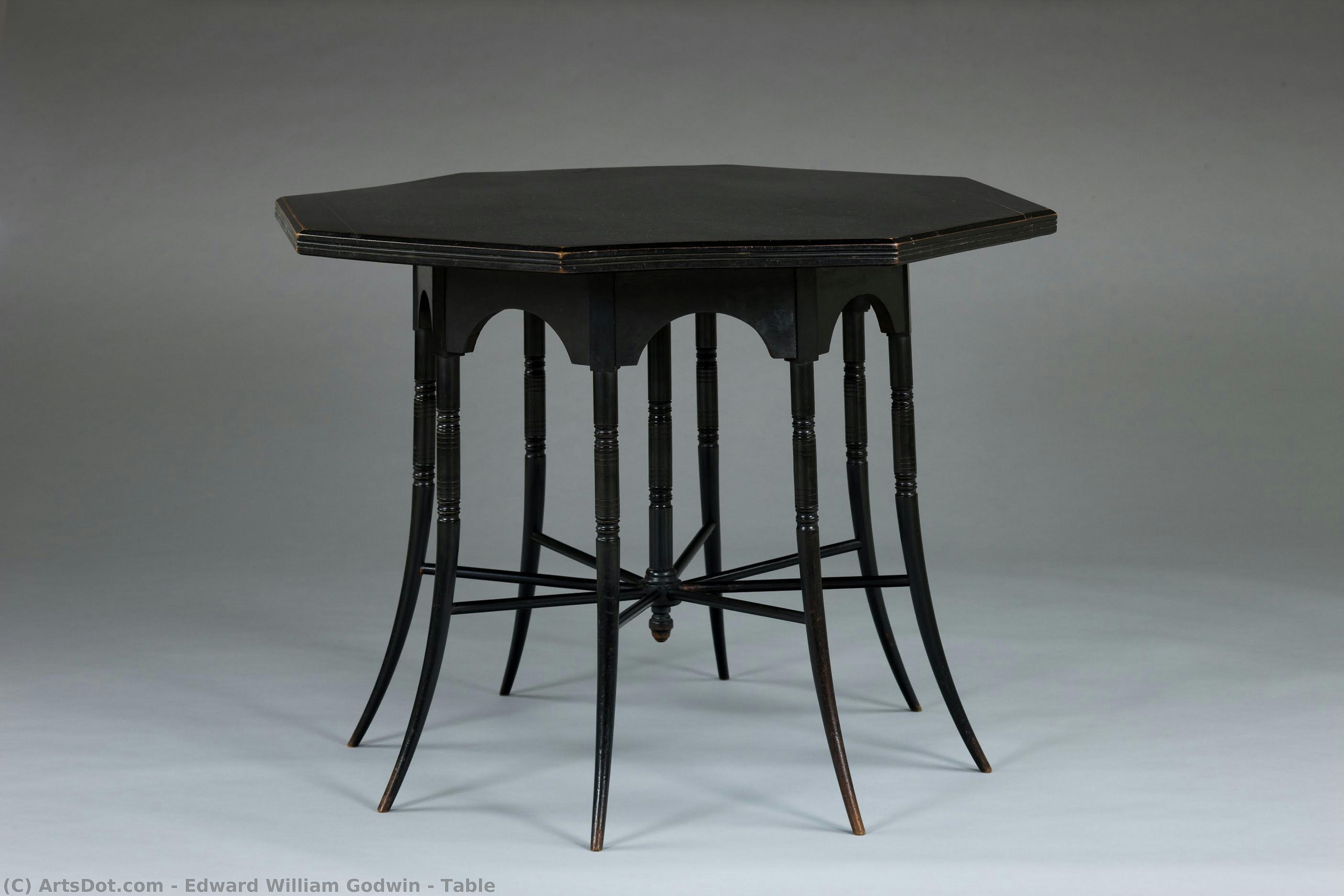
Godwin's embrace of Japanese aesthetics represented a radical departure from prevailing Victorian tastes. Influenced by the opening of Japan to Western trade in 1854, he recognized the potential for enriching design through dialogue with Eastern traditions—a conviction that drove him to explore minimalist forms, natural materials, and refined craftsmanship. His own home in Hertfordshire served as an embodiment of this aesthetic, featuring furniture crafted from ebony and ivory, walls adorned with Japanese silk panels, and decorative objects reflecting the serene beauty of Zen gardens—a bold statement against the excesses of Victorian ornamentation. Godwin’s collaboration with William Burges ignited his lifelong fascination with medieval costume and architecture, fostering a deep appreciation for craftsmanship and symbolic representation. This partnership yielded remarkable results, notably the design of Glenbegh Castle—a magnificent edifice that seamlessly blended Gothic Revival grandeur with Japanese decorative elements.
Legacy and Influence: Shaping Modern Design
Godwin’s contribution to the Arts and Crafts movement cemented his place as one of the foremost designers of his era—a champion of simplicity, functionality, and artistic integrity who anticipated many principles of modern design. His meticulous attention to detail—evident in his furniture designs for Bedford Park and his innovative use of materials—reflected a belief that beauty should arise from careful consideration of both form and function. Godwin’s influence extended beyond the realm of architecture; he collaborated closely with James McNeill Whistler on “Harmony in Yellow and Gold,” designing the interior of Whistler's Chelsea studio—a project that exemplifies his holistic approach to artistic expression. Moreover, Godwin’s unwavering conviction that buildings should inspire contemplation and elevate human consciousness foreshadowed the humanist ethos of twentieth-century design—a legacy that continues to resonate within contemporary art and architecture. His pioneering spirit—a willingness to challenge conventions and embrace new influences—established him as a true visionary who irrevocably transformed the aesthetic landscape of Victorian Britain.