Биография на художника
A Life Etched in the West
Charles Marion Russell, affectionately known as “C.M.” or “Kid” Russell, не беше роден в света, който толкова ярко ще изобрази на платното и бронза. Роден в Свети Луи, Мисури, през 1864 г., ранният му живот не беше потопен в формално художествено обучение, а в поглъщащо очарование от американския Запад – свят, първоначално преживяван чрез истории и скици, подхранван от почти романтично копнеене за открити пространства и непокътна свобода. Тази първоначална страст ще го тласне на запад, оставяйки традиционното образование в шестнадесетгодишна възраст, за да стане работник-пастир в Монтана, в долината Юдит, където той се опита да преследва живота, който толкова ярко си представя. Беше смело решение, целенасомено потапяне в живота, който толкова искрено възприемаше, и се оказа решаващо за формирането на неговата художествена визия. Russell не просто *изобрази* Запада; той го живееше, дишаше праха му и усвояваше ритмите му. Този първичен опит ще стане основата на неговото трайно наследство. В продължение на дванадесет години той посвети живота си на суровата същност на пастирския живот, работата като стопанин на добитък, пастир и гончар, преживявания, които му предоставиха интимно разбиране за пейзажа, животните и, най-важното, хората, които го населяваха – пастирите, коренното население и траперитите, чиито животи той толкова силно ще изобрази.
От Пастир до Хронист
Художественият път на Russell не беше един на целенасочено академично развитие, а по-скоро органично разгръщане, родено от необходимостта и наблюдението. Докато работи като пастир, той започна да скицира сцени от ежедневието си – маркиране на добитък, събиране на коне, срещи със диви животни – улавяйки моменти, които резонират с дивата красота и вградената драма на Запада. Тези не бяха полирани произведения, предназначени за галерии; те бяха лични записи, визуални дневници, документиращи начин на живот, който бързо изчезваше. Ранните му творби се характеризираха с забележителна естественост, остър поглед към детайла, усъвършенстван чрез години наблюдение на нюансите на околната среда. Той не беше заинтересован от романтизиране или идеализиране на Запада; той търсеше да го изобрази такъв, какъвто *беше*, с всички свои трудности и слава. Ключов момент се случи след като нарисува плакат, представящ добитък, мъчейки се в сурова зима – сцена, толкова въздействаща, че предизвика търсене на неговото изкуство, позволявайки му да премине от пастир към пълноценен художник през 1893 г. Това бележи началото на плодотворна кариера, обхващаща живопис, скулптура и писане, всички обединени от непоклатимата си ангажираност да представят автентичната душа на американския Запад. Той не беше просто художник; той беше визуално историк, методично документирайки изчезващ свят преди да го забрави.
Улавяне на Изчезващ Свят: Теми и Техники
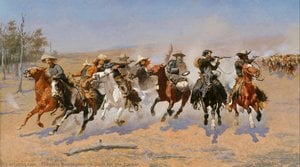
Изкуството на Russell е дълбоко пронизано от наратив – всяка картина разказва история, често потопена в митовете и реалностите на живота на фронтъра. Неговите предмети са разнообразни, но постоянно се фокусират върху взаимодействията между пастири, коренното население и дивата природа. Той не се колебаеше да изобразява конфликти, но неговите представяния рядко бяха сензационни; вместо това те предават чувство за уважение към всички замесени, признавайки сложността на променящия се свят. "Bad Hoss" (1904 г.), например, илюстрира това – динамична сцена, улавяща борбата между пастир и скачащ кон, олицетворяваща както умението, така и опасността, присъщи на живота на пастир. Подобно е и "Битката в река Бели" (1905 г.), която демонстрира способността му да изобразява драматични исторически събития с точност и емоционална дълбочина. Неговата техника се развива през годините, преминавайки от по-илюстративен стил към по-свободни мазки и по-наситен цвят. Той беше майстор на разказване на истории, използвайки композиция, светлина и сянка, за да създаде убедителни наративи, които дълбоко резонират с публиката, жадна за връзка с романтиката и суровостта на Запада. По-късните му творби често включват повишен драматизъм и емоционална интензивност, отразяващи неговото нарастващо зрялост като художник и по-дълбокото си разбиране за човешкото състояние. *Той разбра, че истинската красота на Запада не лежи само в пейзажите му, но и в издръжливостта и духа на тези, които го населяваха.*
Наследство и Последователно Въздействие
Влиянието на Charles Marion Russell върху американското изкуство е неоспоримо. Той не беше просто художник на западни пейзажи; той *определи* ги за поколения. Неговото изкуство помогна да се оформи популярният образ на пастира, коренното население и огромните пейзажи на Запада, повлиявайки на безброй художници, които следваха неговия пример. Той стана известен като “художникът на пастирите” не само заради предметите си, но и за автентичното си представяне на живота в Запада – представяне, основано на личен опит, а не на романтизирана фантазия. Днес неговите картини и скулптури се търсят от колекционери и музеи по целия свят. C.M. Russell Museum Complex в Грейт Фоллс, Монтана, служи като свидетелство за неговото трайно наследство, съхранявайки обширна колекция от неговите творби, лични предмети и артефакти. Неговите фрески, като "Среща между Лис и Кълк и коренното население в дупка на Флатхед", продължават да вдъхновяват възхищение и признание, служейки като мощни напомняния за ключов момент в американската история. Russell не беше просто художник; той беше свидетел на променящия се свят и адвокат за тези, чиито гласове често бяха игнорирани. Това му ангажимент към автентичност, в комбинация с неговия художествен талант, утвърди мястото му като един от най-важните и обичани американски художници – хронист на изчезващ начин на живот и защитник на културното разбирателство.
Отвъд Платното: Глас за Промяна
Russell не беше просто художник; той също така беше адвокат. Той разви дълбоко уважение към коренните американски култури по време на престоя си в Монтана и Канада, и използва изкуството си, за да предизвика съществуващите стереотипи и да насърчи разбирателството. Активно подкрепяше усилията на племето Шипоу (Chippewa) за установяване на резервация в Монтана, дори лобирайки в Конгреса от тяхно име. Тази ангажираност към социална справедливост често се пренебрегва, но представлява важен аспект от неговия характер и художествена визия. Той вярваше, че е важно да документирате и запазите коренните американски традиции, преди те да бъдат загубени завинаги – убеждение, отразено в много от картините и скулп



 Представи си го
 Превключване към принт
 Изпрати
 Сподели
 Детайли

 Изтегляне
 Подобни
 Рентгенова снимка
 Слайдшоу
 Статистика


 Прочетете повече






































 Стъклото е налично само в размери под 110 см