A Pioneer Bridging Worlds: The Life and Legacy of Benjamin West
Benjamin West, роден през 1738 г. в Спрингфийлд, Пенсилвания – град, който днес е част от Свартмор, – се очертава като ключова фигура в трансатлантическия художествен свят, художник, който умело преминаваше между теченията на Неокласицизма и Романтизма, докато същевременно формираше уникална американска художествена идентичност. Историята му е свидетелство за забележително самообразование, непоколебима амбиция и изключителен талант да се свързва както с аристократични покровители, така и с революционни идеали. От скромно начало – негов баща бил собственик на кръчма в Спрингфийлд – ранният му талант беше развит благодарение на ранен контакт с изкуството, като се смята, че е усвоил основни техники от местните племена преди да получи каквато и да е формална подготовка. Този необичаен старт вдъхнови в него дух на иновация, който ще характеризира цялата му кариера. Бързо се утвърди като търсен портретист в Филаделфия и Ню Йорк, но жаждата за по-дълбоки художествени познания го подтикна към пътуване в Европа през 1760 г., което започна пътешествие, което неминуемо ще промени курса на американското изкуство.
От Италия до Лондон: Формиране на Път към Признание
Пристигането на West в Италия бе поворотна точка. Потапяйки се в художественото сърце на Европа, той изучаваше майсторите – Тициан, Рафаел – и общуваше с неокласни мислители като Антон Рафаел Мегс и Анджела Кауфман. Този период беше от съществено значение за оформянето на неговите естетически възприятия, внушавайки му признателност за класическа форма и исторически наратив. Въпреки това Лондон се превърна в неговия краен дом и художествен център. Пристигайки през 1763 г., West бързо се издигна в йерархията на британската художествена сцена, очаровайки публиката с амбициозните си картини и осигурявайки покровителство от крал Джордж III. Това кралско одобрение не само осигури финансова стабилност, но и затвърди неговата позиция като водеща фигура в елита. Определящ момент дойде с избора му в Кралската академия през 1769 г., институция, която по-късно той председаеше от 1792 г. до смъртта си. Неговото влияние се простираше отвъд неговата собствена художествена продукция; West стана шампион за американски художници, търсещи обучение в Европа, предлагайки насоки и подкрепа на поколения млади творци.
Революциониране на Историческото Живопис: Техника и Скандал
Влиянието на West върху художествения свят не се свеждаше само до постигане на техническо майсторство; ставаше въпрос за предизвикване на конвенциите. Той смело преосмисли историческото живопис, отказвайки се от стриктното придържане към класическия модел и приемайки по-съвременна чувствителност.
„Смъртта на генерал Уоlf“ (1770), най-известната му творба, е пример за тази революционен подход. Като представя падналия генерал заобиколен от фигури в *съвременни* военни униформи вместо традиционните римски дрехи, West предизвика значителна дискусия. Критиците поставяха под въпрос историческата точност, но публиката беше очарована от непосредствеността и емоционалната резонанс на сцената. Този смел ход сигнализираше за промяна в стила на представяне на историческите картини, повлиявайки на безброй художници, които следваха неговия пример. Неговият стил се развива през годините, интегрирайки елементи на Романтизма в по-късните си творби, но винаги запазвайки ангажимент към амбициозна композиция и детайлно изпълнение. Други забележителни произведения като
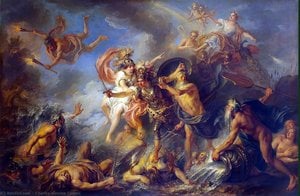
Тетис, донасяща бронята на Ахил,
Три сестри,
Уплашен Астианакс и
Пещерата на отчаянието демонстрират неговата универсалност и майсторство в широк спектър от митологични и исторически теми.
Влияния и Вдъхновения
West беше силно повлиян от творбите на Тициан, Рафаел, Мегс и Кауфман, както и от идеите на немския археолог и художник Йохан Винкелман относно неокласическата екология. Той също така изучаваше работата на италиански Ренесансови и барокови майстори, което му помогна да развие своя уникален стил. Неговата способност да се свързва с различни култури и художествени традиции допринесе за неговия успех като художник.
Основни постижения и историческо значение
Benjamin West остави трайна следа в историята на изкуството, утвърждавайки историческото живопис като жизненоважна жанр за американски художници и насърчавайки чувство за национална художествена идентичност. Неговото председателство на Кралската академия затвърди влиянието му върху британското изкуство, насърчавайки иновациите и подкрепяйки нововъзникващи таланти.
- Той пропагандира по-достъпен и емоционално ангажиращ стил на представяне на историческите сцени.
- Неговата работилница се превърна в убежище за американски художници, търсещи обучение в Европа.
- Той свърза Неокласическите идеали с развиващия се Романтизъм.
West’s innovative spirit, coupled with his diplomatic skills and unwavering dedication to his craft, earned him lasting recognition as “the American Raphael.” He died in London in 1820, leaving behind a body of work that continues to inspire awe and admiration. His story serves as a testament to the power of artistic vision, the importance of cultural exchange, and the enduring legacy of an artist who dared to challenge conventions and forge his own path.



 Преглед в реален мащаб
 Избор на принт
 Сподели
 Сподели
 Подробности
 Ръководство

 Изтегляне
 Подобни артикули
 Рентгенова снимка
 Слайдшоу
 Статистика


 Разгърни целия текст