

Giclée печат или принт върху платно с музейно качество, бързо производство и гъвкави опции за завършен вид. ( Купете ръчно рисувана картина Превключване към дигитално изображение)





























Изберете от нашите предварително зададени размери, които съответстват на оригиналните пропорции на произведението.

Въведете необходимата ширина и височина, за да паснат на вашата рамка или стена. Принтовете могат само да се изрязват, но никога не могат да бъдат по-големи от оригиналната картина, така че при размер с различен формат част от изображението ще бъде загубена. Преди да започнем печат, ще ви изпратим дигитален мок업 за одобрение. Изображението, показано на тази страница, не показва реалното изрязване — само мок업ът го показва.
Доставка по целия свят () в рамките на 2 седмици вместо стандартните 4/5 седмици. (6 Ноември)
Brooch
Размер на репродукцията
The English architect and designer Augustus Charles Pugin’s work is often associated with the grandeur of the Palace of Westminster, but within his lesser-known realm of jewelry lies a captivating testament to his artistic vision – the “Brooch,” a piece that whispers of medieval splendor and personal devotion. Crafted in 1848, this brooch isn't merely an ornament; it’s a miniature embodiment of Pugin’s fervent belief in the restorative power of Gothic design, a philosophy he championed alongside his friend John Ruskin.
The piece itself is a study in restrained elegance. Constructed from meticulously enamelled gold, its surface shimmers with a subtle depth achieved through layers of translucent color. At the brooch's heart rests a vibrant green gemstone – likely emerald or malachite – surrounded by a constellation of smaller blue gems, perhaps sapphires or lapis lazuli. A delicate, stylized heart shape is subtly integrated into the design, echoing the romantic ideals that fueled Pugin’s life and work. The intricate patterns swirling around this central motif are deeply rooted in medieval ecclesiastical decoration, drawing inspiration from the rich symbolism found within Gothic cathedrals – a deliberate nod to the spiritual values he sought to revive.
This brooch is part of a larger “parure,” a set of jewelry designed by Pugin for a woman he hoped to marry, his third wife. The story behind this particular piece is poignant; the marriage never materialized, and instead of being discarded, the parure was gifted to Jane Knill, Pugin’s second wife, in 1848. This intimate connection imbues the brooch with a layer of personal history—a testament to unfulfilled dreams and enduring affection. The complete parure, showcased at the Great Exhibition of 1851 as part of the “Medieval Court,” offered a glimpse into Pugin’s artistic world for a wider audience, solidifying his reputation as a leading figure in the Gothic Revival movement.
Pugin's design philosophy extended far beyond mere aesthetics; he believed that every element within a building or object should carry symbolic weight. The heart shape, for instance, represents love and devotion – a potent symbol considering the circumstances surrounding its creation. The swirling patterns, reminiscent of tracery found in Gothic windows, evoke a sense of spiritual aspiration and connection to the divine. The use of vibrant colors—the deep greens and blues—were carefully chosen not only for their beauty but also for their association with sacredness and royalty within medieval iconography. This brooch is therefore more than just jewelry; it’s a visual meditation on faith, love, and artistic revival.
Today, reproductions of the Pugin Brooch offer art lovers and interior designers alike an opportunity to experience the beauty and sophistication of this remarkable piece. When selecting a reproduction, it’s crucial to choose one that faithfully captures the original's intricate details – the delicate enamelling, the precise gemstone settings, and the subtle interplay of color. A well-crafted reproduction allows us to appreciate Pugin’s genius not just as an architect but as a master craftsman and a visionary artist who sought to bring the elegance and spiritual depth of the Gothic era back to life.
Black (#030303) е водещият цвят на „Brooch“ на Augustus Charles Pugin.
"Brooch" има Elegant атмосфера.
Цветовата идентичност на „Brooch“ на Augustus Charles Pugin: палитра от Earthy, доминирана от Black (#030303).

In the grand tapestry of nineteenth-century design, few threads are as intricate or as influential as those woven by Augustus Charles Pugin. A figure whose work bridged the gap between meticulous scientific observation and the romanticized grandeur of the past, Pugin emerged as a pivotal force in the Gothic Revival movement. Though his name may not always command the immediate recognition of the great masters of oil painting, his impact on the very fabric of British architecture and decorative arts remains profound. Born into an era of rapid industrial transformation, he dedicated his life to capturing the soul of the Gothic style, ensuring that the elegance of medieval craftsmanship was not lost to the encroaching shadows of modernity.
Pugin’s journey was one defined by a deep, scholarly devotion to the structural and ornamental nuances of history. As a French-born British artist, draughtsman, and writer, he possessed a unique dual perspective—the precision of a continental trained eye paired with an intense passion for the English architectural heritage. His early mastery of the draughtsman’s craft allowed him to document the complexities of stone, wood, and glass with an accuracy that was both artistic and educational. Through his detailed illustrations, he did more than merely record buildings; he breathed life into their forgotten details, inviting a new generation to rediscover the spiritual and aesthetic power of the Gothic form.
The true significance of Pugin’s contribution lies in his ability to translate historical motifs into a functional language for contemporary design. He was not merely a nostalgic observer but a visionary who understood that for an architectural style to survive, it must be documented, studied, and then re-applied to the living world. His seminal work, Specimens of Gothic Architecture, serves as a testament to this dedication. In these pages, his pen traced the delicate tracery of windows, the strength of pointed arches, and the intricate patterns of medieval ornamentation, providing a blueprint for the architects who would follow in his footsteps.
His influence extended far beyond the printed page, permeating the realms of:
Through his tireless work as a designer and writer, Pugin helped shape the visual identity of an era. His ability to blend the technical rigor of a draughtsman with the poetic sensibility of an artist allowed him to influence not just the way buildings looked, but the way people perceived the relationship between history, art, and the built environment. He remains a cornerstone figure for anyone seeking to understand the resurgence of medievalism in the nineteenth century, leaving behind a legacy of intricate beauty that continues to inspire awe and reverence.

1812 - 1852 , France

Embark on a visual journey through the world's most radiant masterpieces. Discover how gold leaf, impasto textures, and gilded tones define luxury in fine art, from Byzantine icons to modern abstracts. Explore the eternal allure of gold in curated, museum-quality art collections.

Embark on a journey through the dramatic era of Gothic art. Discover the profound beauty of illuminated manuscripts, sacred gold leaf masterpieces, and the transition to naturalism in this expert-led exploration of medieval artistry and historical grandeur.

Explore the exquisite elegance of Late Gothic art. Discover how masters like Carlo Crivelli and Stefan Lochner blended intricate detail and religious devotion to bridge the Middle Ages and the Renaissance in this expert art history guide for true connoisseurs.
Explore the exquisite elegance of International Gothic art. Discover the mastery of illuminated manuscripts, the brilliance of gold leaf, and the legacy of the Limbourg Brothers in this expert guide to Europe's sophisticated medieval dawn.
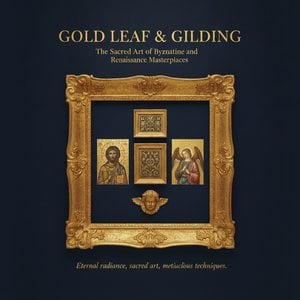
Explore the divine mastery of Byzantine gold leaf and gilding. Discover how ancient artisans used gold ground and mosaics to create celestial light, a timeless legacy of spiritual splendor and technical excellence in sacred art history.
 Преглед в реален мащаб
 Изпрати
 Сподели
 Детайли
 Ръководство

 Изтегляне
 Подобни артикули
 Рентгенова снимка
 Слайдшоу
 Въпроси и отговори
 Статистика


 Прочети повече









 Опцията със стъкло е налична само за размери под 110 см


