Получете файл, готов за печат, който предлага много по-високо качество от уеб прегледа. Всяко дигитално изображение, което предлагаме, е извлечено от висококачествен оригинал в нашата база данни — обикновено с ширина между 5 000 и 15 000 пиксела — така че със сигурност да можете да принтирате в голям формат, да кадрирате тесно или да възпроизведете фините детайли.
Нито един файл не напуска нашето студио без внимание. Дигитален експерт проверява цветовете спрямо оригиналната картина и ги коригира при необходимост, след което подобрява яснотата и детайлите с професионални инструменти за ретуш — винаги оставайки верен на мазките и стила на художника. Резултатът е изображение, което изглежда като самата картина, а не като сканиран образ с филтър.
Одобрявате преди финализиране: нашият експерт ще изпрати изображението по имейл в рамките на 72 часа за ваш преглед. Не сте доволни? Можете да поискате подобрения или корекции, или пълно възстановяване на сумата, ако качеството не отговаря на очакванията ви.
Това е качеството, на което разчитат издателства, дизайн студиа, галерии и печатници.
Изтеглете файл с висока резолюция за лично съхранение, принтиране и творчески проекти. ( Превключване към принт Купете ръчно рисувана картина)
Избирайки WahooArt.com, вие не получавате просто изображение – вие придобивате професионално обработена дигитална творба, създадена с прецизност и подкрепена от гаранция за удовлетворение. Ето какво автоматично е включено във вашата поръчка:
Вашето дигитално изображение с висока резолюция ще бъде изпратено по имейл в рамките на 72 часа от поръчката – готово за незабавно използване.
Вашата картина е професионално оптимизирана чрез усъвършенствани инструменти с изкуствен интелект и ръчна редакция, което гарантира максимална детайлност, яснота и точност на цветовете.
Изгубили сте или сте изтрили файла си по погрешка? Не се притеснявайте – ще го изпратим отново на Вас по всяко време, безплатно.
Насладете се на вашето произведение незабавно, без мита, такси или разходи за доставка – дигиталните изтегляния винаги са освободени от данъци.
Гарантираме, че вашето дигитално изображение отразява оригиналните цветове възможно най-точно чрез използването на професионални инструменти и системи за управление на цветовете.
Ако не сте доволни от вашето дигитално изображение, ще го преработим или ще възстановим 100% от сумата в рамките на 100 дни – без излишни въпроси.
Не сте доволни? Получете пълен възврат на сумата в рамките на 100 дни от получаването на вашия цифров файл – без излишни въпроси.
Купете 3 изображения, спестете 10% - Купете 5, спестете 15% - Купете 10+, спестете 20%. Идеално за творчески проекти, галерии и агенства.
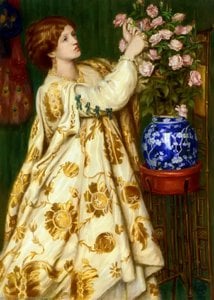
Anthony Frederick Augustus Sandys's “Grace Rose,” painted in 1866, is more than just a portrait; it’s a meticulously crafted tableau vivant, a shimmering glimpse into the opulent world of Victorian society and infused with the evocative spirit of the Pre-Raphaelites. This captivating work, now housed at the Yale Center for British Art, reveals Sandys's profound understanding of color, texture, and symbolic detail – elements that elevate it beyond a simple likeness to a richly layered exploration of beauty, femininity, and the allure of antiquity.
The subject herself, Grace Charlotte Rose, was a woman of considerable social standing, the daughter of Captain Winterton Snow and wife of Sir William Anderson Rose. Sandys’s choice to depict her in such exquisite detail speaks volumes about the importance placed on lineage and status within Victorian society. However, it's not merely a celebration of wealth; rather, the painting subtly hints at a deeper narrative woven through carefully chosen motifs. The elegant pose, the delicate lace trim, and the shimmering pearls all contribute to an atmosphere of refined grace, while simultaneously grounding the portrait in a tradition of aristocratic portraiture.
Sandys’s technical mastery is immediately apparent. He employs a rich, velvety impasto technique, building up layers of paint to create a tactile surface that invites close inspection. The delicate rendering of Grace's silk dress, the subtle sheen of her jewelry, and the intricate details of the antique vase all demonstrate his exceptional skill in capturing texture and light. Notably, Sandys deliberately avoids the stark realism favored by earlier portraitists, instead opting for a softer, more atmospheric approach—a hallmark of Pre-Raphaelite painting.
The composition is carefully orchestrated to draw the viewer’s eye through a series of interconnected elements. The green marble parapet, reminiscent of Italian Renaissance architecture, provides a dramatic backdrop for Grace and establishes an immediate connection to classical antiquity. The arrangement of the pink, crimson, and yellow roses within the vase isn't merely decorative; it speaks to themes of beauty, love, and fleeting moments—a common preoccupation in Pre-Raphaelite art. The inclusion of Japanese painted screens, a popular motif during this period (Japonisme), further enhances the sense of exoticism and adds another layer of visual richness.
“Grace Rose” occupies a fascinating space between the Pre-Raphaelite Brotherhood and the burgeoning aesthetic movement. Sandys, like many artists of his time, was drawn to the Pre-Raphaelite’s emphasis on beauty, detail, and mythological subjects, but he also embraced the aesthetic movement's fascination with decorative arts and exotic influences. The painting’s opulent details—the gold jewelry, the intricate vase, the Japanese screens—reflect this dual sensibility.
The choice of a Japanese screen as a backdrop is particularly significant. It represents a deliberate attempt to incorporate elements of Eastern art into a Western context, aligning with the aesthetic movement's interest in creating visually stimulating and emotionally evocative works. Furthermore, Sandys’s use of color—the rich reds, greens, and golds—is deliberately heightened, creating a sense of dramatic intensity that is characteristic of both Pre-Raphaelite and aesthetic paintings.
Ultimately, “Grace Rose” transcends its formal elements to evoke a powerful emotional response. The portrait captures not just Grace’s physical appearance but also her inner grace and dignity. The subtle gaze, the delicate expression, and the overall atmosphere of quiet elegance suggest a woman of considerable intelligence and refinement. It's a painting that invites contemplation—a reminder of the beauty and complexity of Victorian society and the enduring power of art to capture the essence of human experience.
„Grace Rose“ на Фредерик Сандс може да бъде изтеглен от страницата за Изтегляне на дигитален файл на произведението, като дигитално изтегляне на изображение с висока резолюция.
За „Grace Rose“ на Фредерик Сандс се препоръчва репродукция с размер Medium. Размерът може да бъде променен, като се запазят пропорциите.
Цветовата идентичност на „Grace Rose“ на Фредерик Сандс: палитра от Earthy, доминирана от Walnut (#7f5827).


1829 - 1904 , Великобритания
 Преглед в реален мащаб
 Изпрати
 Сподели
 Детайли
 Ръководство

 Изтегляне
 Подобни артикули
 Рентгенова снимка
 Слайдшоу
 Въпроси и отговори
 Статистика


 Прочети повече