Избор на принт Превключване към дигитално изображение Сподели
Подробности Ръководство Добави в любими Изтегляне Подобни артикули Слайдшоу Статистика

St Mark

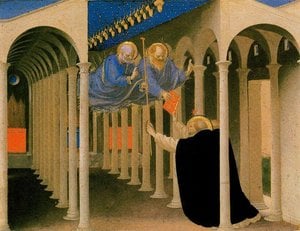
Andrea del Castagno’s ‘St Mark,’ painted in 1442, showcases Saint Mark holding a book on a boat, symbolizing faith and contemplation amidst Venetian culture. This fresco exemplifies early Renaissance artistic style, influenced by Masaccio and Giotto.

Разгледайте Ренесансовия свят на Андреа дел Кастагно (ок. 1419 г.)! Открийте драматичните му фрески, иновативния „Последна трапеза“ и неговото трайно влияние върху флорентинското изкуство. Майстор на реализма и емоцията.

Ръчно изработена маслена репродукция

Ръчно рисувана маслена картина върху платно във вашия размер и рамка, изработена по поръчка от нашите художници. ( Избор на принт Превключване към дигитално изображение)

Стандартен размер
по поръчка
CM
INCH

Изберете от нашите предварително зададени размери, които съответстват на оригиналните пропорции на произведението.

ширина
височина

Можете да въведете свои собствени размери, за да паснат на конкретна рамка или пространство. Ако избраният от вас размер не съответства на пропорциите на оригиналното изображение, ние ще изрежем произведението или ще разширим картината с допълнителни ръчно рисувани елементи. Дигитален макет ще бъде изпратен за ваше одобрение преди започване на производството.
Моля, обърнете внимание, че предпрогледа на екрана не отразява действителното изрязване или разширяване. Само макетът ще покаже точно финалната композиция.
Въпреки че са налични персонализирани размери, препоръчваме да изберете размер от предварително дефинирания списък, за да запазите оригиналните пропорции.

Примери за възможности за персонализация: Заменете лицето с фотография на клиента; Добавете домашен любимец (например заменете котка с куче); Включете скрито послание на фона; Променете пейзажа или елементите на фона.
След получаване на поръчка, екипът на WahooArt.com ще изпрати имейл до клиента с инструкции и ще предостави примерен макет за преглед.

Доставка по целия свят () в рамките на 3-4 седмици вместо стандартните 5 седмици. (22 Септември). Без компромис с качеството.

why_choose_icon
Безплатна експресна доставка по целия свят
why_choose_icon
Висококачествено ленено платно
why_choose_icon
Пълно застраховане на доставката
why_choose_icon
Гаранция за възстановяване на митнически такси
why_choose_icon
Гаранция за пълно съответствие на цветовете
why_choose_icon
Политика за връщане в рамките на 100 дни (само при дефекти)
why_choose_icon
100% Гаранция за връщане на сумата
why_choose_icon
Отстъпка при поръчка на повече произведения

Обща сума

$ 272

reproduction

St Mark

Техника на репродукция

Размер на репродукцията

-

Крайна цена

$ 272

Бърза информация

  • Artist: Andrea del Castagno
  • Subject or theme: Religious iconography
  • Title: St Mark
  • Year: 1442
  • Artistic style: Realistic
  • Medium: Fresco
  • Notable elements or techniques: Perspective construction

Квиз за изкуство

За всеки въпрос има само един верен отговор.

Въпрос 1:
What is the primary subject matter depicted in Andrea del Castagno’s painting, ‘St Mark’?
Въпрос 2:
In what year was Andrea del Castagno commissioned to paint portraits of citizens executed after the Battle of Anghiari?
Въпрос 3:
The fresco ‘St Mark’ utilizes a technique known for its pioneering use of perspective, influenced by Masaccio. What is this technique called?
Въпрос 4:
According to historical records, Andrea del Castagno’s nickname ‘Andrea degli Impiccati’ refers to...
Въпрос 5:
What is one notable characteristic of Mark’s depiction of the Crucifixion compared to other artistic representations of similar themes?

A Vision of Venetian Faith: The Divine Presence in St Mark

In the heart of the Early Renaissance, amidst the salt-misted air of Venice, Andrea del Castagno breathed life into a vision of spiritual fortitude that continues to captivate the modern soul. His 1442 fresco, St Mark, is far more than a mere religious depiction; it is a profound meditation on the human journey toward the divine. As the patron saint of Venice, Mark is presented not as a distant icon, but as a palpable, commanding presence seated upon a boat, his gaze directed upward in a moment of celestial connection. The scene unfolds with a sense of movement and purpose, as pilgrims navigate the waters, their very existence a metaphor for the Christian quest for salvation and the arduous pilgrimage toward Jerusalem.

To behold this work is to witness the transformative power of naturalism. Heavily influenced by the revolutionary techniques of Masaccio, Castagno moved away from the ethereal, flattened aesthetics of the Gothic era to embrace a rugged, anatomical realism. Every muscle, every fold of fabric, and every gesture is rendered with an unprecedented precision that lends the figures a sculptural weight. This mastery of form is paired with an innovative use of perspective, creating a spatial depth that draws the viewer into the boat alongside the saint. The artist’s command over the fresco technique—applying pigment to wet plaster—has preserved a luminous vibrancy in the blues and reds, ensuring that the emotional intensity of the scene remains as striking today as it was in the fifteenth century.

Symbolism and the Renaissance Spirit

Every element within Castagno’s composition serves a higher narrative purpose, weaving a complex tapestry of meaning for the observant viewer. The book held aloft by Saint Mark is not merely an object of study but a potent symbol of divine revelation and the enduring power of sacred knowledge. As the figures surround him, their presence underscores the communal nature of faith, suggesting that the path to holiness is one traveled by many. This interplay between the individual saint and the collective group of pilgrims creates a rhythmic tension between solitude and community, much like the historical tensions Venice faced regarding papal authority and humanist progress.

For the collector or the interior designer, a reproduction of St Mark offers more than just aesthetic beauty; it brings a sense of historical gravity and intellectual depth to a space. The painting’s ability to evoke solemn reverence through its masterful use of light and shadow makes it an ideal centerpiece for environments that value contemplation and classical elegance. It is a piece that invites conversation, bridging the gap between the turbulent politics of the 1440s and the contemporary desire for art that possesses both physical presence and spiritual resonance. To display this work is to invite a fragment of the Renaissance spirit—a testament to resilience, faith, and the eternal human search for meaning—into the modern home.


Биография на художника

Andrea del Castagno: A Florentine Renaissance Master

Andrea del Castagno, pseudonym of Andrea di Bartolo di Simone, stands as a cornerstone of the Florentine Renaissance, embodying its fervent embrace of naturalism and psychological depth. Born around 1419 in Castagno d’Andrea – a village nestled near Monte Falterona – his early life unfolded amidst the turbulent backdrop of warfare between Florence and Milan, shaping his formative years under the shadow of familial upheaval before finding stability within the Medici patronage. Little is known about his formal artistic training; however, scholarly consensus points to mentorships with Fra Filippo Lippi and Paolo Uccello as pivotal influences, absorbing their groundbreaking techniques while forging a distinctive path that would propel him to artistic prominence.

Early Years and Artistic Influences

The genesis of Andrea del Castagno’s artistic vision can be traced back to Giotto di Bondone – whose expressive figures and masterful use of perspective served as an undeniable catalyst for innovation within Florentine painting. Like Giotto, Castagno championed a departure from the stylized conventions of Gothic art, prioritizing emotional resonance and anatomical accuracy—a stylistic decision that would resonate throughout his oeuvre. Vasari’s biographical account recounts tales of Andrea's youthful fascination with drawing animals on slabs of stone – a motif frequently employed by Renaissance artists to convey an idealized vision of nature and human potential. This early preoccupation foreshadowed Castagno’s later mastery of fresco technique, particularly evident in monumental commissions like the *Crucifixion* and *Saints*, executed at the Ospedale di Santa Maria Nuova (1440-1441). The influence of Masaccio – whose revolutionary use of linear perspective fundamentally altered artistic representation—is palpable in these works, establishing Castagno as a champion of groundbreaking visual innovations.

Major Works and Artistic Style

Castagno’s artistic trajectory was marked by an unwavering commitment to realism and psychological exploration—a stylistic hallmark that distinguishes his oeuvre from many contemporaries. His frescoes adorning San Tarasio Chapel in Venice (1442) exemplify this approach, capturing the solemn grandeur of religious devotion with meticulous detail and nuanced emotional expression. Similarly, his contribution to St Mark’s Basilica (1442-1443), including the poignant depiction of *Death of the Virgin*, showcased a burgeoning mastery of dramatic composition—a technique honed through years of observation and experimentation. The centerpiece of Castagno's artistic legacy remains undoubtedly *The Last Supper* – completed around 1447 for Sant’Apollonia, Florence. This monumental fresco transcends mere representation; it embodies Castagno’s profound understanding of human psychology and his unparalleled command of perspective—a feat that cemented his reputation as one of the foremost artists of his era. The villa Carducci frescoes—featuring portraits of luminaries like Spano, Uberti, Dante, and Petrarch—further underscore Castagno's skill in conveying intellectual presence alongside visual beauty.

Legacy and Influence

Andrea del Castagno’s artistic impact extended far beyond Florence, shaping the stylistic sensibilities of subsequent generations of painters – notably Cosme Tura, Francesco del Cossa, and Ercole de’ Roberti—who embraced his pioneering approach to naturalism and emotional depth. His influence can be discerned in their frescoes and portraits alike, demonstrating Castagno's enduring legacy as a catalyst for artistic innovation. Furthermore, he served as an inspiration for Michelangelo – whose monumental sculptures mirrored Castagno’s dedication to anatomical accuracy and expressive dynamism. Andrea del Castagno’s contribution to the Florentine Renaissance—a pivotal moment in European art history—continues to captivate scholars and artists alike, reminding us of the transformative power of artistic vision and unwavering technical skill.
Андреа дел Кастаньо

Андреа дел Кастаньо

1419 - 1457 , Италия

Бързи факти

  • Artistic Movement Or Style: Ренесанс
  • Artists Who Influenced This Artist:
    • Масачо
    • Джоти ди Бондоне
    • Фра Филип Липи
    • Паоло Учело
  • Date Of Birth: c. 1419
  • Date Of Death: 19 August 1457
  • Full Name: Andrea del Castagno
  • Nationality: Италиански
  • Notable Artworks:
    • Последната трапеза
    • Разпятието
    • Възкресението
  • Place Of Birth: Castagnoli, Италия
Разгледайте произведения на изкуството, организирани по теми, стилове и характеристики.