x
Представи си гоПредстави си го AR прегледAR преглед Купете принт Купете принтКупете изображение Купете изображение ИзпратиИзпрати
ДетайлиДетайли Добавяне към любими Добавяне към любими ИзтеглянеИзтегляне ПодобниПодобни Рентгенова снимкаРентгенова снимка СлайдшоуСлайдшоу

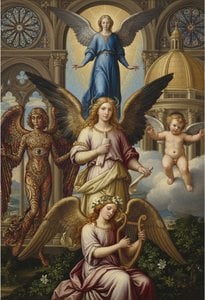
Vault decoration

Marvel at Agnolo Bronzino's 'Vault Decoration,' a stunning Renaissance fresco from Florence’s Palazzo Vecchio. Witness intricate figures, golden light, and classical beauty in this masterpiece of Mannerism.

Бронзино е изключително талантлив фрескатор и портретист от Ренесанса, известен със своя спокойна елегантност и прецизност. Разгледайте неговите най-известни творби като Алегория на похотта и портретите на Козимо I и Елеонора Толедо – шедьоври на манеристичната живописна школа!

Ръчно изработена маслена репродукция

Ръчно рисувана маслена картина върху платно във вашия размер и рамка, изработена по поръчка от нашите художници. (Купете принт Купете принтКупете изображение Купете изображение)

P118B $10
P118H $10
P118W $10
P438Z $10
P508JH $12
P508YH $12
P805H $10
P805Z $10
P919BZ $10
P919G $10
P919XJ $10
P959ZH $10
P968JZ $12
W106C $8
W218G $10
W218JH $8
W218Y $10
W307PJ $10
W316G $10
W316PJ $8
W316Y $10
W398PJ $8
W4111J $10
W500HY $15
W500JH $15
W692G $12
W849H $8
W940BG $15
W953PJ $8

Стандартен
по поръчка
CM
INCH

Изберете от предварително зададените размери, които съответстват на оригиналните пропорции на произведението.

ширина
височина

Можете да въведете свои собствени размери, за да пасне на конкретна рамка или пространство. Ако избраният от вас размер не съответства на пропорциите на оригиналното изображение, ние ще изрежем произведението или ще удължим картината с допълнителни ръчно рисувани елементи. Дигитален макет ще бъде изпратен за ваше одобрение преди започване на производството.
Моля, обърнете внимание, че прегледът на екрана не отразява действителното изрязване или разширяване. Само макетът ще покаже точно финалния състав.
Въпреки че са налични персонализирани размери, препоръчваме да изберете размер от предварително дефинирания списък, за да запазите оригиналните пропорции.

Примери за това какво може да се промени: Заменете лице с клиентска снимка; Добавете домашен любимец (например заменете котка с куче); Включете скрито послание на фона; Променете пейзажа или елементите на фона.
След поръчка, екипът на WahooArt.com ще изпрати имейл на клиента за инструкции и ще предостави преглед на макет.

Доставка по целия свят () в рамките на 3/4 седмици вместо стандартните 5 седмици. (30 Август). Без компромис с качеството.

why_choose_icon
Безплатна експресна доставка по целия свят
why_choose_icon
Висококачествено ленено платно
why_choose_icon
Пълно застраховане при доставка
why_choose_icon
Гаранция за възстановяване на митнически такси
why_choose_icon
Гаранция за цветова точност
why_choose_icon
60-Дневен период за връщане (Само при дефекти)
why_choose_icon
100% Гаранция за връщане на парите
why_choose_icon
Предложение за отстъпка при поръчка на едро

Обща цена

$ 272

reproduction

Vault decoration

Репродукционен метод

Размер на репродукцията

-

Обща цена

$ 272

Бързи факти

  • Movement: Mannerism
  • Medium: Fresco
  • Year: 1541
  • Artist: Agnolo Bronzino
  • Subject or theme: Religious & Myth.
  • Artistic style: Reserved elegance
  • Location: Palazzo Vecchio, Florence

Тест за изкуство

Има само един верен отговор за всеки въпрос.

Въпрос 1:
What is the primary subject depicted in Agnolo Bronzino’s ‘Vault Decoration’?
Въпрос 2:
The ‘Vault Decoration’ is located in which Florentine palace?
Въпрос 3:
Which artistic movement is most closely associated with Agnolo Bronzino’s style, as evidenced by the ‘Vault Decoration’?
Въпрос 4:
What is a prominent feature of the fresco’s composition, contributing to its overall effect?
Въпрос 5:
When was the ‘Vault Decoration’ created?

A Glimpse of Celestial Grace: Agnolo Bronzino’s “Vault Decoration”

Within the opulent Palazzo Vecchio in Florence resides a breathtaking fresco—Agnolo Bronzino's "Vault Decoration," completed in 1541 for Duchess Eleonora di Toledo. More than just a decorative scheme, this monumental work offers a profound meditation on divine order, classical beauty, and the burgeoning complexities of Renaissance courtly life. It’s a visual symphony that invites contemplation, revealing layers of symbolism woven into its meticulously rendered figures and vibrant palette.

Bronzino, a master of Mannerism, eschewed the dramatic emotionality favored by his predecessors like Pontormo in favor of a refined elegance and controlled composition. His style is characterized by elongated forms, subtle distortions, and an almost disconcerting stillness—a deliberate departure from the dynamism of earlier Renaissance painting. “Vault Decoration” exemplifies this perfectly; each figure possesses a serene composure, their gazes fixed with an unnerving intensity that draws the viewer into a world both familiar and subtly unsettling.

A Tapestry of Myth and Religion

The fresco’s central theme is deeply rooted in biblical narrative and classical mythology. The vault itself depicts a celestial scene, dominated by St. Michael, St. John the Evangelist, St. Jerome, and St. Francis—figures representing key virtues and patrons of the Medici court. Below them unfolds a series of allegorical scenes: “Moses Striking the Rock,” illustrating the miraculous parting of the Red Sea; “Moses Gathering Manna,” depicting God’s provision for his people in the wilderness; and “Crossing of the Red Sea.” These stories, rendered with exquisite detail and bathed in a rich, jewel-toned palette of reds, blues, and golds, speak to themes of faith, obedience, and divine guidance.

However, Bronzino doesn’t simply present these narratives as straightforward accounts. He imbues them with a distinctly Mannerist sensibility—figures are often idealized, their bodies rendered with an almost sculptural quality, reminiscent of ancient Greek sculpture. The drapery is voluminous and complex, creating intricate patterns that seem to shimmer with light. The use of gold leaf further enhances the sense of opulence and divinity, transforming the vault into a veritable temple of beauty.

Symbolism and Courtly Intrigue

Beyond the readily apparent religious iconography, “Vault Decoration” is laden with subtle symbolic meaning. The placement of each figure—their gestures, their attire—holds significance within the context of Renaissance courtly life. The Duchess herself, Eleonora di Toledo, was a woman of considerable influence and intelligence; her presence in this grand design underscores the power and sophistication of the Medici court.

Furthermore, the fresco’s meticulous detail suggests an underlying concern with status and prestige—a reflection of the patronage system that fueled Renaissance art. Bronzino's skill was highly sought after by wealthy families and powerful figures, and this work stands as a testament to his ability to fulfill their desires for artistic expression and social affirmation.

A Legacy of Elegance

“Vault Decoration” remains a pivotal masterpiece in the history of Renaissance art. It showcases Bronzino’s mastery of technique, his profound understanding of classical ideals, and his unique Mannerist vision. The fresco's enduring appeal lies not only in its technical brilliance but also in its ability to evoke a sense of awe and wonder—a reminder of the beauty, complexity, and spiritual depth that characterized the High Renaissance.

Today, reproductions of this extraordinary work continue to captivate audiences worldwide. Its timeless elegance and profound symbolism make it an ideal addition to any discerning collection or a stunning focal point for interior design, transporting viewers to a world of celestial grace and courtly splendor.


Биография на художника

Agnolo Bronzino: The Silent Elegance of Florentine Mannerism

Agnolo di Cosimo, known to history as Bronzino, emerged from the vibrant artistic landscape of Renaissance Florence in 1503, a period already brimming with genius. Born the son of a butcher, his path diverged sharply from familial trade, guided instead by an innate talent that would see him become one of the most sought-after portraitists of his era and a defining figure of Mannerism. His early training began with Raffaellino del Garbo, but it was under the tutelage of Jacopo da Pontormo that Bronzino’s artistic sensibilities truly took shape. While absorbing Pontormo's innovative style—characterized by expressive distortions and unsettling perspectives—he ultimately forged his own distinct voice—one characterized by a cool composure and refined detail markedly different from his teacher’s often emotionally charged works. This early period was also influenced by studies with Andrea del Sarto, exposing him to the legacies of Michelangelo and Leonardo da Vinci, foundational influences that would subtly permeate his mature style. The young Bronzino quickly demonstrated an aptitude for capturing not just physical likeness but a certain psychological depth, even in his earliest commissions.

Early Influences and Artistic Formation

Bronzino’s formative years were marked by exposure to the artistic currents of Florence under Pontormo's guidance. Pontormo’s distinctive style—a deliberate departure from classical ideals—challenged conventional notions of beauty and realism. Bronzino skillfully adapted Pontormo’s expressive distortions, incorporating them into his own compositions with remarkable subtlety. Simultaneously, he absorbed lessons from Andrea del Sarto, mastering the techniques of sfumato and chiaroscuro—methods pioneered by Leonardo da Vinci—which would become hallmarks of his later work. These influences instilled in Bronzino a profound appreciation for intellectual rigor alongside artistic virtuosity. His early portraits reveal an uncanny ability to convey inner states through carefully crafted poses and expressions, demonstrating a sensitivity that transcended mere visual representation. Vasari famously described Bronzino as “a boy who had been apprenticed to Pontormo,” highlighting the pivotal role played by his teacher in shaping his artistic vision.

The Medici Patronage and Florentine Court Style

Bronzino’s career ascended dramatically with the patronage of Cosimo I de’ Medici, Duke of Tuscany. Recognizing Bronzino's exceptional talent, Cosimo appointed him as the official court painter—a position he held until his death in 1572—solidifying his influence on Florentine art and culture. This relationship fostered a flourishing artistic environment where Bronzino could hone his skills and explore innovative stylistic approaches. The portraits emanating from this period are not merely likenesses; they are meticulously constructed statements of power, status, and dynastic ambition. Cosimo and Eleonora di Toledo—his wife—became frequent subjects, immortalized in paintings that exude an aristocratic aloofness and polished elegance. These works weren’t simply about capturing physical resemblance but crafting enduring symbols of Medici authority—a deliberate effort to project an image of regal grandeur and intellectual refinement. The commissioning of monumental frescoes for the Villa Imperiale further cemented Bronzino's reputation as a master craftsman, demonstrating his ability to execute ambitious projects with unwavering precision.

The Mannerist Aesthetic: Cool Composure and Stylized Form

Bronzino’s artistic style is quintessentially Mannerist—a movement that emerged in Florence during the mid-16th century as a reaction against the High Renaissance's emphasis on naturalism and harmonious balance. Unlike his predecessors, Bronzino rejected the idealized beauty of classical art, favoring instead a deliberately stylized aesthetic characterized by elongated figures, attenuated drapery, and subtle distortions of perspective. This approach—often described as “frozen emotion”—contrasted sharply with the expressive dynamism of Renaissance painting. Bronzino’s figures are rarely caught in moments of spontaneous action; rather, they appear posed with an almost sculptural stillness—a deliberate departure from the naturalistic conventions of earlier artists. His masterful use of sfumato—the blurring of contours to create a hazy effect—and chiaroscuro—the dramatic interplay of light and shadow—further enhanced this sense of detachment and refinement. As exemplified in *Venus, Cupid, Folly and Time*, Bronzino’s paintings are imbued with complex symbolism—a deliberate effort to convey intellectual ideas alongside visual beauty. He skillfully manipulated color palettes—often favoring muted tones—to achieve a harmonious balance between elegance and restraint.

Legacy and Enduring Influence

Bronzino's contribution to Florentine art history is undeniable, shaping the visual language of aristocratic representation for decades to come. His meticulous technique and stylistic innovation established him as one of the foremost Mannerist painters—a master of cool composure and refined detail whose portraits continue to captivate audiences today. Despite criticisms leveled against Mannerism during the Romantic era—characterized by a preference for emotional expression—Bronzino’s work has experienced a resurgence in appreciation in recent decades, scholars recognizing the intellectual depth and stylistic sophistication inherent in his art. His legacy extends beyond individual masterpieces; he profoundly influenced subsequent generations of artists, establishing standards of excellence that continue to inspire creativity. Bronzino's enduring influence is evident not only in the stylistic conventions of portraiture but also in his pioneering role as a court painter—a position that demanded both artistic virtuosity and diplomatic sensitivity. He remains a testament to the power of art to convey complex ideas and emotions with unparalleled elegance and precision.
Бронзино

Бронзино

1503 - 1572 , Италия

Бързи факти

  • Artistic Movement Or Style: Мannerism
  • Artists Who Influenced This Artist:
    • Якопо да Понтормо
    • Микеланджело
    • Леонардо да Винчи
  • Date Of Birth: 17 ноември 1503 г.
  • Date Of Death: 23 ноември 1572 г.
  • Full Name: Agnolo di Cosimo
  • Nationality: Италиански
  • Notable Artworks:
    • Венера, Купидон и Времето
    • Портрети на Козимо I де' Медичи и Елеонора ди Толедо
  • Place Of Birth: Флоренция, Италия
Разгледайте произведения на изкуството, организирани по теми, стилове и характеристики.