Получете файл, готов за печат, който предлага много по-високо качество от уеб прегледа. Всяко дигитално изображение, което предлагаме, е извлечено от висококачествен оригинал в нашата база данни — обикновено с ширина между 5 000 и 15 000 пиксела — така че със сигурност да можете да принтирате в голям формат, да кадрирате тесно или да възпроизведете фините детайли.
Нито един файл не напуска нашето студио без внимание. Дигитален експерт проверява цветовете спрямо оригиналната картина и ги коригира при необходимост, след което подобрява яснотата и детайлите с професионални инструменти за ретуш — винаги оставайки верен на мазките и стила на художника. Резултатът е изображение, което изглежда като самата картина, а не като сканиран образ с филтър.
Одобрявате преди финализиране: нашият експерт ще изпрати изображението по имейл в рамките на 72 часа за ваш преглед. Не сте доволни? Можете да поискате подобрения или корекции, или пълно възстановяване на сумата, ако качеството не отговаря на очакванията ви.
Това е качеството, на което разчитат издателства, дизайн студиа, галерии и печатници.
Изтеглете файл с висока резолюция за лично съхранение, принтиране и творчески проекти. ( Превключване към принт Купете ръчно рисувана картина)
Избирайки WahooArt.com, вие не получавате просто изображение – вие придобивате професионално обработена дигитална творба, създадена с прецизност и подкрепена от гаранция за удовлетворение. Ето какво автоматично е включено във вашата поръчка:
Вашето дигитално изображение с висока резолюция ще бъде изпратено по имейл в рамките на 72 часа от поръчката – готово за незабавно използване.
Вашата картина е професионално оптимизирана чрез усъвършенствани инструменти с изкуствен интелект и ръчна редакция, което гарантира максимална детайлност, яснота и точност на цветовете.
Изгубили сте или сте изтрили файла си по погрешка? Не се притеснявайте – ще го изпратим отново на Вас по всяко време, безплатно.
Насладете се на вашето произведение незабавно, без мита, такси или разходи за доставка – дигиталните изтегляния винаги са освободени от данъци.
Гарантираме, че вашето дигитално изображение отразява оригиналните цветове възможно най-точно чрез използването на професионални инструменти и системи за управление на цветовете.
Ако не сте доволни от вашето дигитално изображение, ще го преработим или ще възстановим 100% от сумата в рамките на 100 дни – без излишни въпроси.
Не сте доволни? Получете пълен възврат на сумата в рамките на 100 дни от получаването на вашия цифров файл – без излишни въпроси.
Купете 3 изображения, спестете 10% - Купете 5, спестете 15% - Купете 10+, спестете 20%. Идеално за творчески проекти, галерии и агенства.
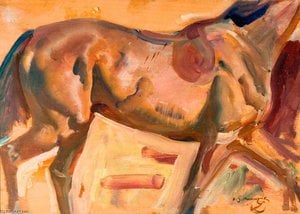
За „The Soarer“ на Adrian Jones е записана яркост от balanced при светлост на ниво Gentle Luminance.
„The Soarer“ на Adrian Jones може да бъде разгледано като слайдшоу на страницата Слайдшоу на произведението.
"The Soarer" принадлежи към направлението Academic Realism, а неговият създател е творил в епохата на 19th Century.

Born in the quiet landscape of Ludlow, Shropshire, on February 9, 1845, Adrian Jones possessed a spirit that was as much defined by scientific precision as it was by artistic passion. The son of James Brookholding Jones and Jane Marshall, his early years were steeped in an intense fascination with the animal kingdom, particularly the noble horse. While his father harbored reservations about a life dedicated to the arts, Jones pursued a path that would uniquely bridge the gap between science and aesthetics. By enrolling in the Royal Veterinary College in London in 1866, he secured his qualification as a veterinary surgeon, a decision that would later provide him with an unparalleled advantage in the studio. This deep, foundational knowledge of equine anatomy allowed him to perceive the subtle musculature, the tension of a tendon, and the rhythmic grace of a gallop with a clarity that few of his contemporaries could replicate.
His journey was not merely confined to the lecture halls of London; it was forged in the heat of global service. Joining the British Army as a veterinary officer in 1867, Jones’s life became an odyssey through Ireland, India, Abyssinia, Egypt, and South Africa. These years of military service instilled in him a profound sense of movement and a rugged, adventurous spirit. The diverse landscapes and cultures he encountered subtly permeated his artistic vision, lending a worldly depth to his later works. It was during this period of transition that he began to cultivate his sculptural talents, encouraged by the sculptor Charles Bell Birch. This mentorship helped transform a skilled surgeon into a rising star of the British art scene, leading to his triumphant debut at the Royal Academy in 1884 with A Hunter, one of the right sort.
As Jones transitioned from the battlefield to the studio, his reputation as a master of equestrian subjects grew with remarkable speed. His ability to capture the majesty and vitality of horses became his hallmark. In 1887, his bronze group Gone Away earned him first prize in the prestigious Goldsmiths’ Company competition, a milestone that solidified his standing among Britain's elite sculptors. His work was characterized by an extraordinary attention to detail and an ability to convey energy and motion within the stillness of bronze or the fluid strokes of oil on canvas. Whether depicting the spirited The Soarer or the joyful Merry Gal, Jones possessed a rare gift for imbuing his subjects with a sense of individual character and unbridled freedom.
His artistic repertoire extended beyond the sculptural medium into captivating paintings that are still celebrated today. In works such as Coronet, Merryman and Dewdrop, one can observe his mastery over light, shadow, and color. His paintings often feature:
The later years of Adrian Jones's life were marked by significant public contributions that moved beyond the purely aesthetic into the realm of national memory. Following the profound losses of the Boer War and World War I, Jones undertook several monumental commissions, creating war memorials that served as poignant tributes to fallen soldiers and their equine companions. These works, including his notable involvement with the Royal Marines Memorial, showcased his ability to use sculpture as a medium for collective mourning and historical preservation. His work became a permanent fixture in the British landscape, bridging the gap between private emotion and public commemoration.
By the time of his passing in 1938, Adrian Jones had left an indelible mark on the history of British art. He remains a singular figure—a man who could dissect the physical form with the precision of a surgeon and reimagine it with the soul of a poet. His legacy lives on through the countless admirers of his equine masterpieces, which continue to evoke the timeless beauty, strength, and spirit of the horse.

1845 - 1938
 Преглед в реален мащаб
 Изпрати
 Сподели
 Детайли
 Ръководство

 Изтегляне
 Подобни артикули
 Рентгенова снимка
 Слайдшоу
 Въпроси и отговори
 Статистика


 Прочети повече