Mannerist رسامون, ranked
The most famous Mannerist رسام is إل غريكو (1541–1614), known for جنازة الكونت أورغاز و منظر مدينة طولةدو View of Toledo. Next come تينتوريتو, غيسيبي أرسيمبولدو, برونزينو و صفونيسبا أنجيسولا. This ranking of the 71 most famous Mannerist رسامون runs from أميكو أسبرتيني (born 1475) to كريستوفانو ألوري (born 1577), across 14 countries.
How this list is ranked. Artists whose works our catalogue files under Mannerist, in the order of our fame ranking of artists. Artists without a Wikidata identifier born after 1955 are left out until verified. The Wikipedia figure next to each name is the number of our 32 languages in which Wikipedia has an article on the artist.
The essentials
Ranked, with their masterpieces
2of 71
إيطالي Born in البندقية الأسلوب المانيري، المدرسة الفينيسية Wikipedia in 31/32 languages

Key works · The 100 most famous works
 معجزة القديس مرقس وهو يحرر العبد
 العشاء الأخير
artworks_database
/en/art/jacopo-tintoretto-the-last-supper-8Y3K2M-en/
/media/artworks/images/thumbnails/25/02/2502bd1970854e5ba0ea3fbc3890950e.jpg
جاكوبو تينتوريتو
1594
رؤية درامية للإيمان والخيانة
365 × 568 سم
العشاء الأخير
 سوسنة والكهنة
Key works · The 100 most famous works
 فيرتومنس (فيرتورنو)
 أمين المكتبة
 اكتشف "الخريف" لجوزيبه أركيْمبُولْدُو: تحفة فنية مذهلة من عام 1572 تجمع بين الفواكه والخضروات في صورة إنسان فريدة. استكشف الأسلوب المانييري والرمزية.
الخريف
artworks_database
/en/art/giuseppe-arcimboldo-autumn-8XY5UD-en/
/media/artworks/images/thumbna
5of 71
إيطالية Born in كَرِمونة عصر النهضة، المانييريزم (الأسلوب التصنعي) Wikipedia in 29/32 languages

8of 71
Born in أرِتسَة Wikipedia in 31/32 languages

Teacher of Jacopo Zucchi #54, Federico Zuccari #41
10of 71
الجنسية Born in فلورنسا الأسلوب أو الحركة الفنية Wikipedia in 27/32 languages

11of 71
إيطالي Born in البندقية عصر النهضة العليا، المانييريزم Wikipedia in 23/32 languages

12of 71
هولندي Born in براونشفايغ المانيرية الشمالية والنقش الباروكي Wikipedia in 19/32 languages

13of 71
الجنسية: إيطالي Born in كاستيلنوفو بيراردينجا الأسلوب أو الحركة الفنية: المانييرية، عصر النهضة Wikipedia in 21/32 languages

14of 71
هولندي Born in أمستردام المانيريسم الشمالي Wikipedia in 28/32 languages

15of 71
فلمنكي Born in أنتويرب المانيريزم الشمالي Wikipedia in 18/32 languages

16of 71
الجنسية: إيطالية Born in بولونيا الأسلوب أو الحركة الفنية: المانييريزم، الباروك Wikipedia in 26/32 languages

Key works · The 100 most famous works
19of 71
إيطالي Born in فلورنسا المانيريزم (التصنعية) Wikipedia in 23/32 languages

21of 71
إيطالي Born in مودينا المانيريزم (التصنع) Wikipedia in 25/32 languages

26of 71
فلمنكي Born in مولبيك المانيريزم الشمالي Wikipedia in 20/32 languages

27of 71
إيطالي Born in فولتيرا المانيرية (التصنعية) Wikipedia in 17/32 languages

29of 71
Italian Born in Bologna Late Renaissance & Mannerism Wikipedia in 18/32 languages

Beyond the Adoration, Fontana's contributions are visible in the frescoes at the Palazzo Vecchio in Florence (1563-65), where he skillfully integrated architectural elements into his paintings. Fontana’s legacy endures through his surviving works, which are housed in prestigious collections such as the Pinacoteca di Vicenza and the La collezione Bonello (Malta).
31of 71
Italian Born in بولونيا Mannerism Wikipedia in 22/32 languages

Whether through the delicate line work of a chalk drawing like Ceres or the monumental scale of fresco fragments such as Ulysses Winning the Archery Contest in the Presence of Penelope, Primaticcio’s oeuvre remains a testament to an artist who could navigate the complexities of myth, majesty, and the human psyche with unparalleled grace.
32of 71
فلمنكي Born in ليدن المانيرية Wikipedia in 15/32 languages

Pupil of Federico Zuccari #41
33of 71
إيطالي Born in مونيغيا المدرسة الجنوية، المانييريزم (الأسلوب التصنعي) Wikipedia in 15/32 languages

34of 71
الجنسية Born in آربينو الأسلوب أو الحركة الفنية Wikipedia in 14/32 languages

35of 71
إيطالي Born in باسانو ديل غرابا عصر النهضة البندقية Wikipedia in 12/32 languages

36of 71
Flemish Late Mannerism

Brussels Court Painter: In 1594, De Clerck ascended to the prestigious role of court painter to Archduke Ernest I of Habsburg Austria, securing patronage that afforded him considerable freedom and resources. The Iconoclastic Crisis & Altarpiece Commissions: The Protestant iconoclasm of 1566 profoundly impacted the religious landscape of Flanders, prompting a dramatic shift towards more restrained artistic expression. Collaborations with Jan Brueghel the Elder on landscapes such as “ Paradise ” further cemented De Clerck’s reputation as a visionary artist who skillfully blended tradition and innovation.
38of 71
Italian Born in Florence Mannerist Painting Wikipedia in 15/32 languages

Beyond the walls of Rome, Perino’s influence stretched into the maritime strength of Genoa and the historic centers of Pistoia.
39of 71
Flemish Born in Bruges Renaissance, 16th Century Painting Wikipedia in 15/32 languages

His arrival coincided with a period of immense artistic patronage and experimentation within the court, orchestrated by Grand Duke Cosimo I de’ Medici and his advisor, Giorgio Vasari. The Metropolitan Museum of Art’s collection features a significant drawing by Stradanus – “ Allegory of America” – offering valuable insight into his artistic vision and providing a tangible connection to this remarkable Florentine master.
Teacher of Antonio Tempesta #56
40of 71
إيطالي Born in بُردِنونة رسم عصر النهضة Wikipedia in 16/32 languages

41of 71
Italian Born in Sant'Angelo in Vado Mannerism Wikipedia in 18/32 languages

One cannot discuss the brilliance of Federico Zuccaro without acknowledging the profound influence of his brother, Taddeo Zuccaro. While Taddeo’s mastery of sculpture provided a structural strength to their shared visions, Federico’s painting prowess brought them to life with ethereal light and movement. Their collaborative spirit yielded masterpieces such as “The Holy Family ” in Palazzo Vecchio, a work that serves as a testament to their unified artistic language.
43of 71
Dutch Born in Gouda Mannerism Wikipedia in 13/32 languages

He spent time in Paris with Jean de la Hame, a glass-painter serving King Charles IX, before securing a position at Fontainebleau during the twilight years of the School of Fontainebleau.
44of 71
Flemish Born in Hulst Mannerism, Renaissance Wikipedia in 8/32 languages

His artistic style was deeply rooted in the Mannerist aesthetic, characterized by a naturalistic portrayal of nature alongside carefully constructed compositions. The influence of Hieronymus Bosch is also readily apparent in Mostaert’s oeuvre, particularly in compositions derived from tapestries based on Bosch's fantastical creations. Gillis Mostaert died in Antwerp in 1598, reportedly burdened by debt, which led to the dispersal of his workshop’s contents among creditors following his death.
45of 71
إيطالي Born in فلورنسا المانيريزم الفلورنسي Wikipedia in 11/32 languages

47of 71
Italian Born in Florence Proto-Baroque & Counter-Maniera Wikipedia in 14/32 languages

His prolific output, including monumental altarpieces such as The Resurrection for Santa Croce, demonstrated that art could be both profoundly beautiful and deeply communicative.
48of 71
إيطالي Born in كارافاجو المانيريزم (الأسلوبية) Wikipedia in 10/32 languages

49of 71
إيطالي Born in كَرِمونة الأسلوب الفلمنكي / الطبيعية اللومباردية Wikipedia in 13/32 languages

50of 71
Italian Born in Zadar Baroque Sculpture; Mannerism Wikipedia in 14/32 languages

The career of Andrea Schiavone was one of prolific achievement, leaving behind a body of work that includes everything from intimate etchings to monumental religious narratives.
51of 71
إيطالي Born in فيرونا عصر النهضة المتأخر والمذهب المانييري Wikipedia in 11/32 languages

52of 71
Italian Born in Bologna Mannerism Wikipedia in 10/32 languages

His later works, influenced by Tuscan models such as Giorgio Vasari and Prospero Fontana, demonstrate a continuous evolution and an enduring curiosity about the changing tides of aesthetic taste.
53of 71
Italian Born in Vicenza Late Renaissance/Mannerist Wikipedia in 5/32 languages

Through his work, the halls of the palace—including the Sala del Senato and Sala dello Scrutinio—were transformed into theatrical stages where history and myth converged.
54of 71
Italian Born in Florence Mannerist Painting Wikipedia in 11/32 languages

His works often serve as windows into the complex allegories of the 16th century: Religious Devotion: In pieces such as Allegory of the Creation, Zucchi captures profound moments of divine connection, utilizing dramatic lighting and celestial figures to evoke a sense of awe and religious fervor.
55of 71
إيطالي Born in البندقية المانيريزم (الأسلوبية) Wikipedia in 9/32 languages

56of 71
Italian Born in Florence Mannerism Wikipedia in 11/32 languages

As a fresco painter, he contributed significantly to some of the most celebrated decorative programs of the age, including works for Villa Lante and Palazzo Farnese. Narrative Allegories: Utilizing complex symbolism to communicate religious and political themes, such as in his evocative work The Expulsion of Heliodorus from the Temple. While his roots remained firmly planted in the disciplined Mannerism of Florence, his work anticipated the emotional intensity and theatricality of the Baroque.
Pupil of Stradanus #39
57of 71
الجنسية Born in بولونيا الأسلوب أو الحركة الفنية Wikipedia in 11/32 languages

58of 71
German Born in Vienna Northern Mannerism

This rigorous training instilled in him a profound understanding of goldsmithing techniques—a craft that demanded precision, artistry, and meticulous attention to detail. Notably, he studied alongside Euclid's Elements and Plato’s Timaeus, texts considered foundational for geometric reasoning and philosophical contemplation – influences that would profoundly shape his later artistic pursuits. Born in Vienna, Italy, Wenzel was the son of Hans Jamnitzer the Elder, a goldsmith who established a tradition of excellence that would continue through subsequent generations.
59of 71
Italian Born in Vicenza

His monumental two-volume treatise, L'idea dell'architettura universale, published in Venice in 1615, stands as one of the final great works of the Renaissance.
60of 71
Italian Born in Melide Late Renaissance

He honed his skills in Rome before the death of Michelangelo, immersing himself in the architectural principles of the past while simultaneously embracing new approaches. His initial commissions were modest – designing villas for wealthy patrons like Cardinal Montalto – but these early projects laid the groundwork for a career defined by ambition and technical mastery. The Fontana dell'Acqua Felice (Fountain of Moses), built for Pope Sixtus V, stands as a prime example.
61of 71
Born in Antwerp Antwerp Mannerism Wikipedia in 9/32 languages

He was a contemporary of other great figures like Quentin Matsys and may have even collaborated with landscape innovators such as Joachim Patinir.
62of 71
Italian Born in Mazzo di Valtellina Mannerist Wikipedia in 10/32 languages

His most celebrated achievement remains the scaled oil copy of the Last Judgment, commissioned by Cardinal Alessandro Farnese.
63of 71
French Born in Paris Second School Fontainebleau; Mannerism; Italian Art Influence Wikipedia in 8/32 languages

He found endless inspiration in the epic tales of Homer, the poetic explorations of Pierre de Rationale, and the dramatic narratives of Torquato Tasso. Born in Paris around 1561, Dubreuil emerged during a transformative era when the French court sought to mirror the sophisticated aesthetics of the Italian masters.
64of 71
الجنسية Born in شافهاوزن الأسلوب أو الحركة الفنية Wikipedia in 7/32 languages

65of 71
Italian Born in Florence Mannerist Wikipedia in 10/32 languages

Beyond his fresco cycles, Conte also produced a series of individual portraits, most notably his portrait of Michelangelo (c. 1540). The portrait is characterized by its dramatic lighting, intense gaze, and subtle gestures—elements that reflect Conte's growing mastery of chiaroscuro and his increasing interest in psychological realism. Conte's career took a significant turn in 1547-48 when he joined forces with Siciolante da Sermoneta on the ambitious fresco decoration of the chapel of San Remigio in San Luigi dei Francesi.
66of 71
Flemish Born in Antwerp Landscape with mythological and allegorical Wikipedia in 8/32 languages

In 1580, Fiammingo was tasked with creating extensive series of paintings to adorn Castle Kirchheim in Württemberg.
67of 71
French Born in Bassigny Northern Mannerism Wikipedia in 9/32 languages

Though his life was cut short in 1616, Bellange’s influence endured far beyond the borders of Lorraine.
68of 71
Italian Born in Parma Mannerist Painting Wikipedia in 8/32 languages

His contributions to the decoration of landmarks like the Santa Maria della Steccata underscore his role as a cornerstone of Parma’s artistic golden age.
69of 71
Italian Born in Novellara Mannerist Wikipedia in 7/32 languages

Born in the small town of Novellara around 1508 or 1511, Orsi navigated an era defined by shifting theological certainties and the complex intellectual currents of humanism.
70of 71
Italian Born in Florence Renaissance and Mannerism Wikipedia in 5/32 languages

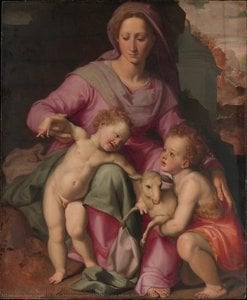
The historical significance of Michele Tosini lies in his role as a bridge between eras. Whether depicting the tender intimacy of a Holy Family or the rustic devotion found in an Adoration of the Shepherds, Tosini possessed the rare ability to capture the profound intersection of the divine and the human. His early training under Lorenzo di Credi and Antonio del Ceraiolo anchored him in the refined traditions of the High Renaissance.
71of 71
Spanish Born in Mascaraque Renaissance, Mannerism Wikipedia in 6/32 languages

Correa's early commissions, such as the altarpiece for the monastery of Santa María de Guadalupe in Mascaraque (circa 1532-1534), demonstrate a clear adherence to Raphael’s principles – elegant figures, balanced compositions, and harmonious color palettes.
The paintings behind the names
Through time
In figures
| إيطاليا | 34 |
|---|---|
| Italy | 15 |
| هولندا | 3 |
| Belgium | 3 |
| ألمانيا | 2 |
| بلجيكا | 2 |
| فرنسا | 2 |
| Netherlands | 2 |
| 1470s | 2 |
|---|---|
| 1480s | 3 |
| 1490s | 5 |
| 1500s | 11 |
| 1510s | 10 |
| 1520s | 8 |
| 1530s | 7 |
| 1540s | 11 |
| 1550s | 7 |
| 1560s | 4 |
| 1570s | 3 |
| متحف الفنون التاريخية | 19 |
|---|---|
| متحف الإرميتاج | 10 |
| مجموعات بافاريا الحكومية للرسم | 10 |
| المعرض الوطني | 8 |
| Rijksmuseum | 6 |
| متحف المتروبوليتان للفنون | 5 |
| معرض أوفيزي | 5 |
| متحف برادو | 5 |
All of them, in order
 إل غريكو1541–1614تينتوريتوإيطالي · 1519–1594
 غيسيبي أرسيمبولدو1527–1593
 برونزينو1503–1572صفونيسبا أنجيسولاإيطالية · 1532–1625
 بونتورمو1494–1556
 بارميجانينو1503–1540جورجو فازاري1511–1574
 جوليو رومانو1499–1546روسو فيورينتينوالجنسية · 1494–1540سيبستيانو ديل بيوميوإيطالي · 1485–1547هندريك غولتزيوسهولندي · 1558–1617دومينيكو دي باتشي بيكافوميالجنسية: إيطالي · 1484–1551بيتر أرتسينهولندي · 1508–1575بارثولوميو سبرانجرفلمنكي · 1546–1611لافينيا فونتاناالجنسية: إيطالية · 1552–1614
 فيديريكو باروتشي1535–1612
 هانز فون آخنألماني · 1552–1615كريستوفانو ألوريإيطالي · 1577–1621
 أليساندرو ألوري1535–1607نيكولو ديل أباتيإيطالي · 1512–1571
 جيوفاني باتيستا موروني1525–1578
 بينفينوتو تشيليني1500–1571
 فرانشيسكو سالفياتي1510–1563
 جيامبولونيافلمنكي · 1529–1608كاريل فان ماندر الأكبرفلمنكي · 1548–1606دانييال فولتيراإيطالي · 1509–1566
 جان جوجونالجنسية · 1510–1567Prospero FontanaItalian · 1512–1597
 يواخيم وتيفيلهولندي · 1566–1638فرنسيسكو بريماتيتشيوItalian · 1504–1570أوتو فان فيينفلمنكي · 1556–1629لوكا كامبياسوإيطالي · 1527–1585جوزيبي تشيزاريالجنسية · 1568–1640فرانشيسكو باسانو الأصغرإيطالي · 1549–1592Hendrick De ClerckFlemish · 1570–1630
 لياندرو باسانو1557–1622Perino del VagaItalian · 1501–1547StradanusFlemish · 1523–1605جيوفاني أنطونيو دي ساكيس (إيل بوردينوني)إيطالي · 1484–1539Federico ZuccariItalian · 1539–1609
 تشيكينو ديل سالفياتيإيطالي · 1510–1563Cornelis KetelDutch · 1548–1616Gillis MostaertFlemish · 1528–1598فرانشيسكو باكياكاإيطالي · 1494–1557
 سيبوني بولزوني1550–1598Santi di TitoItalian · 1536–1603بوليدورو دا كارافاجوإيطالي · 1499–1543فينتشينزو كامبيإيطالي · 1536–1591Andrea SchiavoneItalian · 1522–1563جاكوبو ليجوزيإيطالي · 1547–1627Bartolomeo PassarottiItalian · 1529–1592Andrea VicentinoItalian · 1542–1617Jacopo ZucchiItalian · 1542–1596دومينيكو تينتوريتوإيطالي · 1560–1635Antonio TempestaItalian · 1555–1630أميكو أسبرتينيالجنسية · 1475–1552Wenzel JamnitzerGerman · 1507–1585Vincenzo ScamozziItalian · 1548–1616Domenico FontanaItalian · 1543–1607Jan De Beer1475–1528Marcello VenustiItalian · 1510–1579Toussaint DubreuilFrench · 1561–1602توبياس شتيمرالجنسية · 1539–1584Jacopino del ConteItalian · 1510–1598Paolo FiammingoFlemish · 1540–1596Jacques BellangeFrench · 1575–1616Girolamo Mazzola BedoliItalian · 1500–1569Lelio OrsiItalian · 1508–1587Michele TosiniItalian · 1503–1577Juan Correa De VivarSpanish · 1510–1566
Your questions, answered
First place goes to إل غريكو (#1); تينتوريتو (#2) and غيسيبي أرسيمبولدو (#3) complete the podium.
إل غريكو (#1), تينتوريتو (#2), غيسيبي أرسيمبولدو (#3), برونزينو (#4) و صفونيسبا أنجيسولا (#5).
إيطاليا: 34 of the 71 رسامون in this list were born there, then Italy (15) و هولندا (3).
جورجو فازاري (#8) taught Jacopo Zucchi (#54) و Federico Zuccari (#41); Stradanus (#39) taught Antonio Tempesta (#56).
The highest-ranked رسامون born in Italy are Prospero Fontana (#29), Perino del Vaga (#38), Federico Zuccari (#41), Santi di Tito (#47) و Bartolomeo Passarotti (#52).
Most رسامون in this list were born in the 1540s (11 of 71), between 1475 and 1577 overall.
فلورنسا: 8 of the رسامون in this list were born there.
The earliest-born رسام in this list is أميكو أسبرتيني (#57), born in 1475.
The highest-ranked رسامون born in إيطاليا are تينتوريتو (#2), غيسيبي أرسيمبولدو (#3), برونزينو (#4), صفونيسبا أنجيسولا (#5) و بونتورمو (#6).
The women of this list (2): صفونيسبا أنجيسولا (#5) و لافينيا فونتانا (#16).
The museums holding the most key works of this list are متحف الفنون التاريخية (19), متحف الإرميتاج (10) و مجموعات بافاريا الحكومية للرسم (10).
Our catalogue holds 5,179 works by these رسامون. Each one can be ordered as a hand-painted oil reproduction or a print.
Keep reading
Other movements
 فنانون مشهورون من Baroqueالحارس الليلي · رامبرانت
 فنانون مشهورون من Contemporary Realistالجامعات · جان فرانسوا ميليه
 فنانون مشهورون من Impressionistليلة مرصعة بالنجوم (نيويورك، متحف الفن الحديث) · فنسنت فان خوخ
 فنانون مشهورون من Romanticistزحل وهو يلتهم ابنه · فرانثيسكو غويا
 فنانون مشهورون من NeoclassicistThe Death of Marat · جاك لوي دافيد
 فنانون مشهورون من Realistأصل العالم · غوستاف كوربيه
 فنانون مشهورون من Renaissanceالموناليزا (لا جوكوندا) · ليوناردو دا فينشي
 فنانون مشهورون من Dutch Golden Ageالفتاة ذات القرط المنصوع من اللؤلؤ · يوهانس فيرمير
 فنانون مشهورون من Expressionistتكوين السابع · فاسيلي كاندينسكي
 فنانون مشهورون من Rococoجين-أنتوان واتو
1717
الإنزال إلى سيثيرا: تحفة من أناقة الروكوكو
"الإنزال إلى سيثيرا" لجين-أنتوان واتو مثال نموذجي على أسلوب الروكوكو، حيث يلتقط روح المرح والرومانسية في القرن الثامن عشر الفرنسي. تدعو هذه اللوحة الساحرة، التي تم إنشاؤها عام 1717، المشاه · أنطوان واتو
Other periods
 فنانون مشهورون من Early MedievalSnowy River · وانج وي
 فنانون مشهورون من High Medievalالعذراء في العظمة (عذراء أوني سانتيني) · جوتو دي بوندوني
 فنانون مشهورون من Late Medievalالبشارة والقديسان · سيمون مارتيني
 فنانون مشهورون من Renaissanceخلق آدم · ميكيلانجيلو
 فنانون مشهورون من Early Modernنداء القديس متى · كارافاجيو
 فنانون مشهورون من 19th Centuryالزنابق المائية (أو النيمفيا) · كلود مونيه
 فنانون مشهورون من Modernغرنيكا · بابلو بيكاسو
 فنانون مشهورون من ContemporaryWind Sculpture III (one in a series of nine) · Yinka Shonibare
More rankings