


1of 34
دوتشيو 1255–1319
إيطالي Born in سيينا المدرسة السينية، القوطية في القرن الرابع عشر Wikipedia in 31/32 languages

Gothic فنانون, ranked
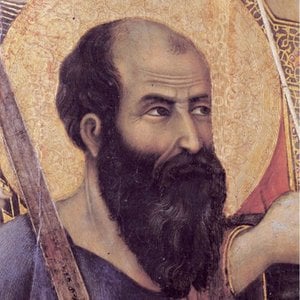
The most famous Gothic فنان is دوتشيو (1255–1319), known for العذراء الروسيلية (تفاصيل) و مايستا (اللوحة الأمامية، اللوحة المركزية). Next come سيمون مارتيني, جنتيلي دا فابريانو, بيزانيلو و ستيفان لوكنر. This ranking of the 34 most famous Gothic فنانون runs from Master Mateo (born 1161) to Jan Baegert (born 1465), across 8 countries.
How this list is ranked. Artists whose works our catalogue files under Gothic, in the order of our fame ranking of artists. Artists without a Wikidata identifier born after 1955 are left out until verified. The Wikipedia figure next to each name is the number of our 32 languages in which Wikipedia has an article on the artist.
The essentials
Ranked, with their masterpieces
1of 34
إيطالي Born in سيينا المدرسة السينية، القوطية في القرن الرابع عشر Wikipedia in 31/32 languages
3of 34
إيطالي Born in فابريانو القوطية الدولية Wikipedia in 23/32 languages

4of 34
إيطالي Born in بيزا عصر النهضة المبكر، القوطية الدولية Wikipedia in 28/32 languages

Key works · The 100 most famous works · نسخ بيزانيلو
5of 34
ألماني Born in ميرزبورغ القوطية المتأخرة، القوطية الدولية Wikipedia in 19/32 languages

6of 34
إيطالي Born in فلورنسا القوطية، عصر النهضة المبكر Wikipedia in 20/32 languages

7of 34
هولندي Born in نيميخن القوطية الدولية Wikipedia in 21/32 languages

8of 34
إيطالي Born in البندقية التأثير البيزنطي والفن القوطي Wikipedia in 15/32 languages

10of 34
إيطالي Born in أرِتسَة حلقة وصل بين مدرسة جيوتو والمدرسة السيينية Wikipedia in 16/32 languages

11of 34
إيطالي Born in فلورنسا عصر النهضة المبكر Wikipedia in 17/32 languages

13of 34
Spanish Romanesque Sculpture

His mastery of limestone carving was unparalleled, particularly through his use of a technique known as trabajo vivo. This method involved layering stone slabs to create textured surfaces that mimicked the appearance of flesh and fabric, lending a sense of movement and vitality to the static medium.
14of 34
هولندي Born in نايميخن القوطية الدولية Wikipedia in 16/32 languages

This circular composition, with its depiction of the Virgin Mary cradling the body of Christ, blends Northern European and Sienese artistic influences into a harmonious whole. The Portrait of Philip the Bold, while only surviving in later copies, was highly esteemed during its time and served as a model for subsequent depictions of the Duke. He played a crucial role in introducing the Limbourg brothers – Herman, Paul, and Johan – to Philip the Bold's service around 1400.
16of 34
هولندي Born in Lower Rhine نهضة القوطية Wikipedia in 14/32 languages

Hamburg and The Birth of Jesus (1424): Francke’s career truly blossomed in Hamburg, where he secured a contract to create an altarpiece for St.
18of 34
Italian Born in Florence Gothic Wikipedia in 7/32 languages

His commitment to procuring marble for the cathedral underscored his understanding of artistic grandeur and civic responsibility. Furthermore, he continued to secure patronage from influential families like the Albizzi, ensuring that Florentine art would endure as a symbol of prestige and cultural achievement. The dispersed predella depicting scenes from Saint Peter’s life – a collaborative effort with Niccolò di Pietro Gerini – remains a poignant reminder of Jacopo's artistic legacy and the enduring power of Florentine Gothic art.
19of 34
Catalan Born in فالس Late Gothic, Flemish influence Wikipedia in 10/32 languages

His workshop became a cornerstone of Catalan production, with works like the Saint Augustine Altarpiece involving collaborations with skilled artists such as Pau Vergós to meet the immense demands of religious guilds and monasteries.
20of 34
German Born in Weil der Stadt Late Gothic Art Wikipedia in 10/32 languages

Commissioned for the parish church in Tiefenbronn, the altarpiece depicts scenes from the life of Mary Magdalene with a striking departure from the prevailing aesthetic norms. The altarpiece isn't just a religious narrative; it is a testament to Moser’s keen observation of human anatomy, light, and shadow. However, scholars generally agree that he was exposed to both the late Gothic traditions prevalent in Southern Germany and the emerging artistic trends emanating from Flanders.
21of 34
German Born in Minden International Gothic Wikipedia in 13/32 languages

It is believed that Bertram was influenced by both French and Netherlandish artistic trends prevalent during his time. Despite these influences, Bertram maintained a uniquely Northern German sensibility, imbuing his work with a sense of regional identity. While sharing similarities with other artists of the period, such as Master Francke (another prominent Hamburg painter), Bertram's work possesses a distinct character—a subtle restraint in emotional expression compared to Francke’s more overtly dramatic approach.
Key works · The 100 most famous works · نسخ Master Bertram
22of 34
Spanish Gothic-Italian

Born around 1357 and passing away in 1406, his life coincided with a period of significant artistic and cultural change across Europe, yet he maintained a distinctly Catalan sensibility throughout his career. The city was a vibrant hub for trade and artistic exchange, exposed to influences from Italy, France, and Flanders.
23of 34
إيطالي Born in سان كيريكو دورشيا الطبيعية، عصر النهضة المبكر Wikipedia in 10/32 languages

Key works · The 100 most famous works · نسخ باولو دي جيوفاني في
 The Coronation of the Virgin, and Saints
 Madonna and Child
 Madonna and Child Enthroned with Saint John the Evangelist, Saint Peter, Saint Agnes, Saint Catherine of Alexandria, Saint Lucy, an Unidentified Female Saint, Saint Paul, and Saint John the Baptist, with Eve and the Serpent; the Annunciation
24of 34
Italian Born in Milan Gothic Illuminations

He took the established decorative language of the Gothic period and infused it with a burgeoning sense of naturalism that would eventually pave the way for the Renaissance.
25of 34
Catalan Born in Girona International Gothic Wikipedia in 8/32 languages

By successfully introducing and refining the International Gothic style in the Principality, he provided a bridge between the medieval past and the approaching Renaissance.
26of 34
Italian Born in Venice International Gothic Wikipedia in 10/32 languages

While the broader Renaissance would eventually move toward the anatomical realism and linear perspective of masters like Bellini, Giambono’s dedication to the International Gothic aesthetic provided the essential foundation of splendor upon which later Venetian art was built.
27of 34
Italian Born in فلورنسا Late Gothic/Renaissance Wikipedia in 7/32 languages

Dal Ponte’s artistic reputation was initially forged through the creation of exquisitely decorated marriage chests – cassoni or forzieri – objects central to Florentine wedding rituals and indicative of a family's wealth and status. His foundations lay firmly within the decorative traditions of the International Gothic style, evident in his use of rich colors, elaborate ornamentation, and elongated figures.
29of 34
إيطالي Born in فلورنسا القوطية المتأخرة Wikipedia in 6/32 languages

30of 34
إيطالي Born in فلورنسا الفن القوطي Wikipedia in 4/32 languages

31of 34
German Late Gothic Wikipedia in 11/32 languages

The Master’s style is a compelling synthesis of Northern European Gothic and Early Renaissance influences. However, the Master’s work transcends mere imitation; he infused these borrowed elements with his own unique sensibility, creating paintings that are both technically proficient and emotionally resonant. The influence of Netherlandish masters is readily apparent in his draftsmanship and compositional structure.
32of 34
Born in Wesel Late Gothic Wikipedia in 3/32 languages

Jan Baegert emerged from the established artistic traditions of Wesel, Germany, where he was born in 1465. He received his formal training under his father, Derick Baegert, a painter who provided the essential technical groundwork for Jan's later career.
Where to see Tracing the physical remains of Jan Baegert’s output requires looking toward the Westphalian and Lower Rhine regions.
33of 34
Italian Late Gothic Wikipedia in 8/32 languages

The Osservanza cycle emerged around 1430-1450, a period marked by significant stylistic shifts in Siena. Influenced by the vibrant Sienese school —particularly the work of Duccio di Buoninsegna and Simone Martini —the Master nevertheless developed a distinct visual language characterized by a heightened sense of drama, emotional intensity, and an innovative use of color. His innovative use of color, dramatic composition, and psychological realism paved the way for the development of Renaissance art in Siena.
34of 34
Austrian International Gothic Wikipedia in 5/32 languages

The Master’s style is a complex synthesis of influences. He drew heavily from the Gothic tradition, evident in his meticulous attention to detail, particularly in the rendering of drapery and architectural elements.
The paintings behind the names
Through time
In figures
| إيطاليا | 16 |
|---|---|
| Germany | 4 |
| هولندا | 3 |
| Italy | 3 |
| ألمانيا | 2 |
| Spain | 2 |
| إسبانيا | 1 |
| Austria | 1 |
| القرن 12th | 1 |
|---|---|
| القرن 13th | 6 |
| القرن 14th | 18 |
| القرن 15th | 5 |
All of them, in order
دوتشيوإيطالي · 1255–1319 سيمون مارتينيإيطالي · 1284–1344جنتيلي دا فابريانوإيطالي · 1370–1427بيزانيلوإيطالي · 1395–1455ستيفان لوكنرألماني · 1410–1451أنيولو جاديإيطالي · 1350–1396الإخوة فان ليمبرغهولندي · 1385–1416باولو فينيتسيانوإيطالي · 1333–1358
 ليبو ممي1291–1356سبينيلو أريتينوإيطالي · 1350–1410برناردو داديإيطالي · 1290–1348
 أندريا بيسانوإيطالي · 1290–1348Master MateoSpanish · 1161–1217جان مالويلهولندي · 1370–1415
 تلمان ريمنشنايدر1460–1531ماستر فرانكي (فراتر فرانكي)هولندي · 1380–1435
 كلاوس سلوترهولندي · 1355–1406Jacopo di CioneItalian · 1325–1399جاومي هوغيتCatalan · 1445–1492Lucas MoserGerman · 1390–1443Master BertramGerman · 1345–1415Pere SerraSpanish · 1357–1406باولو دي جيوفاني فيإيطالي · 1345–1411Giovannino De' GrassiItalian · 1350–1398Lluís BorrassàCatalan · 1360–1425Michele GiambonoItalian · 1400–1462Giovanni dal PonteItalian · 1385–1438
 ثيودوريك براغتشيكي · نيكولو دي بيترو جيرينيإيطالي · 1368–1415باتشينو دي بوناجويداإيطالي · 1280–1340Master Of The Life Of The VirginGerman · Jan Baegert1465–1535Master Of The OsservanzaItalian · Master of Heiligenkreuz AbbeyAustrian ·
Your questions, answered
First place goes to دوتشيو (#1); سيمون مارتيني (#2) and جنتيلي دا فابريانو (#3) complete the podium.
دوتشيو (#1), سيمون مارتيني (#2), جنتيلي دا فابريانو (#3), بيزانيلو (#4) و ستيفان لوكنر (#5).
فلورنسا: 5 of the فنانون in this list were born there.
The museums holding the most key works of this list are متحف المتروبوليتان للفنون (7), معرض أوفيزي (3) و المعرض الوطني (3).
Most فنانون in this list were born in the القرن 14th (18 of 34), between 1161 and 1465 overall.
The earliest-born فنان in this list is Master Mateo (#13), born in 1161.
The highest-ranked فنانون born in إيطاليا are دوتشيو (#1), سيمون مارتيني (#2), جنتيلي دا فابريانو (#3), بيزانيلو (#4) و أنيولو جادي (#6).
إيطاليا: 16 of the 34 فنانون in this list were born there, then Germany (4) و هولندا (3).
“Yet, within this framework, he demonstrated a forward-thinking approach, particularly in his adoption of glazing techniques that foreshadowed the innovations of oil painting pioneered later by Jan van Eyck.” — from our biography of جان مالويل (#14).
Our catalogue holds 1,535 works by these فنانون. Each one can be ordered as a hand-painted oil reproduction or a print.
Keep reading
Other movements
 فنانون مشهورون من Baroqueالحارس الليلي · رامبرانت
 فنانون مشهورون من Contemporary Realistالجامعات · جان فرانسوا ميليه
 فنانون مشهورون من Impressionistليلة مرصعة بالنجوم (نيويورك، متحف الفن الحديث) · فنسنت فان خوخ
 فنانون مشهورون من Romanticistزحل وهو يلتهم ابنه · فرانثيسكو غويا
 فنانون مشهورون من NeoclassicistThe Death of Marat · جاك لوي دافيد
 فنانون مشهورون من Realistأصل العالم · غوستاف كوربيه
 فنانون مشهورون من Renaissanceالموناليزا (لا جوكوندا) · ليوناردو دا فينشي
 فنانون مشهورون من Dutch Golden Ageالفتاة ذات القرط المنصوع من اللؤلؤ · يوهانس فيرمير
 فنانون مشهورون من Expressionistتكوين السابع · فاسيلي كاندينسكي
 فنانون مشهورون من Rococoجين-أنتوان واتو
1717
الإنزال إلى سيثيرا: تحفة من أناقة الروكوكو
"الإنزال إلى سيثيرا" لجين-أنتوان واتو مثال نموذجي على أسلوب الروكوكو، حيث يلتقط روح المرح والرومانسية في القرن الثامن عشر الفرنسي. تدعو هذه اللوحة الساحرة، التي تم إنشاؤها عام 1717، المشاه · أنطوان واتو
Other periods
 فنانون مشهورون من Early MedievalSnowy River · وانج وي
 فنانون مشهورون من High Medievalالعذراء في العظمة (عذراء أوني سانتيني) · جوتو دي بوندوني
 فنانون مشهورون من Late Medievalالبشارة والقديسان · سيمون مارتيني
 فنانون مشهورون من Renaissanceخلق آدم · ميكيلانجيلو
 فنانون مشهورون من Early Modernنداء القديس متى · كارافاجيو
 فنانون مشهورون من 19th Centuryالزنابق المائية (أو النيمفيا) · كلود مونيه
 فنانون مشهورون من Modernغرنيكا · بابلو بيكاسو
 فنانون مشهورون من ContemporaryWind Sculpture III (one in a series of nine) · Yinka Shonibare
More rankings


