The Painter of Dublin's Faces
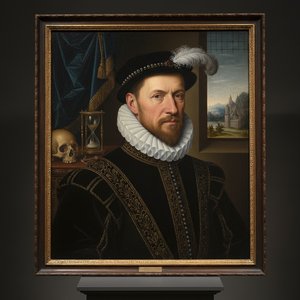
A young girl moves from Holywood House in County Down to the streets of London in 1873. The death of her father, Henry Harrison, has uprooted her family, leaving her to find a new footing in a sprawling metropolis. By 1878, she enters the Slade School of Fine Art. Under the guidance of Alphonse Legros, her hands learn the discipline of the academic style. She wins a scholarship that sustains her training for three years, allowing her to master the precise, linear application of paint. Her brushwork begins to mirror the clarity of the Old Masters, a technique some observers later compare to the meticulous precision of Hans Holbein.
The scene shifts to Dublin in 1889. Sarah Cecilia Harrison settles into the city that will become both her professional stage and her political battlefield. She establishes herself as a portraitist, capturing the likenesses of the era's prominent figures. Her studio becomes a place where the faces of the influential are rendered with a realistic, almost clinical accuracy. In 1890, she travels to France, painting children in Brittany under the open sky, yet her heart remains tied to the social fabric of Ireland.
A Life of Civic Duty
The canvas is only one part of her presence in Dublin. The year 1912 marks a sudden, sharp change in her public trajectory. She becomes the first woman elected to the Dublin City Council. This is not a quiet appointment; it is an active, loud engagement with the struggles of the city. She moves between the easel and the council chamber, advocating for the unemployed and the residents of Dublin's tenements. Her work as the founder and secretary of the Dublin City Labour Yard demonstrates a commitment to the physical realities of poverty.
Her political identity is inseparable from her art. She stands alongside figures like Anna Haslam in the suffrage victory processions, escorting voters to the polls. Even her personal connections intersect with the city's cultural evolution. She works closely with Hugh Lane, supporting his mission to establish a modern art gallery for Dublin. When tragedy strikes and Lane perishes on the Lusitania in 1915, she remains a steadfast figure in the movement to preserve his legacy.
The Final Inscription
Her later years are defined by an unwavering dedication to social reform and the rights of women. She chairs the Women’s Civic Union and continues to navigate the complex political landscape of a changing Ireland. Her portraits remain, hanging in institutions like the Royal College of Physicians and the National Maternity Hospital, documenting the people of her time with an unblinking eye.
The end comes in 1941. She is laid to rest in Mount Jerome Cemetery. On her gravestone, a simple, heavy truth remains carved for all to see:
- Artist and Friend of the Poor
الأسئلة والأجوبة
أين يمكن العثور على أعمال Sarah Cecilia Harrison الفنية مصنفة حسب التقنية؟
للعثور على جميع أعمال Sarah Cecilia Harrison حسب الوسيط الفني، يرجى زيارة صفحة حسب الوسيط الفني الخاصة بالفنان.
كم عدد الأعمال الفنية المتاحة لـ Sarah Cecilia Harrison؟
يمكنك تصفح 11 أعمال فنية من أعمال Sarah Cecilia Harrison في صفحة كافة الأعمال الفنية.
أين يمكنني العثور على إحصائيات حول أعمال Sarah Cecilia Harrison؟
يمكنكم الاطلاع على إحصائيات أعمال Sarah Cecilia Harrison عبر صفحة إحصائيات الزيارات الخاصة بالفنان.