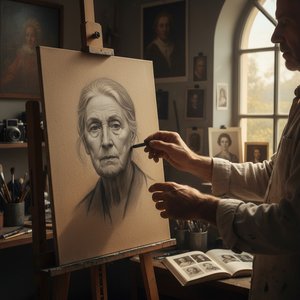
The Quiet Presence of the Portraitist
Jean Ducayer moved through the French art scene during a time when the likeness of a person was a matter of social record. His hands worked with the precision required to capture the stillness of a sitter, focusing on the subtle textures of skin and the weight of fine fabrics. He was a painter who understood the gravity of a gaze. His presence in the historical record is marked by a steady hand and a commitment to the likeness, particularly in the way he handled the nobility of his subjects.
His training began under François Clouet, a man whose influence is felt in the way Ducayer approached the human form. From Clouet, he likely learned the discipline of the line and the importance of a clear, steady contour. This foundation allowed him to navigate the courts and the private chambers of the French elite, where a portrait was more than a picture; it was a statement of existence.
The Language of the Likeness
Ducayer’s work often centers on the individual, focusing on the specific details of a face. He did not seek to embellish, but rather to observe. In his hands, a collar of lace or the sheen of a silk gown became a study in light and shadow. His brushwork was deliberate, aimed at the quiet reality of the person sitting before him.
His output includes studies of the French aristocracy, where a sitter's status is conveyed through posture and attire. Some of his known works include:
- Portrait of Marie de la Tour d'Auvergne
- Portrait of a Lady, Uncertainly Identified as Anne de Bretagne, Demoiselle de Goëllo or her sister, Marie d’Avagour
These works show a painter preoccupied with the nuances of identity. He captured the way light falls across a cheekbone or how a hand rests against a dark background. There is a certain stillness in these compositions, a sense that the subject has been caught in a moment of quiet reflection.
A Legacy in Shadow and Light
Ducayer was active during the first half of the seventeenth century, a period of transition in French painting. While others sought to expand the scale of their canvases, he remained focused on the intimacy of the portrait. His ability to render the specificities of a person's character through their physical features ensured that his work remained a part of the private collections of the era. He left behind a record of faces that continue to hold their composure, preserved in oil and wood, reminding us of the individuals who once moved through the halls of power.
الأسئلة والأجوبة
كم عدد الأعمال الفنية المتاحة لـ Jean Ducayer؟
يمكنك تصفح 1 عمل فني من أعمال Jean Ducayer في صفحة كافة الأعمال الفنية.
أين يمكنني استعراض جميع أعمال Jean Ducayer الفنية؟
يمكن تصفح جميع أعمال Jean Ducayer على هذا الموقع عبر صفحة كافة الأعمال الفنية الخاصة بالفنان.
أين يمكنني مشاهدة المخطط اللوني لأعمال Jean Ducayer؟
يمكنكم الاطلاع على المخطط اللوني لأعمال Jean Ducayer عبر صفحة بصمة الألوان الفنية الخاصة بالفنان.
ما هي أكثر الأعمال الفنية مشاهدةً لـ Jean Ducayer؟
يمكنكم الاطلاع على إحصائيات أعمال Jean Ducayer عبر صفحة إحصائيات الزيارات الخاصة بالفنان.