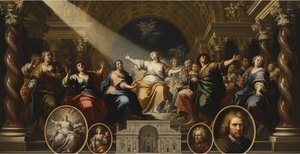
The Architect of the Portuguese Stage
In the vibrant tapestry of the Renaissance, few figures loom as large or as luminously as Gil Vicente, a man often whispered of in the halls of history as "the Trobadour." Born near 1465 in the historic cradle of Guimarães, Portugal, Vicente emerged not merely as a writer, but as a cultural visionary who dared to bridge the fading echoes of medieval mysticism with the bright, inquisitive dawn of humanism. His life was inextricably linked to the splendor of the Portuguese court, where the patronage of figures such as Queen Dowager Leonor Teles de Menezes and the monarchs Manuel I and John III provided the fertile soil necessary for his genius to bloom. Within these royal circles, he absorbed the transformative philosophical currents of his era, drawing inspiration from the intellectual shifts brought by thinkers like Erasmus, which would later infuse his dramatic works with a profound, penetrating wit.
To understand Vicente is to understand the very soul of Iberian drama during a period of immense transition. He was a master of the auto, a form of short, often religious or allegorical play, yet he possessed the audacity to push these structures toward something entirely new. His theatrical repertoire, an astonishing collection of over 150 plays, functioned as a mirror held up to a changing society. Through his comedies and tragedies, he did not merely entertain; he interrogated the very fabric of human existence. He moved seamlessly between the sacred and the profane, utilizing the religious autos sacramentales to explore spiritual truths while simultaneously employing biting satire to expose the hypocrisies of the clergy, the corruption of the nobility, and the struggles of the common folk.
A Legacy of Satire and Humanism
The true brilliance of Vicente’s craft lay in his refusal to adhere to the rigid, often stifling dramatic conventions of his time. While many of his contemporaries sought refuge in strict Aristotelian rules, Vicente embraced a more fluid, kaleidoscopic approach to storytelling. He possessed an uncanny ability to blend the grotesque with the sublime, creating characters that were as much archetypes as they were flesh-and-blood individuals. His plays were populated by a diverse cast of voices—from shepherds and peasants to kings and clerics—each rendered with a level of psychological depth and linguistic dexterity that was revolutionary for the early 16th century.
His historical significance cannot be overstated, as he earned him the prestigious title of "Portuguese Plautus" for his foundational role in establishing a national dramatic identity. The themes he explored—social injustice, the duality of human nature, and the tension between tradition and progress—remain strikingly modern. By weaving together the oral traditions of the medieval troubadours with the sophisticated intellectualism of the Renaissance, Gil Vicente created a theatrical language that was uniquely Portuguese yet universally resonant. His work stands as a monumental achievement in Western literature, a testament to a creator who saw the world not just as it was, but as it could be through the transformative power of art and truth.
الأسئلة والأجوبة
أين يمكنني مشاهدة أعمال Gil Vicente, Called The Trobadour الفنية في معرض ثلاثي الأبعاد؟
الزيارة الافتراضية ممكنة: حيث تعرض صفحة متحف ثلاثي الأبعاد الخاصة بـ Gil Vicente, Called The Trobadour أعمال الفنان في معرض ثلاثي الأبعاد.
كم عدد الأعمال الفنية المتاحة لتصفحها لـ Gil Vicente, Called The Trobadour؟
يمكنك تصفح 4 أعمال فنية من أعمال Gil Vicente, Called The Trobadour في صفحة جميع الأعمال الفنية.
أين يمكن العثور على أعمال Gil Vicente, Called The Trobadour الفنية المصنفة حسب الكلمات المفتاحية؟
للعثور على أعمال Gil Vicente, Called The Trobadour حول موضوع معين، يمكنك زيارة صفحة حسب الكلمات المفتاحية الخاصة بالفنان، والتي تجمع الأعمال الفنية حسب الكلمات المفتاحية.