The Enduring Legacy of Bapende, Bapindi: A Pende Vision
Bapende, often referred to as Bapindi, represents far more than just an artist; he embodies the profound cultural heritage and artistic spirit of the Pende people of the Democratic Republic of Congo. His work, deeply rooted in ancestral traditions and imbued with symbolic power, offers a rare glimpse into a complex society shaped by history, migration, and a vibrant connection to the natural world. Born within a lineage steeped in artistry – his family’s legacy stretching back generations of skilled craftspeople – Bapindi's journey is one of honoring tradition while simultaneously forging a distinctive artistic voice that resonates globally.
Origins and Cultural Context
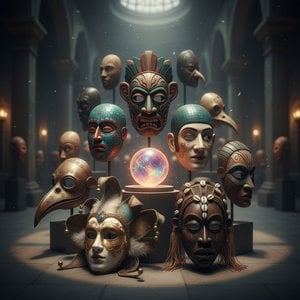
The Pende people, divided into Eastern and Western groups yet united by shared ancestry and language (Kipende/Kipindi), trace their origins to the region surrounding the Cuanza River in Angola. Driven westward by conflict and displacement, particularly during the expansion of the Kingdom of Lunda in the 17th century, they established themselves in what is now the Democratic Republic of Congo. This migration profoundly shaped their culture, influencing everything from social structures to artistic expression. The Pende are renowned for their intricate masks – particularly the iconic Kwoyo-muyombo mask – which serve as central figures in elaborate ceremonies and rituals, embodying ancestral spirits and mediating between the human and spiritual realms. These masks aren’t merely decorative objects; they are conduits of power, imbued with stories and beliefs passed down through generations.
- Language: Kipende (Kipindi)
- Location: Southwestern Democratic Republic of Congo – primarily the Kwilu River region.
- Cultural Connections: Closely related to the Yaka and Suku peoples, sharing similar artistic traditions and spiritual beliefs.
The Art of Transformation: Technique and Symbolism
Bapindi’s distinctive style is characterized by a masterful command of wood carving and intricate detailing. He primarily works with locally sourced hardwoods, meticulously shaping them to represent figures from Pende mythology – warriors, chiefs, spirits, and ancestral ancestors. His technique emphasizes bold outlines, stylized features, and the incorporation of symbolic elements. The Kwoyo-muyombo mask, arguably his most celebrated work, exemplifies this perfectly. The mask’s elaborate surface is covered in a dense network of geometric patterns, often incorporating animal motifs – snakes, birds, and antelopes – each carrying specific meanings within Pende cosmology. These symbols aren't arbitrary; they represent the wearer’s status, lineage, and connection to the spirit world.
The use of contrasting colors—often achieved through pigment application—further enhances the mask’s visual impact and symbolic potency.A Legacy Shaped by History
Bapinde's artistic journey is inextricably linked to the turbulent history of his people. The Pende have endured centuries of conflict, displacement, and colonial rule. The 1931 Pende revolt against Belgian authorities stands as a testament to their resilience and determination to preserve their cultural identity. This period of resistance profoundly impacted the community, shaping its social fabric and artistic expression. Bapinde’s work reflects this history—often depicting scenes of warfare, leadership, and spiritual struggle. His art serves not only as a record of the past but also as a means of transmitting Pende values and beliefs to future generations.
Global Recognition and Enduring Influence
Despite facing numerous challenges, Bapinde’s work has gained increasing recognition on the international stage. Exhibitions in Europe and North America have introduced his art to a wider audience, fostering appreciation for the rich cultural heritage of the Pende people. His distinctive style—characterized by its bold symbolism, intricate detailing, and profound spiritual depth—has influenced contemporary African artists and collectors alike. Bapinde’s legacy extends beyond individual artworks; he represents a vital link between tradition and modernity, ensuring that the artistic spirit of the Pende continues to thrive for generations to come.