A Divine Script: The Golden Legacy of Yahya ibn Osman
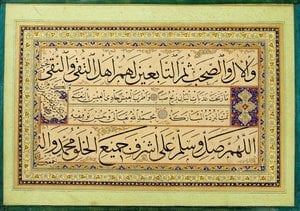
In the quiet reverence of the eighteenth century, within the vibrant heart of Istanbul, the hands of Yahya ibn Osman moved with a precision that bridged the earthly and the divine. His masterpiece, a Qur’an dating to 1744, is not merely a book but a profound spiritual experience captured in ink and gold. As one gazes upon the delicate pages, the eye is immediately drawn into a rhythmic dance of the Naskh script, a style of calligraphy that embodies both clarity and elegance. The manuscript serves as a testament to the Ottoman Golden Age, where every stroke of the reed pen was an act of devotion, and every gilded border was a window into the infinite.
The artistry of this piece lies in its breathtaking technical mastery. The composition is defined by the meticulous balance between the dark, flowing Arabic characters and the luminous, gilded illumination that frames the sacred text. This interplay of light and shadow creates a sense of depth, making the words appear to float upon the aged parchment. For the discerning collector or interior designer, this work offers a sophisticated palette of warm golds and deep, historical tones, providing a focal point that radiates both prestige and tranquility. The intricate geometric patterns surrounding the text are not merely decorative; they represent the underlying order of the universe, inviting the viewer into a state of meditative contemplation.
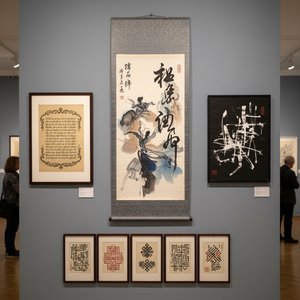
To possess a reproduction of this Qur’an is to bring a piece of Ottoman history into the modern sanctuary. It carries an emotional weight that transcends time, evoking the scholarly atmosphere of ancient libraries and the sacred stillness of mosques. Whether placed in a curated gallery setting or used as a centerpiece in a luxurious, classically styled room, the work commands attention through its subtle grandeur. It is an invitation to slow down, to appreciate the painstaking labor of a master calligrapher, and to surround oneself with the enduring beauty of Islamic heritage.



 معاينة الحجم الحقيقي
 اشترِ لوحة مرسومة يدويًا
 مشاركة
 مشاركة
 التفاصيل

 تحميل الملف
 قطع مشابهة
 الأشعة السينية
 عرض شرائح
 الإحصائيات


 عرض المزيد






































 خيار الزجاج متاح فقط للمقاسات التي تقل عن 110 سم