


لوحة زيتية مرسومة يدوياً على الكانفاس بالمقاس والإطار الذي تفضله، تُنفذ حسب الطلب على أيدي فنانينا. ( اشترِ نسخة مطبوعة اشترِ الصورة)
اختر من بين أحجامنا المُعدّة مسبقًا والتي تتطابق مع النسب الأصلية للعمل الفني.

يمكنك إدخال أبعادك الخاصة لتناسب إطارًا معينًا أو مساحة محددة. وإذا لم يتطابق الحجم الذي اخترته مع نسب الصورة الأصلية، فسنقوم إما بقص العمل الفني أو توسيع اللوحة بإضافة عناصر مرسومة يدويًا. سيتم إرسال نموذج رقمي إليك للموافقة عليه قبل بدء الإنتاج.
يرجى ملاحظة أن المعاينة على الشاشة لا تعكس عملية القص أو التوسيع الفعلية؛ حيث إن النموذج الرقمي وحده هو الذي سيوضح التكوين النهائي بدقة.
وعلى الرغم من توفر أحجام مخصصة، إلا أننا نوصي باختيار أبعاد من القائمة المحددة مسبقًا للحفاظ على النسب الأصلية للعمل الفني.
توصيل عالمي إلى خلال 3 إلى 4 أسابيع بدلاً من المدة المعتادة البالغة 5 أسابيع. (6 سبتمبر). جودة لا تهاون فيها.


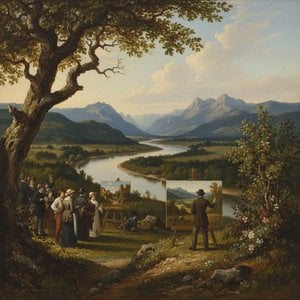
Catering For The Convent
مقاس النسخة المطبوعة

William Samuel Parrott (1844-1915) stands as a pivotal figure in American landscape painting, particularly renowned for his breathtaking depictions of Oregon and the Pacific Northwest. Emerging during a period of significant artistic innovation known as the Luminist movement, Parrott mastered the art of capturing atmospheric effects and conveying profound mood through subtle tonal gradations rather than mere detailed realism. This stylistic approach profoundly shaped his entire oeuvre, establishing him as one of the foremost interpreters of the region's dramatic and untamed vistas.
His formative years were marked by a deep exposure to European art trends, notably the burgeoning influence of Impressionism. However, Parrott remained steadfast in his adherence to Luminist principles, seeking a spiritual connection with the landscape through light. Influenced heavily by masters such as Frederic Church and Asher Durand, Parrott sought to emulate their ability to evoke deep emotion through carefully observed light and color—a skill that would eventually become his artistic trademark. His process was uniquely rigorous; he meticulously studied geological formations and topographic maps, translating scientific data into evocative visual representations that possessed both accuracy and soul.
The breadth of Parrott’s prolific output is staggering, spanning several decades and encompassing over 300 paintings. His primary focus remained the majestic mountainous landscapes—most notably the iconic Mount Hood—and the expansive, winding river valleys that define the American West. To achieve the ethereal quality for which he is celebrated, Parrott skillfully employed complex glazing techniques. By layering translucent washes of pigment onto textured surfaces, he achieved a remarkable sense of luminosity and internal depth.
The resulting images are characterized by several distinct artistic elements:
His paintings are far more than mere representations of scenery; they serve as meditations on nature's grandeur and its capacity to inspire human contemplation. Through his brush, the rugged terrain of the Pacific Northwest is transformed into a realm of quiet majesty.
Beyond his regional focus, Parrott’s work reflects a broader historical movement in 19th-century American art, where the exploration of the frontier coincided with a desire to find a unique national aesthetic. While he is celebrated for his landscapes, his versatility occasionally touched upon other genres and styles, as seen in works like “Bal De La Ville De Paris,” which showcased a different, more vibrant side of his compositional ability.
Today, the historical significance of William Samuel Parrott lies in his ability to bridge the gap between scientific observation and romantic expression. He captured a specific moment in American history when the West was being documented with both wonder and precision. His dedication to the interplay of light and topography ensures that his canvases remain timeless windows into the luminous beauty of a vanishing era, leaving an indelible mark on the tradition of American landscape painting.

1844 - 1915

اكتشف 10 روائع فنية رسمت مسار الفن الرومانسي! استكشف لوحات فريدريش، مالارد وأكثر. قصص الفنانين، تقنيات الرسم، وجمال المناظر الطبيعية الخلابة. احصل على أعمال فنية عالية الجودة من WahooArt.com!

Explore the captivating world of 19th-century landscape painting! Discover renowned artists like Friedrich & Monet, key movements, and find the perfect artwork to bring nature's serenity into your home. Expert insights at WahooArt.

Explore the rich history of landscape art with WahooArt. Discover renowned artists, movements like Impressionism & Romanticism, and expert guidance for collecting timeless pieces. Find your perfect serene escape today!
Explore the captivating genre scenes of Thomas George Webster, a Victorian painter bridging British traditions with American themes. Discover his style, influences & legacy in 19th-century art history.

Explore the captivating landscapes of Herman Herzog, a pivotal American artist known for his realistic depictions of Yosemite & Florida scenes. Discover his legacy, artistic journey, and market value with WahooArt.

 معاينة الحجم الحقيقي
 مشاركة
 مشاركة
 التفاصيل

 تحميل الملف
 قطع مشابهة
 الأشعة السينية
 عرض شرائح
 عرض المزيد




































 خيار الزجاج متاح فقط للمقاسات التي تقل عن 110 سم


