The Illusion of Abundance: A Masterpiece of Trompe-l'œil
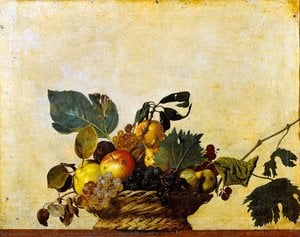
In the realm of nineteenth-century realism, few things captivate the eye quite like the deceptive mastery of William Michael Harnett. His 1875 work, Still Life, serves as a breathtaking testament to the artist's ability to blur the line between the canvas and reality. At first glance, the viewer is presented with a bountiful harvest—a woven basket overflowing with the vibrant textures of nature. Apples, oranges, grapes, and bananas are arranged with a casual elegance that suggests they might have been plucked from a nearby orchard only moments before. The composition invites the observer to reach out, to feel the waxy skin of an orange or the delicate, dusty bloom on a cluster of grapes, creating a sensory experience that transcends the flat surface of the painting.
The true magic of this piece lies in Harnett’s legendary trompe-l'œil technique, a method designed to "deceive the eye." As an artist who began his career in the meticulous world of engraving design on silver, Harnett possessed an unparalleled command over light, shadow, and minute detail. Every element in this still life is rendered with such precision that the shadows cast by the fruit onto the basket appear physically present within our own space. The interplay of light across the varied surfaces—the matte texture of a banana peel versus the reflective sheen of a ripe apple—demonently showcases his ability to manipulate perception, turning a simple arrangement of fruit into a profound study of optical illusion.
A Symphony of Color and Texture
Beyond the technical wizardry, this painting is a celebration of color and organic form. The palette is a rich tapestry of autumnal tones; the deep reds and bright yellows of the fruit provide a striking contrast against the earthy, neutral tones of the basket. This careful balance of hues ensures that the work remains visually stimulating without becoming overwhelming. For the discerning collector or interior designer, this piece offers a unique versatility. Its vibrant yet classic color scheme allows it to serve as a sophisticated focal point in a traditional study, adding a sense of historical weight, or as a surprising, conversational element in a contemporary space that appreciates the play of light and shadow.
The emotional impact of Still Life is one of quiet abundance and nostalgic charm. There is a profound stillness in the composition, a moment frozen in time that evokes the peacefulness of a summer afternoon. It speaks to the beauty found in the everyday, elevating common objects to the status of high art. To possess a reproduction of this work is to bring a piece of nineteenth-century American mastery into one's home—a constant reminder of the artistry required to transform the mundane into the extraordinary. It is not merely a painting of fruit; it is an invitation to pause, to observe, and to marvel at the illusions that define our perception of the world.



 معاينة الحجم الحقيقي
 اشترِ لوحة مرسومة يدويًا
 مشاركة
 مشاركة
 التفاصيل

 تحميل الملف
 قطع مشابهة
 الأشعة السينية
 عرض شرائح
 الإحصائيات


 عرض المزيد






































 خيار الزجاج متاح فقط للمقاسات التي تقل عن 110 سم