

طباعة جيكلي أو كانفاس بجودة المتاحف، مع سرعة في التنفيذ وخيارات متنوعة للتشطيب. ( شراء لوحة مرسومة يدويًا الانتقال إلى الصورة الرقمية)





























اختر من بين أحجامنا المُعدّة مسبقاً والتي تتوافق مع النسب الأصلية للعمل الفني.

أدخل العرض والارتفاع المطلوبين ليتناسب المقاس مع إطارك أو جدارك. يرجى الملاحظة أن المطبوعة يمكن قصها فقط ولا يمكن تكبيرها لتتجاوز أبعاد الصورة الأصلية، لذا فإن اختيار مقاس بأبعاد مختلفة سيؤدي إلى فقدان جزء من الصورة. سنرسل لك نموذجاً رقمياً تجريبياً لاعتماده قبل البدء في عملية الطباعة. الصورة المعروضة في هذه الصفحة لا توضح شكل القص الفعلي — النموذج التجريبي فقط هو ما يظهر ذلك بدقة.
توصيل عالمي إلى خلال أسبوعين بدلاً من المدة القياسية البالغة 4/5 أسابيع. (17 نوفمبر)
Before
مقاس النسخة المطبوعة
Two figures rest within a patch of dappled sunlight, their world bounded by the soft textures of grass and the shade of distant trees. A man in blue clothing leans toward a woman dressed in red, their postures suggesting a quiet, shared ease. The light falls across them in precise gradations, caught through the meticulous etching and engraving technique that defines this scene. Every line of the landscape, from the blades of grass to the heavy limbs of the trees, is rendered with a sharp, observational clarity.
The air feels still, yet certain objects whisper of movement and change. A clock hangs upon a wall, its presence marking the steady, unyielding passage of time against this temporary peace. Nearby, a book rests, a silent weight of knowledge amidst the leisure. In the upper left and lower right corners, birds watch from their perches, small emblems of innocence settled within the greenery.
Beneath the surface of this pastoral scene lies a subtle critique of Georgian England. The composition uses dramatic chiaroscuro to pull the figures from the shadows, highlighting a moment of relaxation that masks deeper social anxieties regarding virtue and reputation. This work belongs to a period of intense scrutiny, where the textures of clothing and nature were used to document the complexities of everyday life.
The emotional pull of the piece resides in its tension between serenity and reflection. It captures a fleeting sense of connection, yet the inclusion of symbols like the clock invites a confrontation with mortality and the consequences of pleasure. The scene remains a quiet study of human behavior, caught in the light before the shadows shift.
يبلغ مستوى الشهرة المسجل لـ "Before" للفنان وليم هوجرت درجة Recognized.
تتضمن الثيمات المتكررة لدى وليم هوجرت موضوع moral critique, classical tradition, social observation, urban life style, satirical narrative؛ بينما يركز عمل "Before" على romanticism, comedy, social commentary, domestic scene, clock, landscape backdrop, human behavior.
يُنصح باستخدام نسخة مُعاد إنتاجها من "Before" للفنان وليم هوجرت لغرض Conversation؛ حيث يأتي هذا الاقتراح تماشياً مع موضوع العمل الفني وأجوائه وألوانه.

لندن، عام 1697. كان الهواء في "بارثولوميو كلوز" يعبق بأصوات مدينة صاخبة في طور النمو. هنا، يخطو ويليام هوغارث أولى خطواته في عالم يتسم باستقرار هش؛ حيث كان والده، ريتشارد هوغارث، يكافح من أجل كسب عيشه كمدرس للغة اللاتينية ومؤلف للكتب المدرسية. كانت الحالة المادية للأسرة في حالة من التقلب المستمر، حتى واجه ريتشارد في لحظة ما الواقع المرير المتمثل في السجن بسبب الديون في سجن "فليت". هذا الاحتكاك المبكر بتقلبات الحياة الحضرية ترك أثراً لا يُمحى في وجدانه، فقد نشأ ويليام وهو يراقب الفجوة العميقة بين الطبقات الاجتماعية، وهي الرؤية التي ستشكل لاحقاً مسيرته الفنية كرسام، ونحات، وفنان ساخر، ورسام كاريكاتير، وكاتب.
لم يكن طريق هذا الفتى مفروشاً بالثروات الموروثة أو الرعاية الفنية السهلة، بل كانت حياة صاغتها قسوة المدينة وتفاصيلها. تنقل في شوارع لندن، يراقب الشخصيات التي تملأ المقاهي والأسواق، بينما كانت والدته، آن غيبونز، تمثل المرساة الأسرية في حياة طبعت عليها التحولات الاقتصادية لتلك الحقبة. وبحلول الوقت الذي بدأ فيه بترك بصمته الخاصة، كان قد أصبح رجلاً متعدد المواهب، يستخدم الحبر والألوان لتشريح المجتمع ذاته الذي نشأ في أحضانه.
لندن، 1697. ينشأ ويليام هوغارث، ابن ريتشارد هوغارث، معلم اللغة اللاتينية والكاتب المتقطع، وسط تقلبات حظ رجل يكافح من أجل إثبات وجوده في قلب المدينة الصاخبة. وتأخذ حالة عدم الاستقرار داخل المنزل منحىً حاداً عندما يُسجن ريتشارد في سجن "فليت" لمدة خمس سنوات بسبب ديون غير مدفوعة. هذه الفترة من الشقاء، التي اتسمت بهشاشة الوضع المالي للعائلة، تركت أثراً لا يُمحى في نفس ذلك المراقب الصغير لتقلبات الميتروبوليس.
بحلول عام 1714، ينتقل التركيز نحو الجوانب التقنية للحرفة؛ حيث يبدأ هوغارث فترة تدريب مهني مع إليس غامبل، وهو نقش للذهب والفضة يعمل في "ليستر فيلدز". هناك، يتعلم الدقة المتناهية المطلوبة لبطاقات التجارة والمنتجات المشابهة، مطوراً قدرة أساسية على التعامل مع الألواح النحاسية. هذا التأسيس التقني وفر له الأدوات اللازمة لمسيرة مهنية ستتجاوز في نهاية المطاف مجرد إعادة الإنتاج التجاري.
تتغير مسارات حياته مع توجهه نحو الدراسة الفنية الرسمية، ففي عام 1720، يلتحق بأكاديمية "سانت مارتن لين". وتتوسع آفاق تدريبه بشكل أكبر تحت إشراف سير جيمس ثورنهيل، الرسام الرسمي للملك جورج الأول. وتحت إشراف ثورنهيل، ينتقل التركيز من الدقة المتناهية في النقش الصغير إلى التعقيدات الأوسع للتصوير والتركيب الفني، لينتقل بذلك من العمل الدقيق للحرفي نحو الآفاق الرحبة للفنون الجميلة.
يتنقل ويليام هوغارث ببراعة فائقة بين دقة البورتريه الواقعي والطاقة المتدفقة والمتسلسلة التي تشبه القصص المصورة. فهو لا يكتفي بمجرد الرسم، بل يعمد إلى بناء سرديات بصرية متكاملة؛ حيث بلغ هذا النهج ذروته في ابتكاره لما أسماه "الموضوعات الأخلاقية الحديثة"، وهو أسلوب وظّف فيه السرد القصصي البصري لنقد النسيج الاجتماعي. لقد تعامل مع اللوحة القماشية وصفيحة النحاس كمسارح تتكشف عليها فصول الدراما، مستخدماً مزيجاً ساحراً من الفكاهة والهجاء اللاذع لإيصال رسائله العميقة.
تكمن الأسس التقنية لأعماله في تمكنه الاستثنائي من فن الحفر على النحاس، فقد أدرك تماماً ثقل الخط وقوة المطبوعات في الوصول إلى جمهور عريض من الناس. وفي عام 1753، انتقل من حيز الممارسة البصرية إلى الفضاء النظري مع نشر كتابه تحليل الجمال؛ حيث تجاوز مجرد الملاحظة الفنية ليصيغ نظرياته الجمالية، مؤكداً بشكل خاص على أهمية "الخط المتعرج" كركيزة أساسية للجمال والحركة.
تتجلى القوة السردية في أعمال ويليام هوغارث في ذروتها من خلال ما أسماه "الموضوعات الأخلاقية الحديثة"، وهي سلسلة من اللوحات صُممت لتعمل كأنها روايات بصرية. ففي عامي 1731 و1732، تتبع لوحة رحلة عاهرة السقوط المأساوي لشابة تصل إلى لندن، لتجد نفسها فريسة لإغراءات المدينة وشرورها. ويستمر هذا النمط من الانحدار الاجتماعي في عام 1735 من خلال رحلة السفاح، التي تروي قصة توم راكويل وهو يبدد ميراثه في المقامرة والمجون. إن هذه الأعمال لا تكتفي بمجرد تصوير مشاهد عابرة، بل هي خرائط ترصد عواقب التحلل الأخلاقي عبر تفاصيل دقيقة وعناصر رمزية غنية.
ثم ينتقل التركيز من الانهيار الفردي إلى صدام الطبقات الاجتماعية في سلسلة زواج على الطراز الفرنسي، التي أُنتجت بين عامي 1743 و1745. هنا، يشن الفنان هجوماً لاذعاً على النتائج الكارثية للزيجات المدبرة والسعي المحموم وراء المكانة الاجتماعية، حيث يصبح التوتر بين القصور الفاخرة للأثرياء والواقع البائس للفقراء موضوعاً متكرراً يثير الشجن. وحتى في سنواته الأخيرة، ظل نقد ويليام هوغارث حاداً ونافذاً؛ ففي عام 1748، تناول في عمله يا لحم بقر إنجلترا القديمة قضية الهوية الوطنية، بينما قدم في عام 1750 لوحة مسيرة الحرس إلى فينشلي رؤية فوضوية وصاخبة للحياة العسكرية، حيث يضع التباين بين الصفوف المنضبطة في الأفق والسلوك الصاخب للجنود في المقدمة.
شهد القرن الثامن عشر بزوغ فجر مدرسة فنية بريطانية خالصة، وهي حركة ساهم في تشكيل ملامحها رفض ويليام هوغارث الاعتماد على النماذج الفنية القارية السائدة آنذاك. فقد تجاوز مجرد محاكاة الأساليب الأجنبية ليؤسس لغة بصرية متجذرة في تفاصيل شوارع لندن وحياتها الصاخبة. ويعد هذا التحول نقطة فارقة في تاريخ الفن، حيث أصبح أهم فنان إنجليزي في جيله، وامتد تأثيره ليكون طاغياً لدرجة أن مصطلح "هوغارثي" (Hogarthian) قد دخل المعجم اللغوي لوصف أسلوبه الفريد في الملاحظة الساخرة والناقدة.
بيد أن النجاح التجاري الذي حققه حمل في طياته نوعاً جديداً من الصراعات؛ فمع الانتشار الهائل لمطبوعاته، واجه موجة عاتية من عمليات إعادة الإنتاج غير المصرح بها، حيث أصبح الانتحال الفني تهديداً مستمراً لمصدر رزقه. هذا التوتر دفع نحو مواجهة قانونية غيرت وجه مفهوم الملكية الفكرية، إذ قاد جهوداً حثيثة لإقرار قانون حق المؤلف عام 1735، وهي خطوة تاريخية ضمنت حقوق المبدعين وحمتها من أولئك الذين يسعون للتربح من نتاج عملهم دون إذن.
إن منهجه في سرد القصص عبر الصور المتسلسلة قد وضع المخطط الأول لوسائل الإعلام المستقبلية، حيث يُعد بمثابة السلف المباشر للرسوم الكاريكاتورية السياسية الحديثة والقصص المصورة. ومن خلال استخدامه لسلسلة من الصور لتشريح السلوك الاجتماعي، قدم نموذجاً للسرد البصري الذي يعتمد على "القراءة" والتأمل بدلاً من مجرد "النظر" العابر. وهكذا، امتد تأثيره من المطبوعات الساخرة في القرن الثامن عشر ليصل إلى صلب أسس الثقافة الشعبية المعاصرة.
تظل الآثار المادية لنقود ويليام هوغارث الاجتماعية مبعثرة عبر كبرى المؤسسات الفنية العالمية. ففي لندن، تحتضن المعرض الوطني قطعاً من سلسلة الزواج على الطراز الحديث، حيث تُحفظ السردية البصرية للانهيار الاجتماعي التي أبدعها. وعلى مقربة منها، يضم متحف تيت بريتن لوحة الشيطان والخطيئة والموت (مشهد من ميلتون)، وهو عمل يبرز قدرته الفائقة على ترجمة الثيمات الأدبية المعقدة إلى قوالب بصرية حية. كما يحافظ متحف "فاوندلينج" على حضور لافت في المدينة، حيث يضم لوحة مسيرة الحرس إلى فينشلي، وهي قطعة تجسد الطاقة الفوضوية للحياة العسكرية في القرن الثامن عشر.
ولا يتوقف مدى تأثير أعماله عند حدود المملكة المتحدة فحسب، بل يمتد إلى أبعد من ذلك؛ ففي مدينة نيويورك، تحافظ مجموعة فريك على لوحة الآنسة ماري إدواردز، وهي بورتريه يعكس مهارته الاستثنائية في التقاط ملامح الشخصية الفردية. وتوفر هذه المجموعات فرصة للقاء التفاصيل الدقيقة لنقوشه ولوحاته في سياقاتها الأصلية، حيث يمكن للزوار تلمس أثره في الطريقة التي تدير بها هذه المؤسسات التوتر القائم بين الفن الرفيع والساتير (الهجاء) الشعبي.

1697 - 1764 , المملكة المتحدة
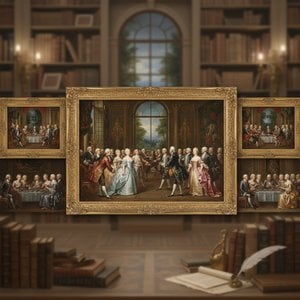
Explore the timeless elegance of formal gatherings through the lens of art history. Discover how master painters captured social grace, status, and atmosphere in iconic group portraits and ballroom scenes.

Explore 25 iconic William Hogarth masterpieces. From satire to engraving, discover his legacy. Explore the full collection on WahooArt.com.
 معاينة الحجم الواقعي
 مشاركة
 مشاركة
 التفاصيل
 دليل
دليل

 تحميل الملف
 قطع مشابهة
 الأشعة السينية
 عرض شرائح
 الأسئلة والأجوبة
 الإحصائيات


 عرض المزيد









 خيار الزجاج متاح فقط للمقاسات التي تقل عن 110 سم


