السيرة الذاتية للفنان
Eugène Isabey: A Painter of Light and Movement
Eugène Isabey, born in Paris on July 22nd, 1803, was a pivotal figure in the transition between Romanticism and Realism. His life, marked by both artistic ambition and personal challenges, produced a remarkably diverse body of work encompassing landscapes, historical scenes, portraits, and dramatic depictions of maritime events. Unlike many artists of his era who focused solely on grand narratives or idealized beauty, Isabey possessed an exceptional ability to capture the fleeting effects of light and atmosphere, imbuing his paintings with a sense of immediacy and dynamism. His early training, initially under his father, Jean-Baptiste Isabey – a renowned miniature painter in the service of Napoleon – instilled in him a rigorous understanding of technique and composition. However, it was his apprenticeship with François André Vincent that truly shaped his artistic vision, exposing him to the principles of academic painting while simultaneously encouraging experimentation with color and brushwork.
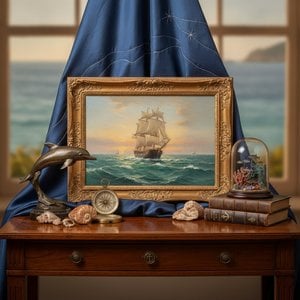
Isabey’s career unfolded against a backdrop of significant historical events. He witnessed firsthand the tumultuous years of the French Revolution and the subsequent restoration, experiences which profoundly influenced his subject matter and approach to art. His decision to accompany the diplomatic mission to Morocco in 1831, though ultimately declined, demonstrates his adventurous spirit and desire to immerse himself in foreign cultures – a theme that would recur throughout his oeuvre. This period also saw him develop a particular fascination with naval subjects, culminating in a series of celebrated paintings depicting shipwrecks and maritime battles, often commissioned by the French Navy. These works weren’t merely historical accounts; they were meticulously researched studies of light, wave motion, and human drama at sea, showcasing his technical mastery and keen observational skills. His 1840 painting *Return of Napoleon's Remains* aboard the *Belle Poule*, a monumental work commissioned for the opening of the Crystal Palace Exhibition, cemented his reputation as a leading historical painter and secured him a place within the French court.
Early Influences and Artistic Development
Isabey’s artistic development was shaped by a confluence of influences. The legacy of the Old Masters, particularly those studied during his early training with his father, provided a foundation in classical composition and technique. However, he quickly moved beyond mere imitation, embracing the expressive qualities championed by Romantic artists like Eugène Delacroix. Isabey’s landscapes, in particular, demonstrate this shift, characterized by loose brushwork, vibrant colors, and an emphasis on capturing the ephemeral beauty of nature. His meticulous studies of light – evident in his depictions of storms, sunsets, and coastal scenes – reveal a deep understanding of atmospheric perspective and color theory. Furthermore, Isabey’s travels throughout Europe and beyond exposed him to diverse artistic traditions, including Italian landscape painting and the vibrant colors of Moroccan art, enriching his visual vocabulary and broadening his stylistic range.
A Diverse Portfolio: Landscapes, Portraits, and Historical Scenes
Isabey's artistic output was remarkably varied, reflecting his versatility as a painter and his willingness to tackle diverse subject matter. His landscapes, often characterized by their dramatic lighting and dynamic compositions, capture the essence of both French and foreign settings. From the rugged beauty of the Pyrenees Mountains to the bustling harbors of Algiers, Isabey’s paintings offer intimate glimpses into different environments and cultures. He was equally adept at portraying human subjects, producing a series of compelling portraits that captured the personalities and social standing of his sitters. His commissions for the French court included numerous state portraits of royalty and nobility, showcasing his ability to render complex fabrics, elaborate costumes, and subtle expressions with remarkable skill. Beyond these genres, Isabey continued to produce historical paintings, often drawing upon literary sources or contemporary events, demonstrating a commitment to both artistic innovation and engagement with the world around him.
Legacy and Historical Significance
Eugène Isabey’s contribution to 19th-century art lies not only in his technical proficiency but also in his ability to capture the spirit of an era. He bridged the gap between Romanticism and Realism, embodying the dynamism and expressive qualities of the former while embracing a greater attention to detail and naturalism. His paintings served as visual documents of a rapidly changing world, reflecting the political upheavals, social transformations, and technological advancements that defined the period. While his work may not always be celebrated with the same fervor as that of Delacroix or David, Isabey’s legacy endures through his evocative landscapes, dramatic historical scenes, and insightful portraits – works that continue to captivate viewers with their beauty, immediacy, and profound sense of atmosphere. He died in Paris on April 25th, 1886, leaving behind a substantial body of work that remains a testament to his artistic vision and enduring influence.



 معاينة الحجم الحقيقي
 التحويل إلى المطبوعات
 مشاركة
 مشاركة
 التفاصيل

 تحميل الملف
 قطع مشابهة
 الأشعة السينية
 عرض شرائح
 الإحصائيات
 عرض المزيد






































 خيار الزجاج متاح فقط للمقاسات التي تقل عن 110 سم