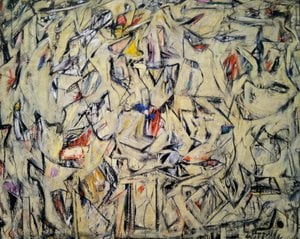
A Moment Frozen in Time: Willem de Kooning’s ‘Seated Man’
Willem de Kooning's “Seated Man,” painted in 1939, isn’t merely a depiction of a man at rest; it’s a potent distillation of the artist’s evolving approach to capturing human emotion and experience. This oil on canvas, measuring a modest yet significant 97 x 87 cm, currently resides within the Hirshhorn Museum and Sculpture Garden in Washington D.C., offering viewers an intimate glimpse into the mind of a pivotal figure in the New York School of art. De Kooning’s work during this period represents a fascinating crossroads – a deliberate exploration of realism interwoven with the burgeoning abstraction that would define his legacy, creating a dynamic tension within each piece.
The painting immediately draws the eye to its central subject: a man seated in a chair, his posture relaxed yet imbued with an underlying sense of contemplation. His arms are crossed, suggesting both vulnerability and self-possession. The deliberate use of color – primarily yellows and browns – contributes significantly to the work’s mood. The bright yellow shirt contrasts sharply with the darker tones of the figure's clothing and the chair, creating a visual rhythm that guides the viewer’s gaze across the canvas. Notably, de Kooning eschews a completely smooth finish; visible brushstrokes are prominent, adding texture and immediacy to the scene – a characteristic hallmark of his style.
Composition and the Dialogue Between Form and Space
The composition itself is carefully constructed to establish a clear dialogue between form and space. The man occupies the left side of the frame, anchoring the viewer’s attention while simultaneously allowing the right half of the canvas to be dominated by a dining table. This arrangement isn't arbitrary; it subtly suggests a domestic scene, a moment of quiet contemplation or perhaps even a shared meal. Two bowls are placed on the table, one closer to the center and the other slightly further away – a detail that invites speculation about their contents and the context of the gathering. A bottle is positioned in the upper left corner, adding another layer of visual interest and subtly directing the eye upwards.
The placement of these objects isn’t simply decorative; it contributes to the painting's overall sense of ambiguity. Is this a portrait of an individual lost in thought? Or does it represent a broader commentary on human interaction and the rituals of daily life? De Kooning deliberately avoids providing easy answers, leaving the interpretation open to the viewer’s own sensibility.
De Kooning’s Early Abstraction and the Human Condition
“Seated Man” is deeply rooted in de Kooning's early experimentation with abstract expressionism. While retaining elements of realism – particularly in the depiction of the man’s face and posture – the painting demonstrates a willingness to distort and fragment forms, anticipating the more radical gestures that would characterize his later work. This exploration of the human figure, often rendered with a sense of unease or even violence, reflects de Kooning's broader engagement with themes of identity, alienation, and the complexities of modern life. His work during this period was profoundly influenced by artists like Jackson Pollock and Franz Kline, whose techniques he absorbed and adapted to his own unique vision.
A Legacy in Modern Art
“Seated Man” stands as a significant testament to de Kooning’s contribution to the development of abstract expressionism. It exemplifies his ability to balance realism with abstraction, capturing not only the outward appearance of a subject but also its underlying emotional state. The painting's blend of observation and invention makes it a compelling study for art enthusiasts and scholars alike, offering insights into the artist’s creative process and his place within the broader context of 20th-century art. Reproductions of this powerful work offer a tangible connection to a pivotal moment in artistic history, allowing viewers to experience de Kooning's vision firsthand.
الأسئلة والأجوبة
ما مدى سطوع "Seated Man" للفنان ويليم دي كونينغ؟
تتمتع لوحة "Seated Man" للفنان ويليم دي كونينغ بدرجة سطوع تبلغ Soft Shadow. ويصف السطوع مقدار الضوء الذي تبدو الألوان عاكسة له.
من هو الفنان وما هو الأسلوب الذي يجسده العمل "Seated Man"؟
يقف وراء "Seated Man" كل من ويليم دي كونينغ وحركة Abstract Expressionism.
ما مستوى التباين الذي يظهره "Seated Man" للفنان ويليم دي كونينغ؟
تُظهر لوحة "Seated Man" للفنان ويليم دي كونينغ تباينًا Serene بين مناطق الضوء والظلال فيها.
ما هي تقنية وحجم العمل الأصلي "Seated Man" للفنان ويليم دي كونينغ؟
أُنجزت لوحة "Seated Man" باستخدام Oil On Canvas، وتبلغ أبعادها 97 x 87 cm في شكلها الأصلي.
هل تتوفر نسخة قابلة للتحميل بدقة عالية من "Seated Man"؟
"Seated Man" متوفر كـ تحميل صورة رقمية عالية الدقة، ويمكن شراؤه مباشرة عبر هذه الصفحة.
عن ماذا يتحدث العمل "Seated Man"، وما هو الطابع الذي يضفيه؟
تُصور "Seated Man" للفنان ويليم دي كونينغ موضوعات seated man, figure, chair, dining, baldness, yellow shirt, abstraction, casual، في أجواء Elegant. ويصف الموضوع والأجواء معاً هذا العمل الفني.
أين يمكنني شراء نسخة مرسومة يدوياً من "Seated Man" للفنان ويليم دي كونينغ؟
تتوفر نسخة "Seated Man" المرسومة يدوياً عبر نسخة زيتية مرسومة يدوياً على قماش الكتان. ويمكن تقديم الطلب من خلال هذه الصفحة، مع إمكانية اختيار أحجام مختلفة.
ما هي لوحة الألوان واللون الطاغي الذي يميز "Seated Man"؟
تتميز لوحة "Seated Man" بمجموعة ألوان تتألف من Dark ويبرز فيها اللون Driftwood (#cb935b).



 معاينة الحجم الواقعي
 التبديل إلى المطبوعات
 إرسال
إرسال مشاركة
 عرض التفاصيل
 دليل الأعمال الفنية للطلاب

 تحميل
تحميل
 قطع مشابهة
 الأشعة السينية
 عرض شرائح متتابع
 الإحصائيات


 اقرأ المزيد






































 خيار الزجاج متاح فقط للمقاسات التي تقل عن 110 سم