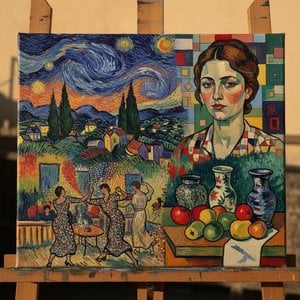
A Window Into the Artistic Soul
In the vast tapestry of art history, few images possess the raw, magnetic intensity of Vincent van Gogh’s 1887 Self-Portrait. To gaze upon this canvas is to encounter more than just a likeness; it is to enter a profound psychological dialogue with one of the most turbulent and brilliant minds to ever wield a brush. Painted during his transformative years in Paris, this work captures a pivotal moment in the artist's evolution, where the influence of Impressionism began to merge with his burgeoning Post-Impressionist identity. The man depicted—with his piercing, wide-eyed stare and neatly groomed beard—confronts the viewer with an unflinching honesty that transcends time, offering a glimpse into a soul caught between creative fervor and deep introspection.
The composition is a masterclass in using color and subtle detail to build a narrative of presence. Clad in a striking blue jacket, Van Gogh uses the subject's attire to anchor the figure amidst a background that vibrates with life. While the man remains the central focus, the surrounding environment is far from static; small, deliberate elements like the clock on the wall and the chair positioned to the right serve as quiet anchors of reality within his expressive universe. These details provide a sense of depth and domesticity, grounding the intense emotional energy of the portrait in a tangible, lived-in space.
The Language of Color and Motion
Technically, this self-portrait serves as a testament to Van Gogh’s departure from strict realism toward a more subjective, emotive style. Moving away from the muted palettes of his earlier Dutch period, the 1887 work embraces a vibrant, kaleidoscopic atmosphere. The brushwork is not merely a tool for depiction but an instrument of emotion itself. One can sense the rhythmic application of paint, where colors do not simply sit on the canvas but seem to dance and collide, creating a sense of movement that mirrors the artist's own restless spirit.
For the collector or interior designer, this piece offers an unparalleled opportunity to introduce a focal point of profound character into a space. The painting’s ability to command attention through its high-contrast blues and energetic background makes it a versatile masterpiece for modern curation. Whether placed in a quiet study to invite contemplation or as a bold statement in a contemporary living area, the work brings with it an aura of historical significance and emotional depth. It is not merely a decoration; it is an invitation to experience the enduring legacy of a man who turned his personal struggles into a universal language of color.



 معاينة الحجم الحقيقي
 اشترِ لوحة مرسومة يدويًا
 مشاركة
 مشاركة
 التفاصيل

 تحميل الملف
 قطع مشابهة
 الأشعة السينية
 عرض شرائح
 الإحصائيات

 عرض المزيد






































 خيار الزجاج متاح فقط للمقاسات التي تقل عن 110 سم