A Tragedy in Gold and Shadow
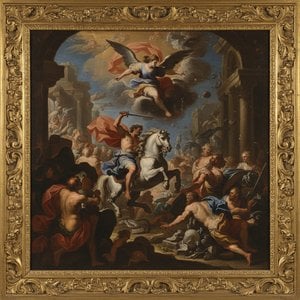
In the grand theater of the French Baroque, few moments resonate with as much harrowing intensity as Simon Vouet’s “Sophonisba Receiving the Poisoned Chalice.” Painted around 1623, this masterpiece serves as a profound window into an era where art was used to capture the very essence of human tragedy and political defiance. The scene is drawn from the classical chronicles of Livy, recounting the heartbreaking fate of Sophonisba, a Carthaginian noblewoman caught in the violent gears of the Second Punic War. As she receives the cup containing her own demise, the viewer is not merely observing a historical event but is thrust into a psychological landscape of betrayal and doomed nobility. It is a painting that demands attention, making it an unparalleled centerpiece for any collection dedicated to the dramatic power of the seventeenth century.
The composition is a masterclass in Baroque tension, utilizing a sophisticated arrangement of figures to guide the eye through a narrative of mounting dread. Vouet places Sophonisba and her husband at the heart of the drama, their interaction defined by a heavy, palpable stillness. The diagonal lines created by the reaching hand of the man and the receptive posture of the woman create a sense of movement that pulls the observer into the exchange. This central tension is subtly bolstered by the presence of secondary figures in the background, whose shadowed expressions add layers of communal grief to the personal tragedy. Even the small, delicate detail of a bird perched upon the left side of the frame serves as a silent, symbolic witness—a quiet omen of the impending death that hangs over the scene like a shroud.
The Mastery of Light and Texture
Technically, the work is a triumph of chiaroscuro, the dramatic interplay of light and dark that defines the Baroque spirit. Vouet employs this technique to sculpt the figures out of the surrounding gloom, bathing Sophonisba’s face and torso in a radiant, warm glow. This luminosity does more than just provide visibility; it elevates her character, imbuing her with a regal, almost divine dignity even in the face of certain death. The light catches the shimmering textures of her attire—the heavy, opulent ermine robe and the glint of her crown—demonstrating Vouet’s extraordinary ability to render tactile reality within a highly stylized, theatrical framework.
For the discerning collector or interior designer, this painting offers much more than historical interest; it provides a profound emotional anchor for a room. The rich palette and the meticulous attention to detail—from the despairing gaze of a maid to the cold metallic sheen of the chalice—create an atmosphere of sophisticated melancholy. A high-quality reproduction of this work allows one to bring the grandeur of the French court and the intellectual depth of classical history into a modern space, offering a conversation piece that is as much about the beauty of human resilience as it is about the mastery of oil on canvas.



 معاينة الحجم الحقيقي
 اشترِ لوحة مرسومة يدويًا
 مشاركة
 مشاركة
 التفاصيل

 تحميل الملف
 قطع مشابهة
 الأشعة السينية
 عرض شرائح
 الإحصائيات


 عرض المزيد






































 خيار الزجاج متاح فقط للمقاسات التي تقل عن 110 سم