A Moment of Serene Contemplation: Simon Vouet’s “Sleeping Venus”
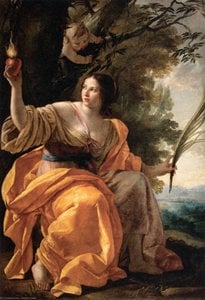
Simon Vouet's "Sleeping Venus," painted around 1630, is not merely a depiction of a reclining nude; it’s an exquisite distillation of Renaissance ideals and the burgeoning Baroque aesthetic. This captivating work transcends simple portraiture, offering instead a profound meditation on beauty, repose, and the delicate balance between earthly pleasure and spiritual contemplation. The painting immediately draws the viewer into a world of hushed tranquility, inviting us to share in the woman's peaceful slumber – a rare and deliberate choice for art of that era.
Vouet, a pivotal figure in transitioning French painting from Mannerism to the Baroque, masterfully employed techniques honed during his extensive travels through Italy. He absorbed the influence of artists like Raphael and Leonardo da Vinci, particularly their understanding of light and shadow – crucial elements evident in the soft, diffused illumination that bathes Venus’s form. The artist's meticulous attention to detail is remarkable; from the subtle folds of her drapery to the delicate curve of her lips, every element contributes to a sense of palpable realism, yet imbued with an ethereal quality.
The Symbolism of Slumber
The choice of Venus asleep holds significant symbolic weight. In classical mythology, Venus is the goddess of love and beauty, but here she’s presented not as a vibrant, active force, but in a state of serene repose. This isn't simply an image of physical beauty; it speaks to a deeper concept – the ideal of inner grace and spiritual harmony. The clouds beneath her suggest a realm beyond earthly concerns, hinting at a connection with the divine. The positioning of her head, slightly tilted back, evokes a sense of vulnerability and trust, as if she’s surrendering entirely to the peace of her dreams.
Furthermore, the inclusion of the tree branch extending from the upper left corner adds another layer of meaning. Trees often symbolize life, growth, and connection to nature – elements that complement Venus's association with fertility and abundance. The branches subtly frame the figure, emphasizing her centrality within the composition and reinforcing the painting’s overall theme of harmonious integration.
A Window into 17th-Century France
"Sleeping Venus" is a quintessential example of the artistic climate in 17th-century France, a period marked by a renewed interest in classical antiquity and a shift towards more dynamic and emotionally charged forms of art. Vouet’s work reflects this transition, moving away from the stylized elegance of Mannerism toward the richer colors, dramatic lighting, and heightened realism characteristic of the Baroque. It was commissioned during a time when royal patronage fueled artistic innovation, allowing artists like Vouet to experiment with new techniques and explore ambitious subjects.
The painting’s creation coincided with the rise of Louis XIII and Cardinal Richelieu, who were both avid collectors of art and sought to elevate French culture through lavish displays of wealth and power. Vouet's work served as a powerful symbol of royal authority and artistic excellence, contributing to the grandeur of Versailles and other prominent palaces.
Recreating the Masterpiece: A High-Quality Reproduction
Reproducing "Sleeping Venus" today offers an opportunity to bring this timeless masterpiece into any setting. A carefully crafted print or canvas reproduction captures not only the painting’s visual beauty but also its underlying emotional resonance. The soft, luminous quality of the original is faithfully replicated, creating a piece that will grace any room with an air of serenity and sophistication. Consider framing it in a classic style to further enhance its historical context and artistic merit.
Whether you're an art enthusiast, a collector seeking to expand your collection, or simply someone looking for a stunning addition to your home décor, Simon Vouet’s “Sleeping Venus” remains a testament to the enduring power of beauty, tranquility, and artistic genius.
الأسئلة والأجوبة
ما هي النبرة العاطفية التي تصاحب أسلوب Baroque في عمل "Sleeping Venus"؟
ضمن حركة Baroque، تم تسجيل "Sleeping Venus" بنبرة Tranquil.
هل تُظهر لوحة "Sleeping Venus" تباينات قوية بين الضوء والظلال؟
تُظهر لوحة "Sleeping Venus" للفنان سيمون فوي تباينًا Bold بين مناطق الضوء والظلال فيها.
ما تاريخ وتصميم "Sleeping Venus" للفنان سيمون فوي؟
أُبدعت لوحة "Sleeping Venus" في عام 1630 كعمل ينتمي إلى حركة Baroque. ويؤرخ التاريخ والأسلوب الفني مكانة هذا العمل في تاريخ الفن.



 معاينة الحجم الواقعي
 اطلب نسخة مرسومة يدويًا
 إرسال
إرسال مشاركة
 عرض التفاصيل
 دليل الأعمال الفنية للطلاب

 تحميل
تحميل
 قطع مشابهة
 الأشعة السينية
 عرض شرائح متتابع
 الإحصائيات


 اقرأ المزيد






































 خيار الزجاج متاح فقط للمقاسات التي تقل عن 110 سم