A Divine Encounter: Simon Vouet’s Annunciation
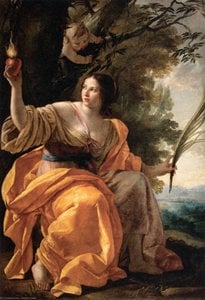
Simon Vouet's "Annunciation," painted in 1640, is more than just a religious depiction; it’s a masterful orchestration of light, shadow, and human emotion. This captivating work transports the viewer to an intimate interior space, where the momentous announcement of Mary’s divine conception unfolds with breathtaking drama. The painting immediately draws the eye to the kneeling figure of the Virgin Mary, bathed in a warm, golden glow emanating from the right side of the composition – a deliberate choice that emphasizes her purity and receptivity to the divine message. The angel Gabriel, rendered with elegant grace and poised authority, delivers the news, his gestures conveying both reverence and urgency. Beyond this central narrative, the painting is populated by a multitude of smaller angels ascending towards the upper reaches of the canvas, creating an atmosphere of celestial presence and overwhelming grace – a visual representation of the vastness and importance of the event.
Baroque Drama and Italian Influence
Vouet’s “Annunciation” firmly establishes itself within the Baroque style, yet it transcends simple imitation. He skillfully absorbed the innovations of the Italian Renaissance – particularly the dramatic use of light and shadow championed by Caravaggio – while adapting them to the evolving aesthetic sensibilities of 17th-century France. The strong directional lines, guiding the viewer’s eye from the architectural details in the background towards the central figures, are a hallmark of Baroque composition. The dynamic arrangement of bodies, the billowing drapery, and the carefully sculpted faces all contribute to a sense of movement and theatricality. This isn't merely a static representation; it’s an experience—a carefully constructed tableau designed to evoke awe and contemplation.
Symbolism and Compositional Detail
The painting is rich in symbolic elements, each contributing to the overall narrative and spiritual depth. The dove, a potent symbol of the Holy Spirit, ascends gracefully above the scene, signifying divine intervention. Mary’s red robe, a traditional color associated with royalty and purity, further emphasizes her elevated status as the Mother of God. Notice the subtle diagonal that runs from the window on the right, down through Mary's robes – this compositional device mirrors the angel Gabriel’s descent and reinforces the pivotal nature of the event. The use of perspective is deliberately flattened, prioritizing emotional impact over strict realism; Vouet sought to capture the *feeling* of the moment rather than a photographic likeness.
Technique and Materials: A Master's Hand
Painted in oil on canvas, “Annunciation” showcases Vouet’s exceptional technical skill. The smooth surfaces of Mary’s robes and the angel’s wings contrast with the textured appearance of the background walls, creating a tactile richness within the image. The artist's mastery of glazing techniques is evident in the luminous quality of the light and the subtle blending of colors. It’s likely that gold leaf was employed to embellish certain elements – perhaps the halo or decorative details – adding further opulence and grandeur to the scene. The meticulous attention to detail, from the delicate folds of drapery to the intricate patterns on the architecture, speaks volumes about Vouet's dedication to his craft. This painting is a testament to the artist’s ability to transform pigments into a vibrant and emotionally resonant work of art.
WahooArt offers meticulously hand-painted reproductions of Simon Vouet’s “Annunciation,” capturing the essence of this Baroque masterpiece with unparalleled fidelity. Each reproduction is created by skilled artists using traditional techniques, ensuring that you receive an authentic representation of this iconic artwork for your home or collection.
الأسئلة والأجوبة
إلى أي أسلوب ينتمي "Annunciation"؟
تنتمي "Annunciation" للفنان سيمون فوي إلى حركة Baroque. وتوفر هذه الحركة السياق الأسلوبي للعمل.
هل يمكنني مشاهدة "Annunciation" كعرض شرائح بملء الشاشة؟
يتوفر عرض متتابع للصور في صفحة عرض متتابع الخاصة بـ "Annunciation" للفنان سيمون فوي.
ما نوع العمل الفني "Annunciation"؟
في الكتالوج، تم تصنيف "Annunciation" للفنان سيمون فوي كـ WallArt. وتساعد هذه الفئة في العثور على أعمال مماثلة.



 معاينة الحجم الواقعي
 اطلب نسخة مرسومة يدويًا
 إرسال
إرسال مشاركة
 عرض التفاصيل
 دليل الأعمال الفنية للطلاب

 تحميل
تحميل
 قطع مشابهة
 الأشعة السينية
 عرض شرائح متتابع
 الإحصائيات


 اقرأ المزيد






































 خيار الزجاج متاح فقط للمقاسات التي تقل عن 110 سم