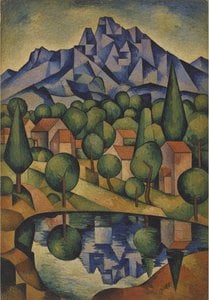
Still Life, Tulips and Apples: A Window into Cézanne’s Vision
Paul Cézanne's *Still Life, Tulips and Apples* (1894) isn’t merely a depiction of fruit and flowers; it’s a profound statement about the nature of seeing itself. Imagine a world distilled to its essential forms – the rounded curves of an orange, the sturdy uprightness of a tulip stem, the gentle slope of a table. Cézanne didn't seek to replicate reality with photographic precision; instead, he meticulously constructed this scene from his own perception, layering color and shape to create a sense of solidity and depth that felt utterly new at the time. The painting’s quiet intensity invites contemplation, drawing us into Cézanne’s deliberate process of observation.
Deconstructing Reality: Form and Color as Building Blocks
Cézanne's genius lies in his radical departure from traditional representation. He wasn’t interested in creating an illusion of space; he wanted to *show* how we perceive it. Notice how the vase isn’t simply a vase, but a series of interlocking cylinders and planes – a carefully constructed geometric form. The colors aren’t applied randomly; they are chosen with precision to define shape and create visual weight. The vibrant reds of the tulips contrast dramatically with the yellows and greens of the fruit, not for purely aesthetic reasons, but to emphasize their individual forms and relationships within the composition. He used visible brushstrokes – short, broken strokes that build up layers of color – to capture the play of light and shadow, creating a textured surface that seems to vibrate with energy. It’s as if he's sculpting with paint, building the image from its fundamental components.
A Pivotal Moment in Art History
Created during a period of immense artistic ferment, *Still Life, Tulips and Apples* represents a crucial turning point in art history. Cézanne was deeply influenced by the Impressionists’ focus on light and color, but he pushed beyond their fleeting impressions to seek something more enduring. He anticipated the developments of Cubism, which would later dismantle objects into geometric fragments. His work paved the way for artists like Picasso and Braque, who would build upon his explorations of form and space. It's a foundational piece in the development of modern art – a testament to Cézanne’s unwavering belief that art could be about more than just what we see; it could be about how we *understand* what we see.
Symbolic Resonance: Beauty, Transience, and Observation
Still life paintings have long been imbued with symbolic meaning. The tulips, often associated with love and beauty, add a layer of romanticism to the scene. The fruit – particularly the apple – can represent temptation or mortality, reminding us of the fleeting nature of existence. However, in Cézanne’s hands, these symbols are not overtly stated; they emerge from the careful arrangement of objects and the artist's profound engagement with their forms. The painting is ultimately a celebration of observation—a quiet meditation on beauty, form, and the act of seeing itself. It encourages us to slow down, appreciate the details, and consider the world around us with fresh eyes.
Bringing Cézanne Home: Reproductions for Your Space
WahooArt.com offers meticulously crafted, handmade oil painting reproductions of *Still Life, Tulips and Apples*, allowing you to experience the power of Cézanne’s vision in your own home. These reproductions capture not only the visual elements but also the texture and depth of the original masterpiece. Imagine this iconic artwork gracing your living room wall – a timeless addition that speaks to both artistic innovation and enduring beauty.



 معاينة الحجم الحقيقي
 التحويل إلى المطبوعات
 مشاركة
 مشاركة
 التفاصيل

 تحميل الملف
 قطع مشابهة
 الأشعة السينية
 عرض شرائح
 الإحصائيات


 عرض المزيد






































 خيار الزجاج متاح فقط للمقاسات التي تقل عن 110 سم