السيرة الذاتية للفنان
A Life Bridging Worlds: The Art of Sheikh Zain al-Din
Sheikh Zain al-Din, also known as al-Iraqi, stands as a fascinating figure in the history of Indian miniature painting—a Kurdish artist born in Erbil, Iraq around 1325 who flourished under the complex patronage system of British Raj. His life story is one of cultural confluence, blending the rich traditions of Mughal artistry with emerging Western techniques to create works that are both exquisitely detailed and uniquely his own. Born into a pious family, Zain al-Din received an early education steeped in Islamic scholarship, memorizing the Noble Qur’an by the age of eight—a foundation that perhaps instilled within him the meticulous precision evident in his later work. However, it was his artistic talent that would ultimately define his legacy, leading him on a path from his homeland to the bustling art centers of Patna and Calcutta.
The Rise of a Company Style Master
Zain al-Din’s prominence grew during a period of significant change in India, as the power of the Mughal Empire waned and British influence expanded. This era saw the emergence of what is now known as the “Company style” of painting—a hybrid aesthetic favored by British officials and collectors who sought realistic depictions of Indian life, flora, and fauna. Zain al-Din quickly became a leading figure in this movement, attracting the attention of European patrons eager to document the natural world around them. His most significant association was with Mary Impey, wife of Sir Elijah Impey, Chief Justice of Calcutta Supreme Court. She commissioned him, along with other artists from Patna, to create detailed sketches of birds and animals from her private menagerie. This patronage proved pivotal in establishing his reputation and allowing him to refine his distinctive style.
Blending Traditions: Mughal Precision & Western Observation
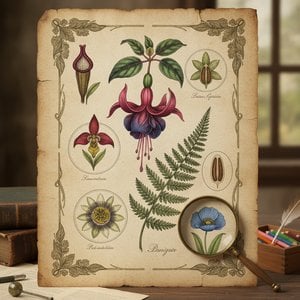
What sets Zain al-Din apart is the masterful way he synthesized seemingly disparate artistic traditions. He didn’t simply adopt Western techniques; rather, he integrated them into the existing framework of Mughal painting. The meticulous detail, delicate brushwork, and vibrant color palettes characteristic of the Patna Qalam style—a local tradition known for its refined naturalism—form the core of his work. To this foundation, he added elements of English botanical illustration, prioritizing accurate representation and scientific observation. His paintings are characterized by bright, uncluttered backgrounds that serve to accentuate the keenly wrought details of plants and animals. This combination resulted in works that were both aesthetically pleasing and remarkably informative, appealing to a growing audience interested in natural history. He employed meticulous calligraphic strokes reminiscent of Mughal Court artist Ustad Mansur for his tinted drawings and sketches.
A Legacy Preserved: Subjects & Significance
Zain al-Din’s subject matter primarily revolved around natural studies—birds, animals, and botanical specimens rendered with astonishing accuracy. His paintings weren't merely decorative; they were a testament to the beauty and diversity of the Indian landscape. The Ashmolean Museum in Oxford holds several examples of his work, including exquisite depictions of mountain-rats, hanging bats, parrots, and storks—each painting a miniature world unto itself. His art is not only valued for its aesthetic qualities but also for its scientific value, providing valuable insights into the flora and fauna of 18th and 19th century India. Recent exhibitions at institutions like the Royal Albert Memorial Museum in Exeter and the Wallace Collection in London have brought renewed attention to his work, highlighting his importance as a key figure in the Company style and a bridge between cultures. His story is a reminder that artistic innovation often arises from the intersection of different traditions, and that even within a colonial context, artists like Sheikh Zain al-Din were able to forge their own unique paths and leave behind a lasting legacy.
Rediscovering Zainuddin: A Modern Appreciation
For many years, Zain al-Din’s name was obscured by history, known only as “Jack Joyenadey” in museum records—a testament to the challenges of accurately documenting artists from marginalized communities within colonial archives. However, dedicated research and collaboration between museum staff have brought his true identity to light, allowing for a more nuanced understanding of his life and work. The rediscovery of his name and artistic contributions has sparked renewed interest in Company style painting and its complex relationship with British patronage. Today, Sheikh Zain al-Din is celebrated as a master artist whose works embody the beauty, precision, and cultural exchange that defined a pivotal moment in Indian art history.



 معاينة الحجم الحقيقي
 التحويل إلى المطبوعات
 مشاركة
 مشاركة
 التفاصيل
 الدليل

 تحميل الملف
 قطع مشابهة
 الأشعة السينية
 عرض شرائح
 الإحصائيات


 عرض المزيد






































 خيار الزجاج متاح فقط للمقاسات التي تقل عن 110 سم