معاينة الحجم الواقعي معاينة بالواقع المعزز اطلب نسخة مرسومة يدويًا التحويل إلى الصورة الرقمية إرسال
عرض التفاصيل دليل الأعمال الفنية للطلاب أضف إلى المفضلة تحميل قطع مشابهة الأشعة السينية عرض شرائح متتابع الإحصائيات

The Virtues

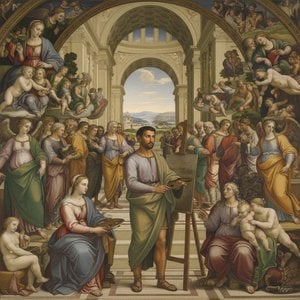
Raphael’s breathtaking fresco ‘The Virtues,’ part of the Stanza della Segnatura in Vatican City, embodies High Renaissance grace with idealized figures representing faith, hope, charity, prudence and fortitude. Explore this masterpiece and bring Raphael's timeless vision home.

رافائيل (1483-1520): فنان عصر النهضة العليا الشهير بلوحاته العذراء الهادئة، وإتقانه للعمارة، وأعماله الأيقونية مثل "مدرسة أثينا". استكشف بداياته في أوربينو وتراثه الفني.

طباعة جيلي / مطبوعات فنية

طباعة جيكلي أو كانفاس بجودة المتاحف، مع سرعة في التنفيذ وخيارات متنوعة للتشطيب. ( اطلب نسخة مرسومة يدويًا التحويل إلى الصورة الرقمية)

Corner sample of the P118B picture frame: بوليسترين مُشكّل, 5 cm wide and 3 cm thick
P118B E£10
Corner sample of the P118H picture frame: بوليسترين مُشكّل, 5 cm wide and 3 cm thick
P118H E£10
Corner sample of the P118W picture frame: بوليسترين مُشكّل, 5 cm wide and 3 cm thick
P118W E£10
Corner sample of the P438Z picture frame: بوليسترين مُشكّل, 5.5 cm wide and 3.5 cm thick
P438Z E£10
Corner sample of the P508JH picture frame: بوليسترين مُشكّل, 7 cm wide and 3.5 cm thick
P508JH E£12
Corner sample of the P508YH picture frame: بوليسترين مُشكّل, 7 cm wide and 3.5 cm thick
P508YH E£12
Corner sample of the P805H picture frame: بوليسترين مُشكّل, 5 cm wide and 3.5 cm thick
P805H E£10
Corner sample of the P805Z picture frame: بوليسترين مُشكّل, 5 cm wide and 3.5 cm thick
P805Z E£10
Corner sample of the P919BZ picture frame: بوليسترين مُشكّل, 7 cm wide and 3.5 cm thick
P919BZ E£10
Corner sample of the P919G picture frame: بوليسترين مُشكّل, 7 cm wide and 3.5 cm thick
P919G E£10
Corner sample of the P919XJ picture frame: بوليسترين مُشكّل, 7 cm wide and 3.5 cm thick
P919XJ E£10
Corner sample of the P959ZH picture frame: بوليسترين مُشكّل, 5 cm wide and 3 cm thick
P959ZH E£10
Corner sample of the P968JZ picture frame: بوليسترين مُشكّل, 6 cm wide and 4 cm thick
P968JZ E£12
Corner sample of the W106C picture frame: خشب طبيعي صلب, 5 cm wide and 3 cm thick
W106C E£8
Corner sample of the W218G picture frame: خشب طبيعي صلب, 5 cm wide and 3 cm thick
W218G E£10
Corner sample of the W218JH picture frame: خشب طبيعي صلب, 5 cm wide and 3 cm thick
W218JH E£8
Corner sample of the W218Y picture frame: خشب طبيعي صلب, 5 cm wide and 3 cm thick
W218Y E£10
Corner sample of the W307PJ picture frame: خشب طبيعي صلب, 6 cm wide and 3 cm thick
W307PJ E£10
Corner sample of the W316G picture frame: خشب طبيعي صلب, 6 cm wide and 3 cm thick
W316G E£10
Corner sample of the W316PJ picture frame: خشب طبيعي صلب, 6 cm wide and 3 cm thick
W316PJ E£8
Corner sample of the W316Y picture frame: خشب طبيعي صلب, 6 cm wide and 3 cm thick
W316Y E£10
Corner sample of the W398PJ picture frame: خشب طبيعي صلب, 5 cm wide and 3 cm thick
W398PJ E£8
Corner sample of the W4111J picture frame: خشب طبيعي صلب, 6.5 cm wide and 3.5 cm thick
W4111J E£10
Corner sample of the W500HY picture frame: خشب طبيعي صلب, 7 cm wide and 5 cm thick
W500HY E£15
Corner sample of the W500JH picture frame: خشب طبيعي صلب, 7 cm wide and 5 cm thick
W500JH E£15
Corner sample of the W692G picture frame: خشب طبيعي صلب, 8 cm wide and 4 cm thick
W692G E£12
Corner sample of the W849H picture frame: خشب طبيعي صلب, 5 cm wide and 3 cm thick
W849H E£8
Corner sample of the W940BG picture frame: خشب طبيعي صلب, 7.5 cm wide and 4.5 cm thick
W940BG E£15
Corner sample of the W953PJ picture frame: خشب طبيعي صلب, 6 cm wide and 3.5 cm thick
W953PJ E£8

مقاس قياسي
مخصص
CM
INCH

اختر من بين أحجامنا المُعدّة مسبقاً والتي تتوافق مع النسب الأصلية للعمل الفني.

العرض
الارتفاع

أدخل العرض والارتفاع اللذين تحتاجهما، ليتناسب مع إطارك أو جدارك. يمكن قص المطبوعة فقط، ولا يمكن أبداً جعلها أكبر من الصورة الأصلية، لذا فإن أي مقاس بشكل مختلف سيؤدي إلى فقدان جزء من الصورة. سنرسل لك نموذجاً رقمياً تجريبياً لاعتماده قبل البدء في عملية الطباعة. الصورة المعروضة في هذه الصفحة لا توضح القص الفعلي — النموذج التجريبي فقط هو ما يظهر ذلك.

توصيل عالمي إلى خلال أسبوعين بدلاً من المدة القياسية البالغة 4/5 أسابيع. (20 أكتوبر)

شحن سريع ومجاني لجميع أنحاء العالم
قماش كتان فاخر
تأمين شامل على الشحن
ضمان استرداد الرسوم الجمركية
ضمان دقة مطابقة الألوان
سياسة الإرجاع خلال 100 يوم (في حالات العيوب فقط)
ضمان استرداد نقدي بنسبة 100%
عرض خصم الكميات

إجمالي السعر

E£ 3531

The Virtues

طباعة جيلي / مطبوعات فنية

مقاس النسخة المطبوعة

-

إجمالي السعر

E£ 3531

حقائق سريعة

  • Artistic style: Idealized realism
  • Movement: High Renaissance
  • Year: 1509-1511
  • Location: Stanza della Segnatura, Vatican City
  • Artist: Raphael
  • Influences: Michelangelo

A Symphony of Virtue: Exploring Raphael’s “The Virtues” Fresco

The fresco "The Virtues," painted by Raphael Sanzio da Urbino between 1509 and 1511 as part of the Stanza della Segnatura in Vatican City, stands as an unparalleled achievement of High Renaissance art. More than just a decorative embellishment of papal chambers, it’s a profound meditation on moral philosophy—a visual embodiment of Christian virtues designed to inspire contemplation and guide spiritual understanding. Commissioned by Pope Julius II during a period of ambitious artistic patronage, Raphael undertook this monumental task with unwavering dedication, transforming an unremarkable hallway into a breathtaking panorama of humanist ideals.

The Compositional Harmony: Michelangelo’s Influence

Raphael's masterful handling of perspective and spatial arrangement owes considerable debt to the pioneering work of Michelangelo Buonarroti on the Sistine Chapel ceiling. Like Michelangelo’s depiction of biblical figures soaring across the vault, Raphael employs dramatic diagonals and expansive curves to draw the viewer’s eye into the scene. The careful positioning of the figures—particularly Fortitude's lion—echoes Michelangelo’s monumental sculptures, demonstrating a shared artistic lineage and reflecting the broader Renaissance fascination with grandeur and anatomical accuracy. This deliberate stylistic kinship elevates “The Virtues” beyond mere aesthetic beauty; it speaks to a deeper engagement with the intellectual currents shaping European culture at the time.

Symbolism Rooted in Classical Tradition

The fresco’s symbolism is intricately interwoven with classical humanist thought, reflecting Raphael's exposure to the philosophical ideas circulating amongst intellectuals of his era. Each virtue—Fortitude, Charity, Prudence, Hope and Temperance—is represented by a female figure, embodying abstract concepts rather than literal representations. The mirror held aloft by Prudence symbolizes wisdom and discernment, prompting viewers to examine their own moral compass. Fortitude’s lion represents courage and resilience, while Temperance's reins symbolize moderation and self-control. Crucially, the depiction of Faith points upwards towards heaven, emphasizing the importance of spiritual devotion and belief—a cornerstone of Christian theology. The central tondo depicting Justice reinforces this thematic core, symbolizing righteousness and moral accountability.

Technique: Fresco Painting – A Legacy of Brilliance

Raphael’s technique exemplifies the mastery of fresco painting achieved during the High Renaissance. This method involves applying pigment onto wet plaster—a process demanding meticulous planning and execution. The durability of fresco ensures that “The Virtues” continues to captivate audiences centuries later, preserving Raphael's vibrant colors and nuanced detailing with remarkable fidelity. Unlike oil paint, which allows for reworking and blending, fresco necessitates a decisive approach, resulting in an image that is both timeless and powerfully expressive. The subtle gradations of color achieved through layering pigments contribute to the fresco’s luminous quality—a testament to Raphael’s artistic skill and his unwavering commitment to capturing the essence of humanist ideals.

Emotional Resonance: Inspiration for Generations

“The Virtues” transcends its formal artistry, resonating with viewers on an emotional level. Its serene beauty and harmonious composition convey a sense of moral upliftment—inviting contemplation and fostering reflection upon ethical conduct. Raphael’s masterpiece serves as a poignant reminder of the enduring power of art to communicate profound philosophical concepts and inspire spiritual aspiration. It remains a cornerstone of High Renaissance art, continuing to inspire artists and collectors alike who seek to emulate its elegance and imbue their own creations with similar moral depth.

الأسئلة والأجوبة

هل يستخدم "The Virtues" للفنان رافايلو تباينات قوية أم تناغمات ناعمة؟

يُظهر التحليل اللوني لـ "The Virtues" للفنان رافايلو تباينًا Statement وتناغمًا Strong Color Unity.

هل يمكنني معاينة "The Virtues" للفنان رافايلو على جداري الخاص قبل الشراء؟

تستخدم صفحة معاينة الواقع المعزز لعمل "The Virtues" للفنان رافايلو تقنية الواقع المعزز لعرض العمل الفني في مساحتك الخاصة، عبر جهاز متوافق.

من أي بلد ينتمي عمل High Renaissance بعنوان "The Virtues"؟

أُنجز العمل الذي ينتمي إلى مدرسة High Renaissance بعنوان "The Virtues" على يد فنان وُلد في إيطاليا.


نبذة عن الفنان

رافائيل: فنان عصر النهضة الإيطالية، بين الرقة والانسجام

في قلب مدينة أوربينو النابضة بالحياة الفكرية والفنية، وُلد رافاييل سانزيو، أو كما عُرف بالعالم "رافائيل"، عام 1483. لم يكن مجرد فنان، بل نتاج بيئة ثقافية غنية، حيث كان والده جيوفاني سانتّي ليس فقط رسامًا في بلاط الدوق فريدريكو دا مونتيفيلترو، بل أيضًا شاعرًا ومثقفًا متعمقًا في تيارات عصر النهضة. هذا الانغماس في بيئة تقدر الرقي الفكري والنقاشات الأدبية شكل بعمق حساسيته الفنية منذ صغره. بعد وفاة والده المبكرة، تحمل رافائيل مسؤولية ورشة العائلة، مما سمح له بصقل مهاراته تحت إشراف فنانين محليين، حيث بدأت تظهر علامات أسلوبه المميز: رقة فائقة واهتمام دقيق بالتفاصيل.

من أمبريا إلى فلورنسا: رحلة استيعاب التأثيرات

كانت رحلة رافائيل الفنية سلسلة من التطور المستمر، حيث تميزت بفترات مكثفة من الدراسة والاستيعاب. التدريب الأولي تحت إشراف بييترو بيروجينو في بيروجيا وضع أساسًا متينًا في الأسلوب الأمبرياني – الذي يتميز بنمذجة ناعمة وتكوينات متناغمة ومشاهد دينية هادئة. لكن فضوله الذي لا يشبع دفعه إلى البحث عن تحديات جديدة وتوسيع آفاقه الفنية. في عام 1504، سافر إلى فلورنسا، المدينة التي كانت تنبض بطاقة الابتكار الفني. هنا، واجه أعمال ليوناردو دا فينشي وميكيلانجيلو، الفنانين الذين دفعوا حدود الرسم إلى مستويات غير مسبوقة. درس بدقة تقنياتهما – "سفوماتو" ليوناردو، تلك التدرجات الدقيقة للضوء والظل، والدقة التشريحية الدرامية والتكوينات القوية لميكيلانجيلو. كانت هذه الفترة في فلورنسا بمثابة بوتقة انصهار، أجبرته على مواجهة إمكانيات فنية جديدة ودمجها في رؤيته الفريدة.

الانتصار الروماني: المفوضيات والإبداعات الخالدة

في عام 1508، تلقى رافائيل دعوة غيرت مسار حياته المهنية – دعوة من البابا يوليوس الثاني للانتقال إلى روما. شكل هذا بداية الفترة الأكثر إنتاجية وازدهارًا في حياته. قدمت له المدينة الأبدية فرصة لا مثيل لها لعرض مواهبه على نطاق واسع، وتزيين شقق البابا في الفاتيكان بلوحات جدارية مذهلة. "أكاديمية أثينا"، ربما عمله الأكثر شهرة، هي شهادة على إتقانه للتكوين والمنظور والرمزية الفلسفية. داخل هذا الفضاء المهيب، جمع رافائيل شخصيات من العصور القديمة الكلاسيكية – أفلاطون وأرسطو وفيثاغورس وإقليدس – لإنشاء مشهد حي يحيي العقل البشري والسعي وراء المعرفة. استمر في العمل للبابوات اللاحقين، بما في ذلك ليون العاشر، وتولى مشاريع ضخمة مثل تزيين "ستانزا ديلا سيجناتورا" و"ستانزا د'إيليودورو". لوحاته الجدارية في هذه الغرف ليست مجرد زخرفة؛ إنها بيانات قوية حول قوة البابا والإيمان الديني ومثل عصر النهضة.

توازن بين الرقة والوقار: أسلوب رافائيل الفني

غالبًا ما يوصف الأسلوب الفني لرافائيل بأنه مزيج متناغم من الرقة والوضوح والجمال المثالي. كان يتمتع بقدرة استثنائية على دمج التأثيرات المتنوعة – التقاليد الأمبرية، والابتكارات الفلورنسية، والعصور القديمة الكلاسيكية – في جمالية فريدة ومتوازنة. تكوينات أعماله مخططة بدقة، وتعرض إحساسًا بالنظام والتناسب يعكس فهمه العميق لمبادئ عصر النهضة. تنبض شخصياته بهدوء ووقار وتعبير عاطفي، مما يجسد المثال الإنساني للكمال البشري. كان أيضًا أستاذ في الألوان، مستخدمًا ألوانًا غنية ومشرقة لإنشاء أعمال جذابة بصريًا ومحفزة فكريًا على حد سواء. على عكس الأسلوب الدرامي المضطرب غالبًا لميكيلانجيلو، تشع أعمال رافائيل بإحساس بالهدوء والانسجام – وهي صفة أسرقت قلوب الجماهير لعدة قرون.

إرث وتأثير دائم

لقد قصرت وفاة رافائيل المبكرة في عام 1520 عن عمر يناهز الثالثة والثلاثين، حياة مليئة بالإمكانات. ومع ذلك، فإن إرثه باقٍ كواحد من أهم الشخصيات في تاريخ الفن الغربي. أصبحت أعماله حجر الزاوية في الجمالية العالية لعصر النهضة، وخدمت كنموذج للأجيال القادمة من الفنانين. بينما سيطغى تأثير ميكيلانجيلو لاحقًا على الخطاب الفني، شهد التأكيد على الوضوح والانسجام والجمال المثالي لرافائيل انتعاشًا خلال الفترة الكلاسيكية الجديدة، حيث دافع عنه النقاد مثل يوهان جوتهارد فينكلمان. اليوم، تظل لوحاته تلهم الرهبة والإعجاب، وتأسر المشاهدين ببراعتها التقنية وعمقها العاطفي وجاذبيتها الدائمة. لقد رسخ مكانته كفنان حقيقي من عصر النهضة – فنان التقط ليس فقط الشبه الجسدي لموضوعاته، بل أيضًا جوهر الرشاقة الإنسانية والكرامة.

رافايلو

رافايلو

1483 - 1520 , إيطاليا

لمحة سريعة

  • Artistic Movement Or Style: الريناسانس العظيم
  • Artists Who Influenced This Artist: ['ليوناردو دا فينشي"، "ميكاييل أنجيلو']
  • Date Of Birth: 1483
  • Date Of Death: 1520
  • Full Name: رافائيل سانزيو د أوربينا
  • Nationality: إيطالي
  • Notable Artworks: ['المدرسة اليونانية"، "السيسينا ماдона"، "تحويل القديس يوحنا المعلم']
  • Place Of Birth: أوربينا، إيطاليا
استكشف الأعمال الفنية المصنفة حسب الموضوعات والأنماط والخصائص.