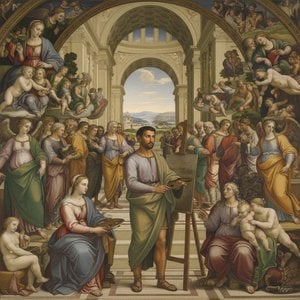
A Serene Emblem of Faith: The Ethereal Vision of St. Sebastian
In the quiet corridors of the Italian Renaissance, few images capture the delicate balance between human vulnerability and divine strength as poignantly as this evocative depiction of St. Sebastian. Attributed to the masterful hand of Raphael, yet breathing with the unmistakable, soft grace of his mentor Perugino, the painting serves as a profound window into the Umbrian school of art. At first glance, the viewer is met not with the expected violence of martyrdom, but with an unexpected, luminous tranquility. The central figure—often interpreted through the lens of spiritual fortitude—stands draped in a rich, crimson robe that commands attention, symbolizing both regal dignity and the sacrificial blood of the saint. This deep hue provides a striking contrast to the more muted, atmospheric backdrop, creating a visual anchor that draws the eye into a state of contemplative stillness.
<
p>The composition is a masterclass in Renaissance equilibrium. While the subject matter carries the weight of Christian iconography—notably the presence of a bow and arrow that allude to the saint's legendary survival of the first execution attempt—the artist eschews dramatic tension in favor of
idealized beauty. The technique employs a soft, almost hazy translucence of color, a hallmark of the era that lends the skin tones an ethereal, pearlescent quality. This approach, likely influenced by the delicate brushwork of Francesco Francia, allows the figures to emerge from the background as if through a gentle mist. Such atmospheric perspective does more than create depth; it envelops the viewer in a dreamlike state, where the boundaries between the earthly and the divine begin to blur.
Symbolism and the Mastery of Form
Beyond its aesthetic splendor, the artwork is layered with profound symbolic meaning designed to inspire devotion and reflection. The spear held with unwavering confidence serves as a dual emblem: it is both a weapon of persecution and a symbol of defense against evil, representing an unshakeable commitment to one's faith. Every element, from the graceful cascade of hair to the subtle positioning of the secondary figures in the background, is orchestrated to maintain a sense of harmonic composition. This reflects the Neoplatonic ideals prevalent in Raphael’s early years—the pursuit of a perfection that transcends the physical world to touch the sublime.
For the discerning collector or interior designer, this piece offers much more than mere decoration; it provides a focal point of intellectual and emotional depth. The painting's ability to harmonize bold, saturated pigments with soft, diffused light makes it an extraordinary addition to a curated space. Whether placed in a room designed for quiet study or as a centerpiece in a grand hall, the work radiates a sense of timelessness. It invites conversation about the intersection of history, art, and spirituality, making it a truly transformative acquisition for those who seek to surround themselves with art that speaks to the soul.



 معاينة الحجم الحقيقي
 اشترِ نسخة مطبوعة
 مشاركة
 مشاركة
 التفاصيل

 تحميل الملف
 قطع مشابهة
 الأشعة السينية
 عرض شرائح

 عرض المزيد






































 خيار الزجاج متاح فقط للمقاسات التي تقل عن 110 سم