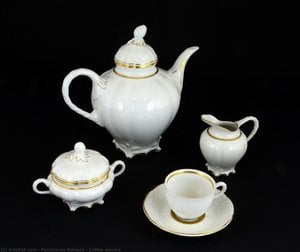
A Legacy of Clay and Fire: The Story of Porcelanas Bidasoa
The history of Porcelanas Bidasoa is more than a mere chronicle of industrial production; it is a profound narrative of resilience, artistry, and the enduring spirit of Gipuzkoa. Emerging from the turbulent landscape of post-Spanish Civil War Spain, this legendary institution was founded in 1935 by Pablo and Gabino Otxotekoa. Their vision was to transform the town of Irun into a beacon of ceramic excellence, a dream that faced immediate devastation when their initial factory was destroyed during the conflict. Yet, from these ashes, a remarkable reconstruction began. By drawing upon the prestigious technical expertise of Limoges—the famed French heart of porcelain artistry—and securing vital investments, Bidasoa rebuilt its infrastructure, setting the stage for a journey that would eventually capture the imagination of the international art world.
As the decades unfolded, the factory’s evolution became a mirror to the changing tides of European design. During the mid-twentieth century, particularly between 1948 and 1954, the company looked backward with reverence to honor the grandeur of defunct European royal manufacturers. Their artisans masterfully recreated the elegance of the Neapolitan Capodimonte and the storied Spanish firms Buen Retiro and Moncloa. These pieces, characterized by their exquisite transparent glazes and intricate gilt decorations, brought a sense of aristocratic nostalgia to the modern era. The craftsmanship was so precise that even the functional elements, such as the rectangular sections of handles on soup tureens, were designed with a meticulous eye for both ergonomic grace and structural integrity.
Innovation and the Intersection of Fine Art
The true metamorphosis of Porcelanas Bidasoa occurred when the company embraced the avant-garde. The period spanning the 1960s through the 1980s marked a revolutionary departure from classical tradition, driven by the visionary designs of Manuel Barbadillo. This era introduced bold geometric forms and vibrant color palettes that broke away from the delicate floral motifs of the past, injecting a sense of contemporary dynamism into the porcelain medium. It was during this golden age of innovation that Bidasoa achieved its most prestigious milestone: collaborations with some of the greatest titans of twentieth-century art, including Pablo Picasso and Salvador Dalí. These partnerships allowed the company to transcend the boundaries of functional tableware, turning everyday objects into canvases for surrealism and cubist expression.
This spirit of experimentation was not limited to form alone but extended into decorative techniques as well. By the 1970s, the introduction of series such as Bidasoa 80 showcased a mastery of modern aesthetics, even as the firm maintained its commitment to classic lines through recreations like the Carlos IV model. This delicate balance between honoring the past and embracing the future ensured that Büssoa remained an international benchmark for quality. The factory’s ability to marry the industrial precision of mass production with the soulful touch of fine art created a unique aesthetic language that resonated far beyond the borders of Spain.
A Cultural Treasure of Gipuzkoa
Despite the economic challenges and mounting debts that eventually threatened its financial stability toward the end of the twentieth century, the cultural impact of Porcelanas Bidasoa remains unshakeable. The company’s legacy is preserved not just in museums, but in the very identity of the Gipuzkoa region. Today, much of this invaluable heritage is safeguarded by Gordailua, the Gipuzkoa Heritage Collection Centre. This collection serves as a vital repository for the thousands of pieces that define an era, ranging from industrial artifacts to high-art ceramics.
The historical significance of Porcelanas Bidasoa can be summarized through its enduring contributions:
- Artistic Synthesis: The unique ability to bridge the gap between traditional royal porcelain styles and modern avant-garde movements.
- Global Influence: Establishing Irun as a pivotal player in the European ceramic market through high-profile collaborations with masters like Dalí and Picasso.
- Technical Mastery: The successful integration of French Limoges techniques with Spanish creative vision, resulting in world-class porcelain.
- Cultural Preservation: Leaving behind a vast, documented history of moulds, tools, and finished works that continue to inspire ceramicists and historians alike.
Though the factory's physical production eventually ceased, the echoes of its kilns continue to resonate. Porcelanas Bidasoa remains a symbol of how industrial ambition, when wedded to artistic passion, can create a legacy that survives even the most turbulent historical shifts.



 معاينة الحجم الحقيقي
 اشترِ لوحة مرسومة يدويًا
 مشاركة
 مشاركة
 التفاصيل

 تحميل الملف
 قطع مشابهة
 الأشعة السينية
 عرض شرائح
 عرض المزيد






































 خيار الزجاج متاح فقط للمقاسات التي تقل عن 110 سم