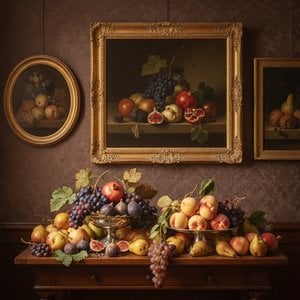
A Celebration of Summer’s Bounty: Renoir's "Strawberries" (1914)
Pierre-Auguste Renoir’s “Strawberries,” painted in 1914, is more than just a still life; it’s an ode to the simple pleasures of life and a testament to the artist’s mastery of Impressionist technique. While often described as featuring strawberries, a closer look reveals a luscious arrangement of peaches, plums, and other fruits cascading across a draped white cloth – a vibrant tableau that embodies Renoir's lifelong fascination with beauty and sensory experience.
Impressionistic Brilliance: Style & Technique
This painting is deeply rooted in the Impressionist movement, characterized by its emphasis on capturing fleeting moments of light and color. Renoir eschews precise detail in favor of *expressive brushstrokes* that build texture and convey a sense of immediacy. The paint application is loose and visible – an impasto technique – creating a tactile quality that invites the viewer to almost reach out and touch the fruit. Notice how the artist doesn’t blend colors seamlessly; instead, he juxtaposes them, allowing the eye to mix them optically. This creates a shimmering effect, particularly noticeable in the highlights on the peaches and plums. The composition isn't rigidly structured but feels organic and natural, mirroring the abundance of a summer harvest.
Historical Context & Renoir’s Late Style
Painted during the early years of World War I, “Strawberries” offers a poignant contrast to the turmoil unfolding in Europe. It represents a deliberate turn towards more intimate and joyful subjects by Renoir in his later years. Increasingly afflicted with arthritis, which severely limited his mobility, Renoir focused on still lifes as they allowed him to continue painting despite his physical challenges. This period saw a softening of his style, a greater emphasis on warmth and sensuality, and a deliberate rejection of the more radical experiments of some of his Impressionist contemporaries.
Symbolism & Emotional Resonance
The choice of fruit itself carries symbolic weight. Peaches and plums have long been associated with abundance, prosperity, and even temptation. The slightly overripe appearance of some of the fruit hints at the transient nature of beauty and pleasure – a common theme in Renoir’s work. However, it's not about decay but rather *celebrating life in its fullness*, acknowledging that all things are ephemeral. The warm color palette—rich oranges, reds, and yellows—evokes feelings of comfort, intimacy, and contentment.
Key Features & Artistic Impact
- Masterful Use of Light: Renoir expertly captures the way light plays across the surfaces of the fruit, creating a sense of volume and depth.
- Textural Richness: The visible brushstrokes and impasto technique create a tactile experience for the viewer, enhancing the sensuality of the subject matter.
- Harmonious Composition: The arrangement of the fruit feels both natural and carefully considered, creating a balanced and visually appealing composition.
- Warm & Inviting Palette: The use of warm colors evokes feelings of comfort, abundance, and joy.
“Strawberries” is a captivating work that exemplifies Renoir’s enduring legacy. It's a painting that invites contemplation, offering a moment of respite and reminding us to appreciate the simple beauty found in everyday life. Its timeless appeal makes it an ideal addition to any art collection or interior space, bringing a touch of French elegance and *joie de vivre* to its surroundings.



 معاينة الحجم الحقيقي
 اشترِ لوحة مرسومة يدويًا
 مشاركة
 مشاركة
 التفاصيل

 تحميل الملف
 قطع مشابهة
 الأشعة السينية
 عرض شرائح

 عرض المزيد






































 خيار الزجاج متاح فقط للمقاسات التي تقل عن 110 سم