A Dance of Color and Form: Examining Paul Klee’s “The Step”
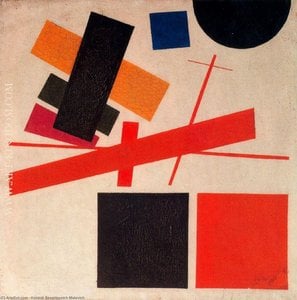
Paul Klee's "The Step," painted circa 1937, stands as a testament to the artist’s unwavering commitment to exploring the intersection between abstraction and emotion—a hallmark of his distinctive artistic vision. More than just a visual representation, it embodies Klee’s profound engagement with musical principles and his belief in art's capacity to communicate intangible feelings. This seemingly simple composition – a solitary figure holding aloft a red pole against an orange and brown backdrop – belies a complex tapestry of influences and deliberate choices that continue to fascinate scholars and inspire collectors alike.
Style and Technique: Embracing Geometric Harmony
Klee’s style is undeniably rooted in geometric abstraction, yet it transcends mere formalism. He eschewed representational accuracy, prioritizing instead the creation of visual harmonies reminiscent of musical scores. The painting utilizes a technique characterized by layered washes of color—primarily orange and brown—that build upon one another to generate depth and luminosity. These hues are punctuated by bold strokes of red, notably in the pole held by the central figure, which serves as both an anchor point and a focal element within the artwork. Klee’s meticulous attention to detail is evident in the subtle variations of tone and texture achieved through his brushwork, demonstrating a mastery of watercolor that anticipates developments in Abstract Expressionism.
Historical Context: Bauhaus Influence and Artistic Dialogue
“The Step” emerged during Klee's time at the Bauhaus School in Dessau, Germany—a crucible for modernist experimentation where he collaborated with artists like Wassily Kandinsky and Josef Albers. This influential environment fostered a dialogue between visual arts and music, encouraging artists to consider how color and form could convey musical ideas. The painting reflects this spirit of collaboration and intellectual curiosity, mirroring the Bauhaus ethos of integrating art into everyday life. Furthermore, Klee’s exploration of geometric abstraction aligns with broader trends in European art during the 1930s, responding to anxieties surrounding societal upheaval while simultaneously reaffirming a belief in the transformative power of artistic expression.
Symbolism and Emotional Resonance: Beyond Surface Appearance
While visually arresting, “The Step” is laden with symbolic significance. The solitary figure represents introspection and contemplation—a deliberate departure from traditional portraiture—suggesting an inward gaze focused on achieving balance and stability amidst uncertainty. The red pole symbolizes aspiration and upward movement, mirroring the musical concept of ascending scales. Simultaneously, the orange and brown hues evoke warmth and earthiness, grounding the composition while conveying a sense of serenity. Ultimately, Klee’s artwork invites viewers to contemplate themes of resilience, harmony, and the pursuit of inner peace—resonances that extend far beyond its formal aesthetic qualities.
Interior Design Considerations: Bringing Klee's Vision Home
A reproduction of “The Step” would lend itself beautifully to contemporary interior design schemes. Its muted color palette – predominantly orange and brown accented by red – complements a range of styles, from Scandinavian minimalism to bohemian chic. The geometric abstraction offers a refreshing counterpoint to more ornate patterns, creating a space that feels both calming and intellectually stimulating. Consider framing the artwork in a neutral tone to maximize its impact or pairing it with complementary textiles—such as textured linens or woven rugs—to further enhance its visual harmony.
الأسئلة والأجوبة
هل يُعد "The Step" للفنان بول كليه عملاً فنياً مشهوراً؟
مستوى الشهرة المسجل لـ "The Step" للفنان بول كليه هو Recognized.
ما مدى التناغم بين ألوان "The Step"؟
تُظهر ألوان "The Step" للفنان بول كليه تناغماً Unified Palette. ويصف التناغم كيفية ترابط الألوان مع بعضها البعض.
ما هي الاستخدامات الموصى بها لنسخة مطبوعة من "The Step" للفنان بول كليه؟
الاستخدام الموصى به لنسخة مطبوعة من "The Step" هو Accent.
هل يتوفر خيار التنزيل لـ "The Step"؟
يمكن تحميل صورة "The Step" للفنان بول كليه من صفحة تحميل الخاصة بالعمل الفني: تحميل صورة رقمية عالية الدقة.
ما مدى حدة الألوان في "The Step" للفنان بول كليه؟
تتميز الألوان في "The Step" للفنان بول كليه بكثافة Vivid.
ما هو الشعور الذي تثيره ألوان "The Step" للفنان بول كليه؟
تتناغم لوحة ألوان Dark في عمل "The Step" للفنان بول كليه مع نبرته العاطفية Reflective؛ فاللون هو أحد السبل التي يعبّر بها العمل الفني عن المشاعر.
ما هي الغرفة المقترحة لعرض "The Step"، مع مراعاة لوحة ألوانه؟
تتناغم ألوان Dark في لوحة "The Step" للفنان بول كليه مع المساحة الموصى بها لها: وهي Living Room.
هل توجد ورقة حقائق حول "The Step" للفنان بول كليه مخصصة للطلاب؟
تقدم صفحة دليل تعليمي الخاصة بـ "The Step" للفنان بول كليه ورقة حقائق قابلة للطباعة ومكونة من ورقتين: العمل الفني مع جدول بياناته، وشريط زمني يضعه ضمن الحقبة التي عاش فيها الفنان، وأعمال أخرى للفنان نفسه، ولوحة الألوان المقاسة، بالإضافة إلى مراجع جاهزة للاقتباس بأربعة أساليب مختلفة.



 معاينة الحجم الواقعي
 اطلب نسخة مرسومة يدويًا
 إرسال
إرسال مشاركة
 عرض التفاصيل
 دليل الأعمال الفنية للطلاب

 تحميل
تحميل
 قطع مشابهة
 الأشعة السينية
 عرض شرائح متتابع
 الإحصائيات
 اقرأ المزيد






































 خيار الزجاج متاح فقط للمقاسات التي تقل عن 110 سم