وصف القطعة الفنية
Deep Pathos: An Exploration of Color and Emotion in Paul Klee’s Masterpiece
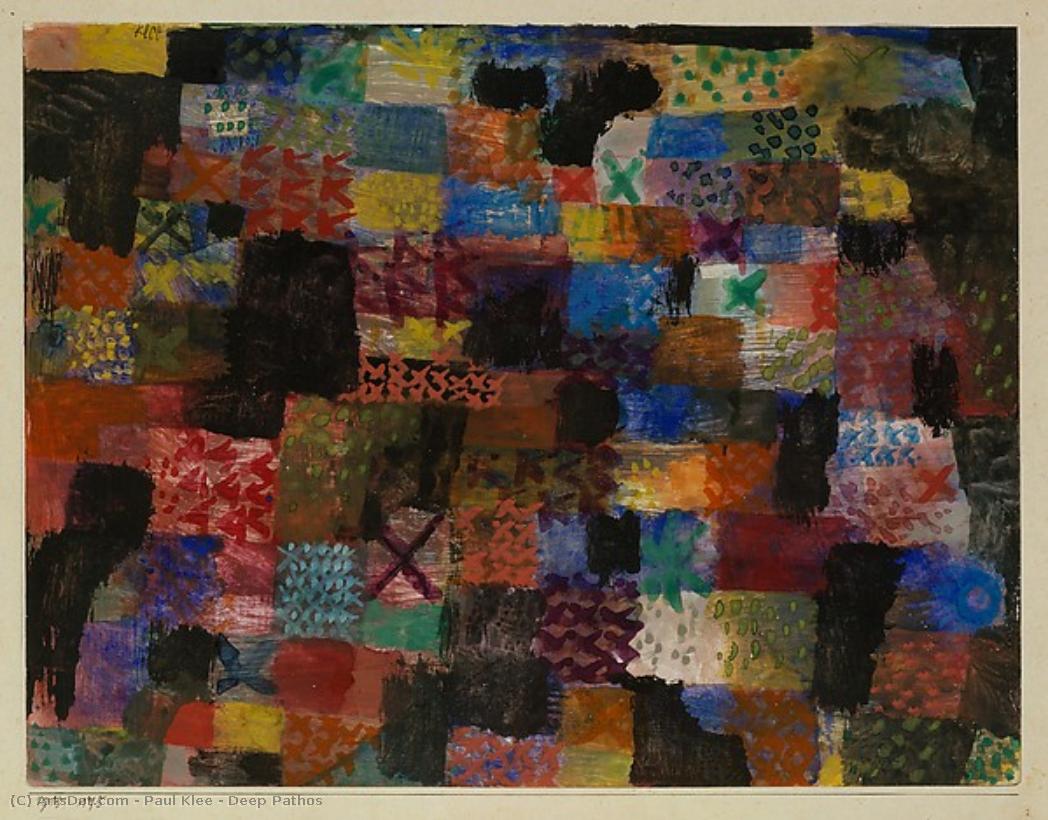
Paul Klee's "Deep Pathos," created in 1915, stands as a testament to the artist’s singular vision—a fusion of Expressionism, Cubism, and Surrealism that transcends mere visual representation. More than just pigment on paper, it embodies a profound engagement with psychological depth and invites contemplation about the complexities of human experience. This oil painting on cardboard, measuring 9 1/4 × 11 1/2 inches, is housed at The Metropolitan Museum of Art (The ME), offering visitors an unparalleled opportunity to immerse themselves in Klee’s groundbreaking aesthetic.
Composition and Structure: A Grid Beyond Geometry
At first glance, "Deep Pathos" presents a deceptively simple geometric framework—a grid composed of interlocking rectangular blocks. However, this apparent rigidity belies a dynamic interplay of movement and visual rhythm. Unlike traditional perspective, Klee eschews linear recession, instead layering colors and shapes to create an illusion of depth that feels organic rather than calculated. The absence of a dominant focal point encourages the viewer’s eye to wander across the surface, discovering subtle nuances in texture and color as it progresses. This deliberate fragmentation reflects Klee's fascination with Cubist principles while simultaneously hinting at the subconscious currents explored by Surrealist artists—a duality that underscores the painting’s emotional resonance.
Color Palette: Earthy Undertones Illuminated by Vibrant Accents
The artwork’s dominant palette is rooted in muted earth tones—browns, ochres, reds, and blues—creating a mood of quiet contemplation. Yet, these subdued hues are punctuated by bursts of brighter colors—yellows, greens, and oranges—that inject vitality into the composition without overwhelming it. Klee's masterful manipulation of color theory is evident in his careful layering of pigments, allowing underlying tones to subtly influence the appearance of surface shades. This technique contributes to a sense of luminosity and depth, mirroring the artist’s belief that color possesses inherent expressive power. The translucent quality of the paint lends an ethereal feel to the piece, enhancing its contemplative atmosphere.
Influence and Artistic Context: Echoes of Ancient Art and Modern Movements
Klee's artistic sensibilities were profoundly shaped by a diverse range of influences—from ancient Egyptian art’s symbolic use of color and form to the burgeoning avant-garde movements of his time. Notably, "Deep Pathos" draws inspiration from Surrealist imagery, mirroring Klee’s exploration of dreamlike states and subconscious associations. Simultaneously, it reflects the geometric rigor characteristic of Cubism, demonstrating Klee's willingness to experiment with innovative stylistic approaches. His involvement in Der Blaue Reiter (The Blue Rider) and Die Brücke solidified his position within a circle of artists committed to challenging artistic conventions and expressing emotional truths—a legacy that continues to inspire contemporary art practitioners.
Symbolic Depth: Exploring Emotion Through Abstract Form
Ultimately, "Deep Pathos" transcends literal representation, prioritizing symbolic exploration over visual realism. The grid-like structure serves as a metaphor for order struggling against chaos—a motif recurrent throughout Klee’s oeuvre—while the delicate lines and organic shapes evoke feelings of vulnerability and introspection. As Klee himself stated, “I want to express what I see.” The title itself—"Deep Pathos"—suggests an investigation into profound sorrow or melancholy, conveyed through the careful orchestration of color and form. Viewing this artwork is akin to embarking on a journey inward, prompting reflection on universal themes of emotion and experience.



 معاينة الحجم الحقيقي
 اشترِ لوحة مرسومة يدويًا
 مشاركة
 مشاركة
 التفاصيل

 تحميل الملف
 قطع مشابهة
 الأشعة السينية
 عرض شرائح


 عرض المزيد






































 خيار الزجاج متاح فقط للمقاسات التي تقل عن 110 سم








