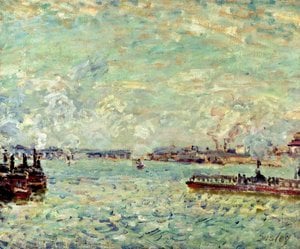
A Window Into Parisian Life: The Soul of the Seine
In the heart of Paris, where the rhythmic pulse of the city meets the gentle flow of the water, Paul Cézanne captured a moment that transcends mere scenery. The Seine at Bercy, painted in 1878, is far more than a tranquil riverside landscape; it is a profound distillation of the Impressionist spirit, infused with the nascent, structural explorations that would eventually pave the way for Cubism. As one gazes upon this canvas, they are not just observing a river, but witnessing a pivotal moment in art history where the fleeting light of the Belle Époque began to coalesce into something more permanent and architectural.
The scene unfolds with a lively, bustling energy, presenting a panoramic view of the Seine at Bercy. Small boats drift near the shore while larger vessels navigate the deeper waters, creating a sense of movement and purpose. Amidst this aquatic dance, figures populate the banks, their presence adding a layer of human narrative to the landscape. A horse, visible in the foreground, anchors the composition, grounding the viewer in the everyday vitality of 19th-century Parisian life. It is a painting that breathes with the activity of a city in motion, yet it possesses an underlying stillness that invites deep contemplation.
The Architecture of Light and Form
What truly distinguishes this masterpiece from its Impressionistic predecessors is Cézanne’s revolutionary approach to technique. While contemporaries like Monet sought to dissolve form into shimmering reflections and atmospheric haze, Cézanne utilized a bold, deliberate method to sculpt the canvas. He employed thick impasto—heavily textured paint applied with significant pressure—to create palpable ridges and valleys across the surface. These expressive brushstrokes do not merely represent shapes; they define them, fracturing the river and sky into geometric planes that anticipate the analytical brilliance of modern art.
This technique allows the viewer to experience a sense of solidity and permanence amidst the dynamism of the scene. Cézanne painstakingly rebuilt his subjects from multiple viewpoints simultaneously, a method designed to convey not just visual information, but an emotional resonance. For the collector or interior designer, this creates a piece that possesses incredible depth; it is a painting that changes as the light in a room shifts, offering new textures and perspectives with every glance. The interplay of heavy texture and structured composition makes it a commanding presence in any curated space.
A Legacy for the Modern Collector
To own a reproduction of The Seine at Bercy is to possess a fragment of the bridge between two eras. Cézanne stands as the monumental figure who connected the ephemeral beauty of Impressionism with the structured complexity of the 20 many-century avant-garde. His ability to capture how a scene felt—the weight of the water, the solidity of the earth, and the vibrant pulse of human existence—makes this work an enduring source of inspiration.
For those seeking to transform a living space, this artwork offers more than decoration; it offers an atmosphere of sophisticated history and intellectual depth. Whether placed in a sun-drenched gallery or a contemporary study, the painting’s rich textures and historical gravity serve as a conversation piece that celebrates the enduring beauty of the Parisian spirit. It is an invitation to slow down, to observe the structure within the movement, and to find beauty in the deliberate, textured reality of the world around us.



 معاينة الحجم الحقيقي
 اشترِ لوحة مرسومة يدويًا
 مشاركة
 مشاركة
 التفاصيل

 تحميل الملف
 قطع مشابهة
 الأشعة السينية
 عرض شرائح
 الإحصائيات


 عرض المزيد






































 خيار الزجاج متاح فقط للمقاسات التي تقل عن 110 سم