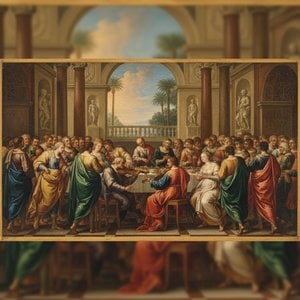
Paolo Veronese: A Venetian Visionary – Decoding the Majesty of Annunciation
The year is 1558. Venice, at its zenith of artistic and cultural influence, pulsates with creativity—a city where patronage fueled innovation and ambition reigned supreme. Amidst this opulent panorama emerges Paolo Veronese, a painter whose canvases transcend mere representation; they embody the spirit of an era and invite contemplation on themes of faith, grandeur, and divine grace. This essay delves into the intricacies of his masterpiece, “Annunciation,” exploring its stylistic brilliance, technical prowess, and enduring emotional resonance.
Veronese’s “Annunciation” is a monumental oil painting on canvas measuring 340 x 455 cm—a testament to Venetian ambition and artistic skill. Unlike the muted palettes favored by many of his contemporaries, Veronese employs a riotous symphony of color, meticulously layering hues to achieve unparalleled luminosity and depth. His masterful use of glazing techniques—applying thin translucent layers of paint over previous coats—creates an ethereal atmosphere that captures the sacred moment depicted with breathtaking accuracy. The canvas itself is treated with meticulous detail, reflecting the Venetian obsession for surface perfection.
Stylistically, “Annunciation” firmly establishes Veronese as a pioneer of Mannerism, a movement characterized by elongated figures, stylized poses, and an emphasis on decorative ornamentation. Departing from the idealized proportions of Renaissance art, Veronese presents Mary and Gabriel in postures that convey both solemn dignity and subtle dynamism—a deliberate rejection of classical harmony.
The painting’s historical context is inextricably linked to the Counter-Reformation, a period marked by papal efforts to reaffirm Catholic dogma following the Protestant Reformation. The depiction of the Virgin Mary receiving the angelic messenger serves as a powerful visual affirmation of Christian faith and divine providence—a deliberate message intended for viewers within the Venetian ecclesiastical hierarchy.
Symbolism permeates every aspect of “Annunciation.” The architectural setting—a building adorned with columns reminiscent of Roman temples—represents stability and authority, mirroring the Church’s role as protector of Christendom. The vibrant colors—particularly the golden hues—symbolize divine illumination and holiness, elevating the scene to a realm beyond earthly concerns. Even the positioning of the figures contributes to the narrative's symbolic significance; Mary is depicted in an upright posture, signifying humility and piety, while Gabriel leans forward with reverence.
More than just a beautiful image, “Annunciation” evokes profound emotional responses—a sense of awe, wonder, and spiritual contemplation. Veronese’s ability to convey complex theological ideas through visual artistry underscores the enduring power of art to inspire faith and illuminate the human condition. Its grandeur continues to captivate audiences today, reminding us of Venice's legacy as a beacon of artistic excellence.
The painting’s impact extends beyond its immediate religious significance; it established Veronese as one of the foremost painters of his time and influenced generations of artists who followed. Reproductions of “Annunciation” adorn homes and galleries worldwide, ensuring that Veronese's vision—a celebration of color, form, and faith—remains accessible to admirers across cultures.



 معاينة الحجم الحقيقي
 التحويل إلى المطبوعات
 مشاركة
 مشاركة
 التفاصيل

 تحميل الملف
 قطع مشابهة
 الأشعة السينية
 عرض شرائح
 الإحصائيات


 عرض المزيد






































 خيار الزجاج متاح فقط للمقاسات التي تقل عن 110 سم