A Pivotal Step Towards Cubism: Decoding *Paysage aux deux figures*
Paysage aux deux figures (Landscape with Two Figures) represents a crucial juncture in Pablo Picasso’s artistic development, offering a compelling glimpse into the nascent stages of Cubism. Created around 1909-1910 – a period defined by radical experimentation – this work bridges his earlier styles with the revolutionary aesthetic that would define much of the 20th century.
Deconstructing Reality: Subject and Style
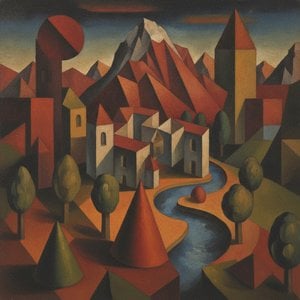
The painting depicts two figures traversing a wooded landscape. However, Picasso doesn’t aim for realistic representation. Instead, he subtly dismantles traditional perspective and form. The figures are suggested rather than explicitly rendered, constructed from simplified shapes and planes that seamlessly integrate with the surrounding trees. A dominant tree anchors the composition in the background, its branches reaching upwards, while two smaller trees provide a foreground counterpoint. This deliberate fragmentation is characteristic of Picasso’s evolving style.
Analytical Cubism in Practice: Technique & Palette
Paysage aux deux figures exemplifies Picasso's Analytical Cubism phase. Notice how he breaks down objects into geometric forms, presenting multiple viewpoints simultaneously – a radical departure from traditional single-perspective representation. The color palette is deliberately restrained, dominated by earthy tones of greens, browns, and ochres. This limited range reinforces the painting’s harmonious connection to nature while emphasizing form over vibrant color. Unlike later Synthetic Cubist works that incorporated collage, this piece relies solely on painterly means to achieve its deconstructed aesthetic.
Historical Context: A Revolution in Perception
The early 20th century was a period of immense intellectual and artistic upheaval. Influenced by scientific advancements – such as Einstein’s theory of relativity – and philosophical shifts, artists began to question traditional methods of representation. Picasso, alongside Georges Braque, sought not merely to *depict* reality but to explore the very *structure* of perception itself. This painting is a vital step in that journey, marking his decisive break from earlier periods like the Rose and Blue Periods.
Symbolism & Emotional Resonance
While fragmented, Paysage aux deux figures evokes a sense of quiet contemplation and connection to the natural world. The simplification of forms doesn’t diminish emotional impact; rather, it invites active participation from the viewer in reconstructing the scene and interpreting its meaning. The ambiguity surrounding the relationship between the two figures – are they walking together or apart? – adds a layer of psychological depth, prompting reflection on themes of companionship, solitude, and the human condition.
Display & Interior Design Considerations
This painting would be stunning within a modern or contemporary interior that embraces natural materials and textures. Consider pairing it with furniture featuring clean lines and organic shapes to complement its geometric forms. Neutral wall colors will allow the artwork’s subtle palette to truly shine. Museum-quality lighting is essential to highlight the nuances of Picasso's brushwork and color choices. Allow ample viewing distance to fully appreciate the painting’s complex composition.
A Lasting Legacy
Paysage aux deux figures isn’t simply a landscape; it is a testament to Picasso's genius and his revolutionary contribution to modern art. It remains a captivating piece that continues to inspire, challenge, and provoke thought in viewers today – a powerful reminder of the transformative power of artistic innovation.



 معاينة الحجم الحقيقي
 اشترِ لوحة مرسومة يدويًا
 مشاركة
 مشاركة
 التفاصيل
 الدليل

 تحميل الملف
 قطع مشابهة
 الأشعة السينية
 عرض شرائح
 الإحصائيات

 عرض المزيد






































 خيار الزجاج متاح فقط للمقاسات التي تقل عن 110 سم