A Monumental Vision of Mythic Landscape
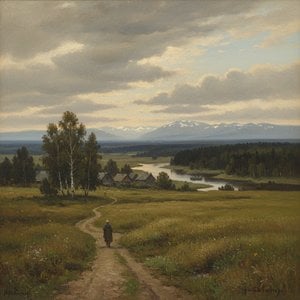
Nicholas Roerich’s “Giantess Krimgerd,” painted in 1915, stands as a testament to the artist's profound engagement with mythology and landscape painting—a fusion that exemplifies the Symbolist movement’s core tenets. This striking monochrome depiction captures a desolate yet powerfully evocative scene: a jagged rock face dominates the foreground, bearing an unsettling visage reminiscent of ancient stone sculptures.
Symbolism and Mythological Resonance
Roereich's artistic vision wasn’t merely concerned with capturing visual beauty; it sought to convey deeper spiritual truths. Krimgerd draws heavily from Slavic folklore—specifically tales of a colossal female figure guarding sacred places—injecting an element of primal energy into the composition. The rock face itself isn’t simply geological formation; it embodies resilience, endurance, and perhaps even sorrowful contemplation. Its gaze seems fixed upon something beyond our immediate perception.
Technique and Artistic Considerations
Executed in charcoal and graphite on paper, “Giantess Krimgerd” showcases Roereich's masterful command of tonal shading—a technique characteristic of Symbolism that prioritizes conveying mood and emotion over precise realism. The artist meticulously builds up layers of graphite to achieve a velvety surface texture, highlighting the contours of the rock face with subtle gradations of grey. This deliberate approach underscores the painting’s expressive power.
Historical Context: Embracing Spiritual Renewal
Painted during a period marked by significant artistic and intellectual ferment—the aftermath of World War I and the burgeoning interest in Eastern mysticism—Krimgerd reflects Roereich's broader preoccupation with exploring spiritual dimensions alongside aesthetic concerns. Symbolism arose as a reaction against Impressionism’s focus on fleeting sensory experience, advocating instead for art that communicates ideas and emotions through symbolic imagery.
Emotional Impact: A Landscape of Contemplation
"Giantess Krimgerd" transcends its formal elements to elicit a palpable sense of solitude and wonder. The bleak expanse of the rocky terrain—coupled with the enigmatic expression of the stone giant—invites viewers into a meditative state, prompting reflection on themes of timelessness, resilience, and the enduring presence of mythic narratives.



 معاينة الحجم الحقيقي
 اشترِ نسخة مطبوعة
 مشاركة
 مشاركة
 التفاصيل

 تحميل الملف
 قطع مشابهة
 الأشعة السينية
 عرض شرائح

 عرض المزيد






































 خيار الزجاج متاح فقط للمقاسات التي تقل عن 110 سم