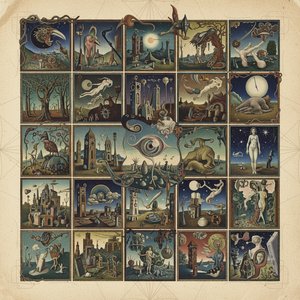
A Descent into the Dreamscape: Max Ernst’s “Untitled (7908)”
Max Ernst's "Untitled (7908)," a deceptively simple black and white photograph of a monumental sculpture, isn’t merely a documentation of an artwork; it’s a portal. Captured in 1926, this image offers a glimpse into the fertile, unsettling mind of one of Surrealism’s most daring pioneers. The sculpture itself—a towering, biomorphic creation—immediately commands attention, its organic forms twisting and merging like a landscape born from a fever dream. It's a piece that speaks to the anxieties and aspirations of a rapidly changing world, reflecting Ernst’s own restless intellectual journey and his fascination with the subconscious.
The photograph’s power lies not just in the sculpture’s arresting form but also in its meticulous execution. The lighting is deliberately muted, casting deep shadows that accentuate the texture of the material—likely wood or clay—and lending a sense of weight and solidity to what could easily appear as ethereal. The composition, tightly framing the sculpture against a neutral background, creates an immediate intimacy, drawing the viewer into this strange, contained world. The handwritten label at the bottom left corner, referencing the artwork’s title and date, subtly anchors us in time while simultaneously reinforcing the feeling of being adrift within a dream.
The Roots of Surrealism: Ernst's Intellectual Landscape
To fully appreciate “Untitled (7908),” one must understand the context of Max Ernst’s artistic development. Born in Brühl, Germany, in 1891, Ernst was profoundly shaped by his early exposure to philosophy and psychology. His academic pursuits at Bonn University—spanning fields from art history to psychiatry—were not simply academic exercises; they were a deliberate attempt to dismantle conventional ways of seeing and understanding the world. This intellectual rigor fueled his experimentation with techniques like *frottage* (rubbing textures onto paper) and *grattage* (scraping paint off a canvas), methods designed to tap into the unconscious mind and bypass rational thought.
Ernst’s disillusionment with the established art world, coupled with his growing interest in psychoanalysis—particularly the work of Sigmund Freud—led him to embrace Surrealism. This movement, emerging from the ashes of Dada, sought to liberate art from the constraints of logic and representation, exploring themes of dreams, sexuality, and the irrational. “Untitled (7908)” embodies this spirit perfectly, presenting a visual manifestation of the subconscious – a landscape sculpted by instinct and imagination.
Decoding the Symbolism: Birds, Beasts, and the Unconscious
The sculpture’s imagery is rich with symbolic potential. The intertwined forms—resembling both animalistic features like horns or antlers and organic growths—suggest themes of transformation, growth, and perhaps even decay. Ernst frequently employed birds in his work, often representing freedom, aspiration, and the ability to transcend earthly limitations. Their presence here reinforces this sense of upward movement and spiritual yearning.
The overall effect is profoundly unsettling yet strangely compelling. The sculpture’s ambiguity invites interpretation, prompting viewers to project their own anxieties and desires onto its surface. It's a visual representation of the internal struggle between reason and instinct, order and chaos—a core concern for Ernst and the Surrealist movement as a whole. The piece doesn’t offer easy answers; instead, it presents a series of questions about the nature of reality, the power of the unconscious, and the human condition.
A Legacy in Reproduction: Bringing the Dreamscape Home
Reproductions of “Untitled (7908)” offer a remarkable opportunity to bring this evocative artwork into your home or office. The stark black and white palette lends itself beautifully to contemporary interiors, providing a sophisticated contrast against brighter colors and textures. The sculpture’s powerful imagery—a testament to Max Ernst's visionary genius—can serve as a constant reminder of the mysteries that lie beneath the surface of our conscious minds.
Whether you are an art collector seeking a unique addition to your collection or simply someone drawn to the beauty and complexity of Surrealism, a high-quality reproduction of “Untitled (7908)” is sure to captivate and inspire. It’s more than just a print; it's a window into the dreamscape of one of art history’s most influential figures.
الأسئلة والأجوبة
ما هو اللون الطاغي على تكوين "untitled (7908)" للفنان ماكس إرنست؟
اللون الأكثر بروزاً في "untitled (7908)" هو Putty (#dddddd). ويعد اللون السائد مفيداً عند تنسيق العمل الفني مع التصميم الداخلي.
ما هي المكانة التي تحتلها "untitled (7908)" للفنان ماكس إرنست في تاريخ الفن؟
تنتمي "untitled (7908)" للفنان ماكس إرنست إلى حركة Surrealist Movement، ضمن حقبة High Medieval. ويمنح هذا المزيج العمل مكانته في تاريخ الفن.
هل تُعد "untitled (7908)" نموذجاً لما اعتاد ماكس إرنست على إبداعه عادةً؟
يصور "untitled (7908)" موضوعات sculpture, surrealism, organic forms, biomorphic, animalistic, dreamlike, ernst، بينما تتمثل الثيمات المسجلة لـ ماكس إرنست في dadaism, surrealist experimentation, psychological exploration, dreams, symbolic, primal imagery”, “autobiographical, personal journey”. وتُظهر المقارنة بينهما مدى ارتباط هذا العمل بالموضوعات المعتادة للفنان.



 معاينة الحجم الواقعي
 اطلب نسخة مرسومة يدويًا
 إرسال
إرسال مشاركة
 عرض التفاصيل
 دليل الأعمال الفنية للطلاب

 تحميل
تحميل
 قطع مشابهة
 الأشعة السينية
 عرض شرائح متتابع
 الإحصائيات

 اقرأ المزيد






































 خيار الزجاج متاح فقط للمقاسات التي تقل عن 110 سم