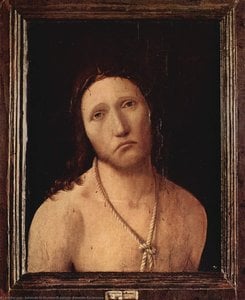
Oil On PanelEarly Renaissance
 1485
1485 90.0 x 56.0 cm
 متحف الفنون الجميلة
احصل على صورة رقمية عالية الدقة ومعزّنة، بجودة تفوق بكثير المعاينة عبر الإنترنت.
يتم إعداد كل ملف بعناية فائقة من قبل متخصصينا الداخليين باستخدام أدوات متقدمة ولمسات يدوية خبيرة. نضمن أن تتمتع كل صورة بوضوح استثنائي، ودقة لونية متناهية، وتفاصيل دقيقة.
يتم تسليم الملف النهائي عبر البريد الإلكتروني في غضون 72 ساعة، وهو مُحسَّن للاستخدام الفوري في المجالات المهنية والتحريرية ومجالات الطباعة. هذه هي ذات الجودة التي تعتمد عليها كبرى استوديوهات التصميم ودور النشر والمعارض الفنية المرموقة.
حمّل ملفاً عالي الدقة للعرض الشخصي، والطباعة، والمشاريع الإبداعية. ( اشترِ نسخة مطبوعة اشترِ لوحة مرسومة يدويًا)
عندما تختار WahooArt.com، فأنت لا تحصل على مجرد صورة فحسب، بل ستحصل على عمل فني رقمي مُحسّن باحترافية، صُمم بدقة متناهية ومصحوب بضمان الرضا. إليك كل ما يتضمنه طلبك تلقائياً:

ستصلك ملفات صورك الرقمية عالية الدقة عبر البريد الإلكتروني في غضون 72 ساعة من إتمام الطلب - لتكون جاهزة للاستخدام الفوري.

يتم تحسين عملك الفني باحترافية باستخدام أدوات الذكاء الاصطناعي المتقدمة والتحرير اليدوي، لضمان أقصى درجات التفاصيل والوضوح ودقة الألوان.

هل حذفت ملفك أو فقدته عن طريق الخطأ؟ لا تقلق - سنعيد إرساله إليك في أي وقت، ومجاناً.

استمتع بأعمالك الفنية فوراً دون أي رسوم جمركية أو ضرائب أو مصاريف شحن - فالتحميلات الرقمية دائماً ما تكون معفاة من الضرائب.

نحن نضمن أن تعكس صورتك الرقمية الألوان الأصلية بأقصى قدر ممكن من الدقة، وذلك باستخدام أدوات احترافية وتقنيات إدارة الألوان.

إذا لم تكن راضياً عن صورتك الرقمية، فسنقوم بتعديلها أو استرداد 100% من قيمتها خلال 100 يوماً - دون أي أسئلة.

لم تكن راضياً؟ احصل على استرداد كامل المبلغ خلال 100 يومًا من استلام ملفك الرقمي - دون أي أسئلة.

اشتري 3 صور، ووفر 10% - اشتري 5، ووفر 15% - اشتري +10، ووفر 20%. مثالية للمشاريع الإبداعية، والمعارض، والوكالات.
Matteo di Giovanni’s “Saint Bartholomew,” painted around 1485 in Siena, stands as a testament to the burgeoning artistic fervor of Tuscany during the High Renaissance. More than just a depiction of biblical scripture—the Apostle’s martyrdom—it embodies a profound engagement with humanist ideals and masterful execution that continues to captivate viewers centuries later.
The composition is strikingly simple yet powerfully effective: the Apostle dominates the canvas with unwavering gaze, positioned at the edge of a stylized marble floor. Lines are precise and linear, delineating musculature and folds of clothing with meticulous detail. Geometric shapes – rectangles for drapery, circles for the halo—contribute to the painting’s visual harmony.
Beyond its formal qualities, “Saint Bartholomew” resonates with emotional depth. Giovanni’s masterful portrayal captures the Apostle’s unwavering resolve—a beacon of faith amidst suffering—inspiring contemplation and conveying a palpable sense of solemn grandeur. It is a work that transcends mere representation, inviting viewers to engage in a dialogue with timeless themes of spirituality and human resilience.
Currently housed in the Museo Nazionale di San Matteo, Pisa, “Saint Bartholomew” remains a cornerstone of Tuscan Renaissance heritage—a captivating artwork deserving of careful observation and appreciation.

In the heart of the Italian Renaissance, amidst the winding streets of Siena, the brushstrokes of Matteo di Giovanni helped define an era of profound spiritual and aesthetic transformation. Born around 1435 in Borgo San Sepolcro, Matteo’s journey was one of migration and metamorphosis. Though his origins lay elsewhere, his soul became inextricably linked to the Sienese school, a movement characterized by its lyrical grace, rich ornamentation, and deep devotion. His life was marked not only by artistic pursuit but by a remarkable personal stability; through two marriages to women of significant wealth, Matteo secured the financial freedom necessary to acquire real estate and establish a lasting presence in the San Salvatore neighborhood of Siena.
The early years of Matteo’s career remain shrouded in the soft mists of history, yet the traces of his development are etched into the very fabric of his canvases. While no formal apprenticeship is recorded, scholars often look toward the workshop of the renowned sculptor and painter Vecchietta as a potential cradle for his talent. His style emerged as a sophisticated tapestry woven from various threads of influence: the delicate precision of the miniaturist Girolamo da Cremona, the robust Florentine energy of Antonio del Pollaiolo, and the established Sienese traditions set by masters such as Sassetta and Domenico di Bartolo. This unique synthesis allowed him to bridge the gap between the decorative elegance of the late Gothic period and the burgeoning humanism of the Renaissance.
Matteo’s early professional life was defined by the collaborative spirit of the 15th-century workshop. In 1452, he entered into a significant partnership with Giovanni di Pietro, a period during which they shared living quarters and worked side-by-side on monumental tasks. One of the most illuminating glimpses into his early technical skill comes from 1453, when records show Matteo coloring and gilding a sculpture of the Archangel Gabriel by the celebrated Jacopo della Quercia. This task—applying precious gold leaf to sacred forms—demonstrates his mastery over the luminous, tactile surfaces that would become a hallmark of his later altarpieces.
His growing reputation led him to contribute to the most sacred spaces in Siena. His hands helped embellish the organ shutters within the Siena Cathedral and played a vital role in the decoration of the San Bernardino Chapel. These commissions were more than mere jobs; they were spiritual contributions to the city's liturgical life. As his skill matured, Matteo’s work began to exhibit a more complex narrative depth, moving beyond simple iconography toward a more dramatic and emotionally resonant style that captured the attention of the most prestigious patrons in Tuscany.
The true measure of Matteo di Giovanni’s stature is found in his selection for the urban renewal projects of Pienza. As one of only four Sienese painters chosen to furnish altarpieces for the newly erected chapels of the Pienza Cathedral, he stood at the forefront of the era's most ambitious architectural and artistic endeavors. His contributions to this project, particularly the three altarpieces dating from 1460-62, serve as a definitive window into his evolving technique, showcasing a mastery of light, form, and sacred storytelling.
Matteo’s legacy is defined by several key artistic pillars:
Though he passed away in 1495, the echoes of Matteo di Giovanni’s artistry continue to resonate. He remains a pivotal figure who navigated the transition from the medieval mindset to the Renaissance dawn, leaving behind a body of work that continues to inspire awe through its delicate beauty and enduring spiritual strength.

1435 - 1495 , Italy

 معاينة الحجم الحقيقي
 مشاركة
 مشاركة
 التفاصيل

 تحميل الملف
 قطع مشابهة
 الأشعة السينية
 عرض شرائح
 عرض المزيد