A Luminous Study in Devotion: The Wise Virgins
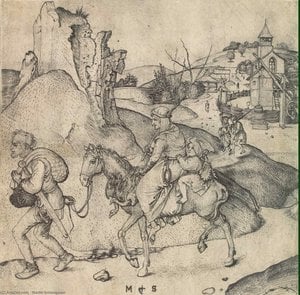
To gaze upon this exquisite engraving is to step into a moment suspended between earthly anticipation and divine promise. While the accompanying description speaks of The Fifth Wise Virgin, the physical artifact before us presents a profound meditation on preparedness, rendered with the meticulous grace characteristic of the Northern Renaissance masters. The composition centers around a figure whose serene bearing suggests an inner light, flanked by companions who echo her quiet dignity. It is not merely a depiction; it is a visual sermon etched in black and white, inviting contemplation upon the nature of faith and vigilance.
The Mastery of Line: Technique and Craftsmanship
What immediately arrests the eye is the sheer virtuosity displayed through the medium itself. This work is a testament to the power of printmaking, specifically engraving—a technique demanding both immense technical skill and profound artistic vision. Observe how the artist has manipulated line after line; it is not simply drawing, but an architectural construction of shadow and light. The use of hatching and cross-hatching creates a breathtaking illusion of texture, allowing us to perceive the delicate fall of drapery or the subtle sheen of hair, all achieved without the aid of color. This precision speaks directly to the legacy of artists like Martin Schongauer, whose hand guided these fine tools across the metal plate.
Symbolism Woven into Shadow and Light
The subject matter, strongly suggesting the parable of the wise virgins, imbues every element with symbolic weight. The candles held aloft are more than mere props; they are potent symbols of faith, enlightenment, and readiness for a calling that transcends the mundane. The monochromatic palette forces the viewer to look beyond superficial color and instead focus on form, gesture, and spiritual resonance. The light emanating from these sources—though rendered in ink—feels palpable, suggesting guidance piercing through the deepest shadows of uncertainty.
Historical Echoes and Enduring Grace
Dating this piece to the late 15th century places it at a fascinating crossroads in art history, where the rich traditions of Italian Renaissance theory began to merge with the intense realism and minute detail favored by the Northern schools. The elegance of the posture, the balanced symmetry, and the narrative depth all speak to an era grappling with profound theological questions through increasingly sophisticated artistic language. For the modern collector or designer, this piece offers a connection not just to a historical period, but to a timeless human quest for meaning.
Bringing Sacred Art into Modern Spaces
To reproduce such a work is to bring its quiet power into contemporary living spaces. Imagine this engraving mounted where natural light can catch the intricate interplay of black and white tones. It serves not only as an object of aesthetic beauty but as a focal point for reflection—a sophisticated piece that whispers tales of devotion, discipline, and enduring illumination. Its detailed narrative quality ensures it remains captivating whether viewed up close by an admirer of printmaking or from across a grand hall.



 معاينة الحجم الحقيقي
 اشترِ لوحة مرسومة يدويًا
 مشاركة
 مشاركة
 التفاصيل

 تحميل الملف
 قطع مشابهة
 الأشعة السينية
 عرض شرائح
 الإحصائيات


 عرض المزيد






































 خيار الزجاج متاح فقط للمقاسات التي تقل عن 110 سم